History of Newport New Hampshire

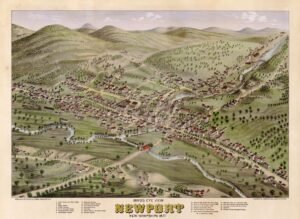
Bird's Eye View of Newport New Hampshire 1877

The History of Newport, New Hampshire, from 1766 to 1878 is a record of Newport’s growth from its early settlement through the close of the nineteenth century. It opens with the original charter and proprietary arrangements and follows the development of Newport’s physical setting, transportation routes, and economy. Particular attention is given to mills, banks, hotels, manufacturing, and the coming of the railroad, all of which shaped the town’s commercial life. The concluding genealogical section identifies families connected with Newport and other chapters provide biographical details that might otherwise be lost.

History of Amherst New Hampshire

Residence of Isaac Brooks in Amherst New Hampshire

The history of Amherst, New Hampshire, unfolds from its 1675 land grant to veterans of the Narraganset War, marking the impetus for settlement along the Souhegan River. From its early governance and incorporation in 1760 to territorial adjustments that birthed Mont Vernon and Milford, this narrative encompasses local geography, economy, and Indigenous presence. Key military engagements, civic institutions, and genealogical records are explored up to 1882, offering a comprehensive view of the town’s evolution and its prominent figures.

History of the town of Medford, Massachusetts

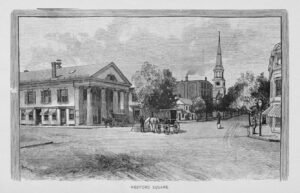
Medford Square about 1850

The History of the Town of Medford, Middlesex County, Massachusetts, from Its First Settlement in 1630 to 1885 (Boston, 1886) represents both a continuation and revision of Charles Brooks’s original 1855 history. Edited and supplemented by James M. Usher, with a genealogical register compiled by William H. Whitmore, this expanded edition incorporates Brooks’s extensive antiquarian research while extending the narrative to cover the developments of the following three decades. Drawing on scattered records, local traditions, and municipal documentation, the work preserves the character of Brooks’s text while providing a fuller account of Medford’s growth and a register of its early families.

Southborough Massachusetts vital records

Vital records of Southborough, Massachusetts, to the end of the year 1849 title page

The list of vital records of Southborough, Massachusetts, comprised in this volume includes all which were entered in the Town Books during the period from the earliest date there found to the end of the year 1849. Some additions and corrections of names and dates have been made from the records of the First Church, these being indicated in each instance by proper reference. There are a total of 6,267 births, marriages, and deaths recorded. This book is free to read or download.

The Amidon Family of Rehoboth, MA

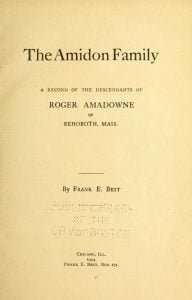
The Amidon Family

The Amidon Family genealogy book details the lineage of Roger Amadowne, a French Huguenot who fled to England and later to America after the revocation of the Edict of Nantes. Documented in Salem, Massachusetts in 1637, variations of his surname include Amadon, Amidown, and Ammidon. The work, organized with biographical sketches and two helpful indexes, presents the family’s history and is richly illustrated. Originally published in 1904, it serves as a valuable resource for descendants and historians alike.

History of Littleton New Hampshire

1895 Map of Littleton New Hampshire

The History of Littleton New Hampshire is comprised of three volumes, two volumes of history, and a final volume of genealogies. Considered one of the best examples of local history written in the early 20th century, is your ancestors resided in Littleton then you need these books. Read and download for free!

Howard Genealogy of Bridgewater and New Bedford Mass.

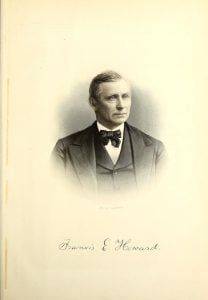
Frances E. Howard

The Howard family, prominent in the history of Bridgewater and New Bedford, Mass., traces its lineage back to John Howard, an early settler. Key figures include Capt. Benjamin Beal Howard, founder of Howard Seminary and known for his philanthropic deeds, and his son, Francis Edward Howard, an influential public servant and community leader. Both men embodied the family’s commitment to education and civic duty, contributing significantly to the community’s development and welfare, leaving a lasting legacy through their charitable efforts and public service.

Ancestors of William J. Rotch of New Bedford, MA

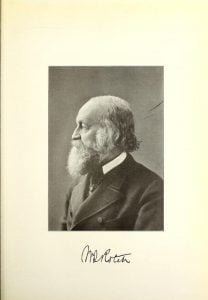
William J. Rotch

The Rotch family has played a significant role in New Bedford’s history since the 18th century, greatly impacting its whaling and cotton industries. William Rotch, the first American ancestor, settled in Provincetown around 1700, later moving to New Bedford and pioneering the whale fishery there. His descendants continued to shape the city’s commercial landscape, including William J. Rotch, who became a notable businessman and public figure, serving as mayor and supporting various local enterprises and educational initiatives. The family’s legacy endures in New Bedford’s character and prosperity.

Chandler Family of Boston and East Bridgewater MA

The Chandler family of Boston and East Bridgewater, Massachusetts, traces its lineage to Edmund Chandler, a Duxbury pioneer from the 17th century. Led by the esteemed Hon. Peleg Whitman Chandler, a prominent lawyer and city official, the family has notably contributed to Massachusetts’ legal and civic life. Cleaveland Angier Chandler, a descendant and active community member, continues this legacy in East Bridgewater. The family includes multiple generations of patriots who played significant roles during the American Revolution, emphasizing their deep-rooted connection to the region’s history.

Descendants of John Ames of West Bridgewater MA

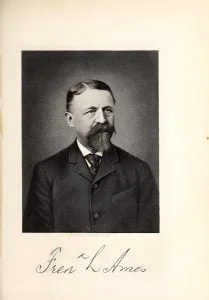
Frederick Lothrop Ames

The Ames family, of early English origin, traces its lineage back to John Ames, buried in 1560 in England. His descendants, including John Ames who settled in Massachusetts, contributed significantly to local communities. Notably, Oliver Ames became a renowned shovel manufacturer and a prominent figure in the railroad industry. His son, Frederick Lothrop Ames, furthered the family legacy through business and philanthropy. The Ames family’s enduring influence is reflected in their various ventures, civic contributions, and commitment to education and community service.

M. A. Angier

1st Lt. M. A. Angier, an Infantry officer from Durham County, joined the military on April 14, 1917. He trained at Ft. Oglethorpe, Camp Jackson, and Camp Sevier. Promoted to 2nd Lt. on July 14, 1917, he later attained the rank of 1st Lt. in March 1918. Angier completed his service and was mustered out at Camp Sevier on March 1, 1919.