History of the Congregational Church of Norwich Vermont

Congregational Church, Norwich Village

The Congregational Church of Norwich, one of Vermont’s oldest congregational churches, was established in 1770, primarily by former members from Connecticut. Reverend Lyman Potter became its first settled minister in 1775. Early meetings were held in private homes or barns until the first meeting house was built around 1784. After several pastors, including Reverend James W. Woodward, who served from 1804 to 1821, tensions over meeting house locations led to the formation of the South Congregational Church in 1819. Despite the split, the original church maintained a strong membership.
Norwich Plain Meeting House

The Norwich Plain Meeting House was constructed in 1817 and dedicated on November 20 of the same year. Reverend R. W. Bailey served as the first pastor until 1823. Initially consisting of eleven members, the congregation grew significantly during Bailey’s ministry and subsequent leadership, including notable revivals under Reverend Doctor Roswell Shurtleff. The church moved to its current location in 1852, experiencing further growth, especially after absorbing members from the dissolved North Church in 1854. The church has had several pastors and continues to thrive.

The Ministerial Act of Vermont

The Ministerial Act, enacted by Vermont’s legislature in October 1783, mandated local taxation for building meeting houses and supporting ministers. In 1785, Norwich decided to assume the cost of its meeting house via taxation, raising £694 from its citizens. This tax, payable in various forms, equalized expenses for all, regardless of prior contributions. The meeting house became a town property, leading to new seating arrangements based on age and contribution. The Act remained until 1801, fostering a unified religious practice among Norwich’s residents.

History of the Bridges Between Hanover NH and Norwich VT

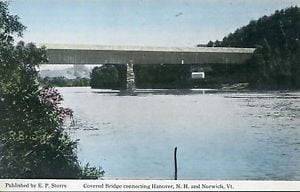
Norwich-Hanover covered bridge

The first recorded crossing of the Connecticut River between Norwich, VT, and Hanover, NH, was in 1765 using a canoe. Following this, ferry services began around 1778, with disputes over ferry rights between the two towns and Dartmouth College. By 1796, the first bridges were established, with significant community efforts aimed at creating a free bridge. Ultimately, following discussions and public support, the Ledyard Free Bridge was constructed in 1859, marking the first free bridge over the river between the two states.

Norwich Vermont and Dartmouth College

Norwich, Vermont, and Dartmouth College share a significant historical bond. Founded around the same time, both institutions benefited from mutual support, with Norwich contributing land and donations for the college’s establishment in Hanover. The founders of Norwich had personal ties with Dartmouth’s founder, Rev. Dr. Wheelock, who nearly chose Norwich as the college’s location. Over the years, Norwich supplied a substantial number of students to Dartmouth, highlighting a close relationship that fostered mutual growth and education amidst the challenges of their early settlements.

Norwich Vermont Proposed Union with New Hampshire

In 1782, the towns of Newbury, Moretown, Norwich, and Hartford considered uniting with New Hampshire following Vermont’s failed attempt at a union with New Hampshire towns. They expressed a desire for this union, emphasizing mutual benefits and historical claims. Committees were formed to deliberate and send a memorial to the New Hampshire General Court seeking jurisdiction over their territory, citing previous affiliations and a need for defense. The appeal highlighted the communities’ struggles under Vermont and their hopes for a beneficial re-alignment with New Hampshire.

Norwich Vermont in the Controversy with New York

The political struggle between New York and the New Hampshire Grants primarily affected settlers’ titles and local governance. Norwich, largely detached from these tensions, operated under New Hampshire Grants without significant interference from New York. Town records seldom reference New York, reflecting a quiet disregard for its authority. While other towns sought charters from New York, Norwich maintained its practices, opting for traditional New England governance. When Vermont declared independence in 1777, Norwich citizens actively participated, culminating in the formation of a separate state, solidifying their break from New York’s jurisdiction.

List of the Principal Pioneer Settlers in Norwich Vermont

In 1771, the population of Norwich, Vermont, was recorded at 206 people in forty families, highlighting its growth since being chartered by New Hampshire. The town was part of Gloucester County after 1772, previously belonging to Cumberland County. The census showed a predominance of youth, with 92 children under sixteen. The list of pioneer settlers includes notable names such as Daniel Baldwin, Ebenezer Ball, and Medad Benton, many of whom contributed to the establishment of the community by clearing land and building essential structures.

The Founding of Dartmouth College

The establishment of Dartmouth College in Hanover in 1769 marked a significant milestone for nearby Norwich settlers, who recognized the benefits of higher education and contributed generously to its founding. Doctor Wheelock, motivated to educate both settlers and Indigenous peoples, raised substantial funds in Europe. The college’s location evolved from Norwich to Hanover due to jurisdictional issues. Early challenges included securing food supplies and labor, but by 1773, the college had transformed from wilderness to a thriving settlement, supported by local community efforts.

First Settlements in Norwich Vermont

The early settlement of Norwich, Vermont, began in 1762 when Samuel Slafter’s son, John, explored the area, reporting its fertile land and water sources. In 1763, after receiving his father’s rights, he commenced clearing lots but faced challenges, as his initial choice proved unsuitable. By 1765-66, a few families settled permanently, including the Hutchinsons and Manns, establishing homes and farms. Pioneers endured various hardships, yet they built foundations for a thriving community, characterized by a homogeneous population primarily from Connecticut.

The Proprietors of Norwich Vermont

The early proprietors of Norwich, Vermont, largely hailed from Connecticut towns such as Mansfield and Tolland, with some from New Hampshire and Massachusetts. While many grantees did not settle personally, they transferred their rights to their sons or younger acquaintances. Key early settlers included Captain Hezekiah Johnson and Jacob Fenton. The proprietors diligently organized land surveys, established roadways, and incentivized settlement through financial support, ultimately fostering rapid growth in the new township. Meetings continued until 1770, addressing land divisions and mill constructions.

The Original Grantees of Norwich Vermont

On July 5, 1761, a number of men received land grants for what would become Norwich, Vermont. Most were from Mansfield, Connecticut, though many never visited the town. The list includes individuals such as Eleazer Wales, Abner Barker, and Ebenezer Heath, among others. Notably, some opted not to accept their grants. The document serves as a historical record of the original grantees, highlighting their connections to Connecticut and their role in the early settlement of Norwich.

Norwich as a Province of New Hampshire

On July 4, 1761, King George III granted a charter for the establishment of Norwich, a township in New Hampshire, encompassing twenty-three thousand acres. The charter outlined conditions for land settlement and cultivation, designated responsibilities for preserving certain trees, and specified annual rent payments. It stipulated the creation of town lots and established governance procedures, including the appointment of town officers. The charter also allocated shares for community institutions, such as a church and school, setting the foundation for the township’s future development.

The Founding of Norwich Vermont

In August 1761, the proprietors of the newly chartered township of Norwich, Vermont, convened in Mansfield, Connecticut, to initiate settlement in a largely uninhabited wilderness. They aimed to cultivate a six-square-mile tract along the Connecticut River, supported by the post-French and Indian War boom in population and security. The proprietors received their charter from New Hampshire’s Governor Wentworth and established conditions for land cultivation, including provisions for education and religion, while also reserving land for the governor.

Norwich Vermont an Independent Township

The political organization of America began with the Township, particularly in New England, where towns emerged as independent entities with self-governing rights in the mid-17th century. Town meetings served as foundational democratic institutions, allowing citizens to elect officials and manage local affairs. Norwich, Vermont, exemplified this tradition, organizing its town government in 1761 before any settlers arrived. Its early record-keeping and governance practices reflect a commitment to law, order, and community engagement, which have shaped its ongoing civic structure.

Captivity and Redemption of Mrs. Jemima Howe – Indian Captivities

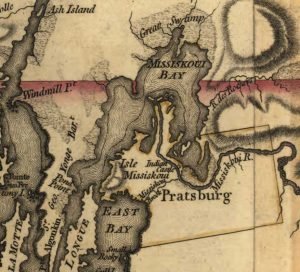
Map of Indian Town of Missiskoui

The account chronicles the capture and eventual redemption of Mrs. Jemima Howe after her abduction by Native Americans in 1765 during an ambush in Hinsdale, New Hampshire. Following traumatic events, including the death of her husband and the loss of two children, she endured a harrowing journey through the wilderness, eventually being sold to a French man after nearly a year with the Indians. Through the assistance of notable individuals like Colonel Schuyler, she was ultimately ransomed and reunited with some of her children, revealing both her suffering and resilience.

Narrative of the Captivity of Mrs. Mary Rowlandson – Indian Captivities

In February 1676, during King Philip’s War, Mrs. Mary Rowlandson was captured by Native Americans after her home in Lancaster was attacked. She witnessed horrific violence and loss, including the deaths of family members and friends, as the assailants burned homes and killed indiscriminately. Throughout her captivity, she endured immense physical and emotional suffering, facing starvation and constant fear. Yet, she found strength in her faith, documenting her ordeal and reflecting on God’s providence. Ultimately, she was redeemed after many harrowing weeks, reuniting with her husband but mourning the loss of her child and other relatives.

Vermont Genealogy at Ancestry

Ancestry offers an extensive array of genealogy resources for Vermont, providing users access to millions of records, including birth, death, and marriage indices, as well as historical accounts and biographical sketches of notable individuals. While some resources are free, many require a subscription, though a 14-day free trial is available to explore Vermont’s genealogical history. The collection encompasses a variety of documents, from state journals to local histories, making it a valuable asset for researchers and descendants of Vermonters.