
The Discovery Of This Continent: It’s Results To The Natives
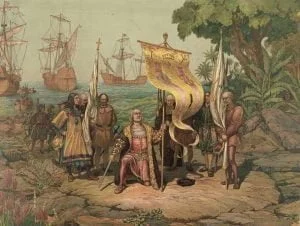
Columbus Landing on Hispaniola

In 1470, Christopher Columbus married Dona Felipa, daughter of a renowned navigator, and settled in Porto Santo, where they shared dreams of discovering lands to the West. Their ambitions fueled Columbus’s determination, leading to his 1492 voyage that resulted in the European discovery of the Americas. However, this event marked the beginning of devastation for native peoples, introducing warfare, disease, and colonization that would decimate their populations and cultures, ultimately transforming their rich, diverse societies into shadows of their former selves.

Biography of Dr. Nathaniel Polhill Jelks

Dr. Nathaniel Polhill Jelks, born on July 18, 1845, in Hawkinsville, Georgia, distinguished himself as a physician after serving in the Confederate Army during the Civil War. He graduated from Bellevue Hospital Medical College in 1868 and practiced medicine in Hawkinsville, gaining recognition and leadership in medical associations. A devoted family man, he had seven children with his first wife, Kathleen Lamkin, and two with his second wife, Kate Pate. Active in civic and religious life, he was a deacon in the Baptist Church until his death on March 28, 1911.

Slave Narrative of Martha Colquitt

Martha Colquitt, an elderly former slave from Athens, Georgia, recalls her life on a plantation owned by Marse Billie Glenn. Born to a cook, she describes her family’s experiences, including her mother’s cooking and the provisions they received. Slaves on the plantation feared leaving, feeling well-cared for. Martha shares details of life events, religious practices, and the end of slavery during the Civil War. Now older, she reflects on her family, hardships, and the kindness of neighbors while hoping for better support in her old age.

Slave Narrative of Mrs. Sarah Byrd

Mrs. Sarah Byrd, a 95-year-old ex-slave from Georgia, recounts her early life in Virginia and experiences on Dr. Byrd’s plantation. Born into a separated family, she describes her plantation duties, including cotton picking. While Dr. Byrd was relatively kind, his wife was harsh, often punishing without cause. Mrs. Byrd shares stories of plantation life, including marriages, frolics, and prayer meetings, and vividly depicts her first encounter with Union soldiers during the Civil War, which culminated in her emancipation.

Slave Narrative of Ellen Claibourn

Ellen Claibourn, born in 1852 in Augusta, Georgia, reflects on her life as a slave on Mr. Hezie Boyd’s plantation. At the age of seven, she became a maid and nurse for her young mistress, shaping her articulate speech. Ellen recalls the Confederate War, her grandfather’s eventual freedom, and the community’s resilience. She highlights the differences in conditions between house servants and field hands, and discusses family, religion, and the care provided during the war. Ellen’s narrative emphasizes a complex mix of hardship and care in her experiences.

Slave Narrative of Carrie Nancy Fryer

Carrie Nancy Fryer, a 72-year-old former slave residing in Augusta, Georgia, shares her life experiences and memories from slavery. She describes her childhood on the Pickens plantation, her family’s struggle for sustenance, and her health remedies. Nancy reflects on her relationships, including those with her husband and children, alongside her profound spiritual experiences and insights into the supernatural. Despite her hardships, she emphasizes dignity and resilience, insisting on maintaining a clean household. She requests the interviewer to send a postcard to her former employer, expressing her ongoing struggles.

Slave Narrative of George Eason

George Eason, born on a plantation in Forsyth, Georgia, recounts his experiences as a slave under Mr. Jack Ormond. Eason grew up assisting his mother, who worked as the cook, and later transitioned to fieldwork, facing daily toil and inadequate rations. Despite some comforts, such as decent food for house servants, the slaves endured harsh conditions, limited clothing, and meager provisions. Eason reflects on the mental toll of slavery, the lack of personal freedom, and the complex emotions surrounding their situation, including a yearning for the past.

Chickasaw Indians

The Chickasaw Indians, part of the Muskhogean group and closely related to the Choctaw, originally inhabited northern Mississippi. They were first encountered by Europeans in 1541 under De Soto, showcasing their warlike nature. As staunch allies of the English, they resisted French expansion. However, increasing land pressures led to their relocation to present-day Oklahoma between 1837 and 1847. The Chickasaw established a government modeled after the U.S. before merging into Oklahoma, with historical populations ranging from 1,900 in 1715 to around 11,000 by 1923.