The Descendants of Franklin Mary Noyes Rowe of Humboldt County, Iowa

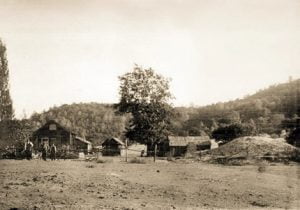
Home of Franklin and Mary Noyes Rowe 1887-1905

This book, “The Descendants of Franklin Mary Noyes Rowe of Humboldt County, Iowa, with Some Notes on Their Ancestors,” authored by Velma Rowe Coffin in Storm Lake, Iowa, in 1955, is a meticulously researched genealogical record spanning 87 pages. It traces the lineage of Franklin Rowe, born December 30, 1836, in Onondaga County, New York, and provides insights into his ancestry and descendants. Free to read or download.
United States Bureau of Land Management Tract Books, 1800-c. 1955

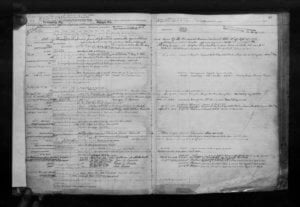
record-image_3QS7-89W3-39QL-W

3,907 land management tract books containing official records of the land status and transactions involving surveyed public lands arranged by state and then by township and range. These books indicate who obtained the land, and include a physical description of the tract and where the land is located. The type of transaction is also recorded such as cash entry, credit entry, homesteads, patents (deeds) granted by the Federal Government, and other conveyances of title such as Indian allotments, internal improvement grants (to states), military bounty land warrants, private land claims, railroad grants, school grants, and swamp grants. Additional items of information included in the tract books are as follows: number of acres, date of sale, purchase price, land office, entry number, final Certificate of Purchase number, and notes on relinquishments and conversions.

Sacramento California Police Mug Books 1864-1949

Mug Book cropped

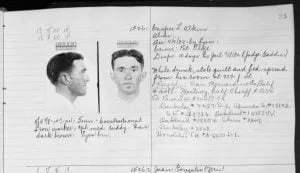
Mug Books of the past have been replaced by computer databases now, but back before the days of computers and databases, they served as an effective method for Police Departments to keep track of past criminals and wanted people. The Sacramento Police Department has generously provided these scanned images to archive.org for free access to everyone. If you are not aware if one of your ancestors may have been arrested for a crime, then I suggest you first search the newspaper records available online for free of Sacramento California, so that you have a year span to choose from. Unless you’re like me and just like perusing the old mug shots…

Chronicling America Historical Newspapers

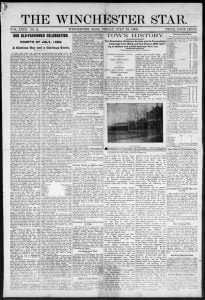
Winchester Star

Chronicling America is a Website providing access to information about historic newspapers and select digitized newspaper pages, and is produced by the National Digital Newspaper Program (NDNP). NDNP, a partnership between the National Endowment for the Humanities (NEH) and the Library of Congress (LC), is a long-term effort to develop an Internet-based, searchable database of U.S. newspapers with descriptive information and select digitization of historic pages. Supported by NEH, this rich digital resource will be developed and permanently maintained at the Library of Congress. An NEH award program will fund the contribution of content from, eventually, all U.S. states and territories.

California World War 2 Casualties – Army, Air Force

World War 2 Casualties - Army, Airforce

This database contains War Department casualties (Army and Army Air Force personnel) from World War II for California. Information provided includes serial number, rank and type of casualty. The birthplace or residence of the deceased is not indicated. An introduction explaining how the list was compiled, a statistical tabulation, and the descriptions of the types of casualties incurred are also included.

Small Town Newspapers

Winchester Star

Small Town Papers gives you access to the people, places and events recorded in real time over the decades or even centuries! Browse and search the scanned newspaper archive from 1846 up to the current edition! Their archives contain millions of names of ancestors not found anywhere else. Enhance your Ancestry research with their high resolution scanned newspaper archive. Find distant relatives and discover your ethnic heritage by reading the articles about family and friends written back in the day.

Ancestry of Herbert Isam Mitchell of Brockton, MA

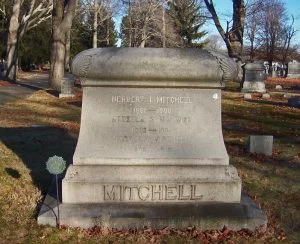
Herbert I Mitchell

The Mitchell family, tracing back to Experience Mitchell who arrived in Plymouth in 1623, is deeply rooted in Massachusetts history. Experience settled in Duxbury and was noted for his contributions as a juryman and original proprietor of Bridgewater. His legacy continued through his descendants, including Isam Mitchell, a successful lumber dealer in Brockton. Herbert Isam Mitchell, Isam’s son, was a prominent businessman and Mason, who contributed significantly to the local Masonic community until his untimely death at age thirty-nine.

Wiyot Tribe

The Wiyot Tribe, also known as the Wishosk, inhabited a coastal region of Northern California, primarily around the lower Eel River and Humboldt Bay. Their territory, rich in redwood, extended along several creeks and rivers, with subsistence largely dependent on marine resources. The tribe exhibited cultural similarities with nearby tribes, characterized by their square houses, redwood canoes, and unique spiritual beliefs centered around the creator deity Gudatrigakwitl. Tragically, they faced significant violence and disenfranchisement, particularly following the Indian Island Massacre in 1860, greatly diminishing their population and recognition.

Biography of Hon. Joseph B. Crockett

Joseph B. Crockett, born in 1808 in Jessamine County, Kentucky, pursued law after studying under prominent mentors. He became a successful attorney, legislator, and Commonwealth’s Attorney before moving to St. Louis and later California, where he thrived. Crockett was appointed to the Supreme Court, eventually becoming Chief Justice, serving for twelve years until 1880. Notably respected for his integrity and legal acumen, he gained popularity for his kindness and talent, leaving a lasting legacy in both Kentucky and California. He passed away in 1883-84.

Chronological Record of Police Appointments City and County of San Francisco

San Francisco police ledger page 56a

This free collection contains three volumes of handwritten manuscripts which depict the chronological record of police appointments for the city and county of San Francisco from Oct 1853 – Nov 1947. They are set up in a ledger format with an index at the front of each volume. The volumes, since they are handwritten, are not searchable.

General History of the Western Indian Tribes 1851-1870 – Indian Wars

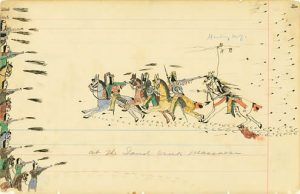
At the Sand Creek Massacre

From 1851, vast territories east of the Rockies were designated as Indian Territory, where numerous tribes roamed. The discovery of gold in California sparked emigration, leading to treaties that confined tribes like the Cheyennes and Arapahoes to specific areas while promising annual payments. Tensions escalated, culminating in the Sand Creek Massacre in 1864, followed by ongoing conflicts. By 1868, efforts to negotiate peace resulted in treaties relocating tribes to reservations, as Indian populations dwindled and government policies shifted to assert control and promote their civilization.

Kit Carson, His Life and Adventures – Indian Wars

kitcarson

Christopher “Kit” Carson, born on December 24, 1809, in Kentucky, grew up in the dangerous wilderness of Missouri, fostering his adventurous spirit. At age 12, he rescued bear cubs, showcasing his bravery. After abandoning a saddler’s apprenticeship for a life of exploration, he became skilled in woodcraft and hunting tactics. Carson served as a scout and guide, notably for Colonel J.C. Fremont, and gained fame for his exploits. He died in 1868, remembered as a legendary figure in American frontier history.

Indian Hostilities in California and New Mexico – Indian Wars

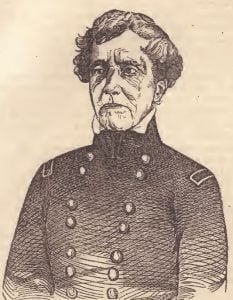
general kearney

The condition of Indian tribes in California, particularly the Shoshonee, Blackfeet, and Crows, is dire, marked by hostility towards settlers, particularly in the Sierra Nevada region. Following the gold discovery, tensions erupted into violence as tribes attacked miners. This led to a declaration of war from settlers, resulting in numerous casualties among the Indians. In New Mexico, the Apache and Navajo tribes proved formidable, engaging in violent confrontations with U.S. troops, while the peaceful Pueblo and other tribes often fell victim to Apache raids.

Big Valley Tribe

Pomo girl photographed by Edward S. Curtis in 1924

The Big Valley Tribe, descendants of the Xa-Ben-Na-Po Band of Pomo Indians, historically occupied the Clear Lake area in California. In 1851, a treaty was agreed upon but later rejected by the U.S. Senate, leaving the tribe landless after failing to meet claims deadlines. Over time, the tribe faced illegal termination but regained federal recognition in 1983. The Big Valley Pomo, now a self-governing entity, established Konocti Vista Casino, driving economic growth. Their mission focuses on self-sufficiency, cultural preservation, and community development.

Pomo Basket Making

Pomo Basket

Pomo baskets served varied practical functions in everyday life. Baby baskets, designed for easy transport, were crafted with care, while tightly woven cooking baskets held water for food preparation, utilizing heated stones to cook soups and mush without burning. Coarse, white willow baskets allowed visibility for storing fish and wood, while conical baskets, adorned with intricate designs, were used for gathering seeds. Essential for winter, storage baskets secured dried foods, demonstrating the Pomo’s ingenious craftsmanship and resourcefulness in basket making.

Treaty of August 20, 1851

On August 20, 1851, a treaty was signed at Camp Lu-pi-yu-ma, California, between U.S. Indian Agent Redick McKee and leaders of various tribes, including Ca-la-na-po and Ha-bi-na-po. The treaty established a relationship of peace, recognizing United States authority while prohibiting acts of hostility. The tribes ceded their land rights in exchange for designated reservations and promises of agricultural aid, supplies, and education efforts by the U.S. for five years, underscoring the government’s attempt to integrate these tribes into a more “civilized” lifestyle.

History of the Buena Vista Tribe

casus oliver on reservation

The Me-Wuk Indians of the Buena Vista Rancheria are an integral part of California’s Native American history. They lived in and around what is now Amador County for thousands of years.

Management of the California Indian Reservations

The management of California Indian Reservations was marred by corruption and misrepresentation, with exaggerated accounts of Indian populations and agricultural successes. An investigation in 1858 revealed that only about 2,000 Indians were actually supported, while a small army of employees profited from inflated salaries. Reports highlighted rampant mistreatment and violence against the Indians, including massacres by settlers. The federal government failed to protect their rights, leading to a deterioration of their living conditions and loss of land, marking a disgraceful chapter in California’s history.