
Wappinger Indian Divisions

The Wappinger Tribe comprised various sub-tribes and divisions, including Kitchawak, Mattabesec, and Manhattan. Kitchawak, a notable band, inhabited the eastern Hudson banks in present-day Westchester County, with significant sites like Kitchawank and a formidable fortress at Croton. Mattabesec, a key Algonquian entity, occupied the Connecticut River region and included several affiliated tribes. Manhattan, part of the Wappinger confederacy, controlled Manhattan Island and adjacent areas, with their principal village at Nappeckamack; their land was later sold to Dutch settlers.
Connecticut Indian Tribes

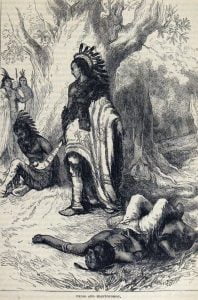
Uncas and Miantonomoh

The Mahican Indians occupied Litchfield County’s northwest corner while the Mohegan, a distinct tribe of the Algonquian stock, settled primarily in the upper Thames River valley. The Mohegan played a significant role in the Pequot War, with Uncas, their chief, rising in prominence after the Pequot’s defeat. Other tribes like the Nipmuc and Pequot also inhabited Connecticut, with the latter known for their destructive conflicts with settlers. Native populations significantly declined due to wars and colonization impacts, yet some remnants still exist today.

From Poughkeepsie to Kingston along the Hudson River

Traveling along the Hudson River from Poughkeepsie to Kingston, one encounters the Poughkeepsie Bridge, a remarkable cantilever structure completed in 1888. The journey reveals significant landmarks such as Highland Village, Hyde Park, and notable residences. The historical city of Kingston, once known as Esopus, played a role in early American governance and retains many historic buildings. The area showcases the beauty of the river and its surrounding scenery, offering a picturesque setting enriched with geological history and cultural significance.