
Collections of the New Hampshire Historical Society

1892 Map of New Hampshire

The Collections of the New Hampshire Historical Society is a 15 publication series documenting the state’s history through various primary sources, including manuscripts, letters, and public records. It collates valuable narratives that were previously difficult to access, providing insight into events, individuals, and communities in New Hampshire. Each volume offers focused topics and historical analyses, and most volumes contain individual indexes.
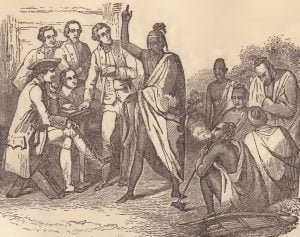
Treaty of 10 December 1850 – Texas Indians

In a historic meeting on December 10, 1850, near the headwaters of Wallace Creek, Special Agent John H. Rollins forged a pivotal peace treaty with the chiefs of numerous Texas Indian tribes. This landmark agreement, aimed at establishing peace and defining relations between the U.S. government and these tribes, covers a wide array of commitments from acknowledging U.S. jurisdiction to regulating trade, ensuring mutual peace, and setting forth guidelines for the return of prisoners and stolen property. With the original treaty held in Washington and a copy in the Texas State Library, this document remains a crucial piece of history in understanding the complex relationships and negotiations between Native American tribes and the expanding United States.

1859 List of Munsee from Leavenworth County Kansas

This list was adapted for the web from a photocopy of a two-page typed document possessed by the family of Clio Caleb Church. Since it has no official heading or signature, the document appears to be someone’s transcription of an original report to the Office of Indian Affairs, Department of the Interior. Likely this is a census of the Munsee who were moving from Leavenworth County to the new reservation in Franklin County, coinciding with the Treaty of 1859. It is not an enrollment list — it includes non-Indian spouses and there are no enrollment or allotment numbers. The document lists the person’s name, sex, and age, grouped by family unit.

Cherokee Proposals for Cession of their Land

In a series of letters dated from December 1820 to January 1821, Cherokee leaders, particularly from Creek Path Town, express concerns over land rights and representation within their nation. They appeal to Major General Andrew Jackson for assistance in securing a defined tract of land, fearing future dispossession by upper-nation chiefs and highlighting their exclusion from council decisions. They also request a fair distribution of treaty annuities, reflecting their long-standing grievances and the hope for a secure future on their ancestral lands.

Signers of Native American Treaties

Treaty with Five Nations

This unique database comprises a list of all signers of each specific treaty, whether the signer be white or Native American. To search for a white ancestor, place their name in the Surname and/or given (first) name below. To search for a Native American ancestor try the Indian and Other searches, each one separately.

The Robinson Treaties

In 1850, the Government of the Province of Canada, recognizing the mineral wealth along Lakes Huron and Superior, tasked William B. Robinson with negotiating treaties to extinguish Indigenous land titles. The Robinson Treaties established annuities, land reserves, and hunting rights for local tribes. Robinson adeptly addressed Indian concerns, particularly regarding compensation for mining rights, securing an agreement of £4,000 and an annual £1,000 annuity. His negotiations included significant participation from both Indigenous leaders and half-breeds, ultimately fostering a cordial relationship among the parties involved.

The Qu’appelle Treaty, Or Treaty Number Four

The Qu’Appelle Treaty, established in 1874, involved the Cree and Saulteaux tribes surrendering approximately 75,000 square miles of land at Qu’Appelle Lakes. This treaty marked a vital step in fostering relations between the Indigenous tribes and the Canadian government. It aimed to address the lawlessness in the North-West Territories, leading to the establishment of local governance and law enforcement. The treaty was signed after considerable negotiation, ultimately granting the tribes terms similar to those of Treaty Number Three, including supplementary agreements with previously unrepresented bands.

The Qu’appelle Treaty, Or Number Four – Afternoon Conference

At the Qu’Appelle Treaty conference, Chiefs presented themselves to Lieutenant-Governor Morris, seeking terms similar to those at the Lake of the Woods. Morris explained the differences in payments due to varying conditions and reiterated the Queen’s commitments to both nations. Despite requests for increased compensation, Morris asserted they could only offer the same terms as before. After discussions, the Chiefs signed the treaty, grateful for the support offered. Morris emphasized the importance of friendship and the Queen’s justice towards all her children.

The Qu’appelle Treaty, Or Number Four – Fifth Day’s Conference

On September 14, Lieutenant-Governor Morris addressed the Cree and Saulteaux, emphasizing the importance of unity and understanding between the two nations. He expressed concern about the lack of communication from their leaders and urged them to consider the needs of their distant brethren. Morris reiterated the government’s neutrality regarding trade rights, stressing the Queen’s intentions for the well-being of the Indigenous peoples. He called for a thoughtful resolution, expressing hope that they would come together to discuss their lands and future with sincerity and goodwill.

The Qu’appelle Treaty, Or Number Four – First Day’s Conference

At the opening of the conference, Commissioners welcomed the Indigenous leaders, notably noting the absence of Chief Cote, the Pigeon, of the Saulteaux tribe. The Lieutenant-Governor emphasized the Queen’s desire for communication and cooperation, urging the tribes to select spokespeople for negotiations about land and support. The Cree expressed uncertainty on representation, promising to decide by the next day. They were reminded of the importance of choosing a suitable place for their gathering, fostering a sense of community as the discussions began.

The Qu’appelle Treaty, Or Number Four – Sixth Day’s Conference

During the Sixth Day’s Conference regarding the Qu’Appelle Treaty, Lieut.-Governor Morris emphasized his role as a listener to the Cree and Saulteaux leaders, expressing a desire for mutual understanding. Chiefs shared their concerns and aspirations, seeking assurances from the Queen for support and assistance. The discussion highlighted the importance of clear communication and the need for a treaty beneficial to both tribes. The chiefs showed unity in their desire to finalize the treaty, ensuring it would also represent the absent members of their nations.

The Qu’appelle Treaty, Or Number Four – Hudson Bay Company

The dialogue between Lieutenant-Governor Morris and The Gambler reveals deep tensions over land rights of Indigenous peoples and the Hudson Bay Company (HBC). The Gambler expresses frustration over the HBC’s influence and the lack of communication regarding land surveys. Morris asserts the Queen’s authority in land management and emphasizes that the Company operates under her permission, seeking a resolution that honors both the Indigenous peoples and the Company’s rights. The conversation highlights the complexities of colonial authority, Indigenous agency, and the promise of fair dealings from the Crown.

The Qu’appelle Treaty, Or Number Four – Fourth Day’s Conference

On September 12, 1874, a meeting was held between the Indian delegates—two Cree and two Saulteaux—and the Queen’s Commissioners, led by the Lieutenant Governor. The Indigenous leaders requested to meet away from the soldiers’ camp for open dialogue. The Governor conveyed the Queen’s message, emphasizing her care and support for Indigenous peoples, offering land, tools for farming, and schooling for their children. However, tensions arose as some leaders hesitated to engage fully due to unresolved matters, highlighting the complexities of the treaty discussions.

The Qu’appelle Treaty, Or Number Four – Third Day’s Conference

On September 11, 1874, the Cree leaders convened with government Commissioners, though the Saulteaux Chief was absent. The Lieutenant-Governor conveyed the Queen’s message, expressing her concern for the Indigenous peoples’ hardships and offering support. He proposed assistance in learning agricultural practices, annual monetary aid, and provisions for establishing homes and schools. He emphasized the Queen’s care for future generations and urged the Cree to consider this opportunity thoughtfully before returning to discuss further. The meeting aimed to solidify an agreement through mutual cooperation.

The Qu’appelle Treaty, Or Number Four – Second Day’s Conference

On September 9, 1874, Lieutenant-Governor Morris addressed the Cree and Saulteaux leaders, emphasizing the importance of establishing a treaty with the Queen’s representatives. He expressed disappointment at the Saulteaux’s absence, urging them to engage in discussions vital for their future generations. While some chiefs indicated they weren’t ready to speak, Morris sought a commitment to meet the next day. He underscored the Queen’s consideration for their well-being and the need for unity among the tribes before moving forward with the treaty.

The Manitoulin Island Treaty – Great Manitoulin Island

In 1862, the Government of Canada sought to establish a treaty with the Indigenous inhabitants of Great Manitoulin Island to facilitate land settlement. Honorable William McDougall led the negotiations, facing initial resistance but ultimately achieving an agreement. The treaty allowed for the surrender of most land on the island for settlement, while preserving certain areas for the Indigenous peoples. Excluded from the agreement were regions east of Heywood Sound and the Manitoulin Gulf. This treaty aimed to improve living conditions for the Indigenous communities while opening land for new settlers.

The Stone Fort and Manitoba Post Treaties

In 1871, Joseph Howe proposed the appointment of Wemyss McKenzie Simpson as Indian Commissioner to negotiate land cessions with the Indigenous bands between Thunder Bay and the Stone Fort. Simpson, alongside S. J. Dawson and Robert Pether, consulted with Manitoba’s Lieutenant-Governor A. G. Archibald and influential half-breed James McKay. Responding to Indigenous unease over settlers and land claims, they aimed to secure treaties, addressing the extinguishing of Indian title to lands in Manitoba and adjacent timber areas. Negotiations were set to take place at Lower Fort Garry.

The Stone Fort and Manitoba Post Treaties – Second Day

During the second day of the treaty conference, Indigenous leaders expressed their concerns about the imprisonment of four Swampy Cree Indians, which clouded the discussions. After their release, the atmosphere improved, leading to a treaty on August 3, 1871, that involved relinquishing Indian title for land reserves, school provisions, and a modest annuity. A follow-up meeting at Manitoba Post confirmed acceptance of these terms with minimal negotiation. However, misunderstandings regarding unfulfilled promises later necessitated a revision of the treaties in 1875.

The Stone Fort and Manitoba Post Treaties – Proclamations

In July and August 1871, Mr. Simpson announced meetings at Stone Fort to negotiate an Indian treaty, with a proclamation banning liquor sales during these talks. The first assembly on July 27 attracted a thousand Indigenous people, where Lieutenant-Governor Archibald emphasized the Queen’s intent to treat all her children equally and promote their well-being. He encouraged adopting agricultural practices while ensuring Indians retained their rights to hunt. The gathering set the stage for discussions on land reserves and representation, fostering an atmosphere of fairness and open dialogue.

The Blackfeet Treaty – Fort Pitt, September 8th, 1876

Constantine Scollen, a missionary with experience among the Cree and Blackfeet, writes to the Governor of Manitoba about the Blackfeet’s declining condition due to alcohol and smallpox. He argues for a treaty to secure their future as settlers encroach on their lands and highlights their fears of losing sovereignty. By 1877, Treaty negotiations began, leading to a satisfactory conclusion and the establishment of trust between the Blackfeet and the Canadian government, reflecting a commitment to their welfare amidst changing circumstances.