
Treaty of March 29, 1836

On March 29, 1836, a treaty was signed on the Tippecanoe River in Indiana between U.S. Commissioner Abel C. Pepper and Pottawatamy Chief Wau-ke-wa Che-coses. The treaty involved the cession of four sections of land to the United States, with the chief’s band agreeing to vacate the land within three months and relocate to the designated Pottawatamy territory west of the Mississippi within two years. In return, the United States promised a payment of $2,560. The treaty would be binding upon ratification by the President and Senate.
Treaty of October 16, 1826

On October 16, 1826, the United States, represented by Lewis Cass and others, reached a treaty with the Potawatamie Tribe near the Mississinewa River. The agreement involved the cession of significant tracts of land in Indiana, alongside commitments from the U.S. for annual payments, educational support, and provisions for a mill and blacksmith services. Additionally, a strip of land was ceded for road construction. Various grants of land were allocated to individuals connected to the Potawatamie, and hunting rights were affirmed.

Treaty of October 20, 1832 – Potawatomie

The Treaty of October 20, 1832, between the United States and the Potawatomi Tribe, formalized the cession of a substantial tract of land in Indiana. Key provisions included the reservation of specific sections for individual tribe members and an annuity of $15,000 for twenty years. Additionally, the treaty outlined compensation for claims against the Indians and allowed for hunting and fishing rights on ceded lands. This agreement marked a significant shift in Potawatomi land ownership and highlighted the tribe’s loyalty during previous conflicts.

Treaty of April 22, 1836 – 2

On April 22, 1836, a treaty was established between U.S. Commissioner Abel C. Pepper and leaders of the Patawattimie tribe. The tribe ceded ten sections of land previously reserved in 1832 to the United States in exchange for $6,400, to be paid after ratification. The chiefs agreed to relocate west of the Mississippi within two years. The treaty would become binding upon its ratification by the U.S. government. Signatories included both tribal chiefs and witnesses, marking a critical moment in Patawattimie history.

Treaty of March 26, 1836

On March 26, 1836, a treaty was signed between the United States and Mes-quaw-buck, chief of the Pottawatamy tribe, at Turkey Creek Prairie, Indiana. The Pottawatamy ceded four sections of land to the U.S. in exchange for $2,560 and the promise to cover treaty expenses. The tribe agreed to peacefully vacate the land and relocate west of the Mississippi within two years. This agreement was binding upon ratification by the U.S. President and Senate, as evidenced by the signatures of the parties involved.

Treaty of December 17, 1834

On December 17, 1834, a treaty was established at Logansport, Indiana, between U.S. Commissioner William Marshall and Mota, chief of the Potawattimie tribe. The treaty required the tribe to cede land previously reserved for them and agree to relocate west of the Mississippi River within three years. In return, the United States promised to assist in their relocation, provide necessary goods, and offer financial compensation. The treaty’s ratification binds both parties to its terms, as evidenced by the signatures of the chief and his head men.

Treaty of September 23, 1836

On September 23, 1836, a treaty was signed at Chippe-way-naung between the United States, represented by Abel C. Pepper, and the Potawattamie chiefs of the Wabash. This agreement involved the cession of Potawattamie lands in Indiana, with the United States agreeing to pay $1.25 per acre, totaling $33,600, to be settled by May 1, 1837. The Potawattamies committed to relocate west of the Mississippi within two years. The treaty also included provisions for debt payments and stipulated its binding nature upon ratification.

Treaty of September 22, 1836

On September 22, 1836, a treaty was established at Chippewanaung, Indiana, between U.S. commissioner A. C. Pepper and Mo-sack, chief of the Potawattimie tribe. The tribe ceded four sections of land to the U.S. in exchange for $3,200, to be paid by May 1, 1837. The Potawattimie agreed to relocate west of the Mississippi within two years. Additionally, a commissioner would be appointed to settle the tribe’s debts. The treaty would take effect once ratified by the President and Senate.

Treaty of September 20, 1836

On September 20, 1836, a treaty was established between the U.S. government, represented by Abel C. Pepper, and the Patawattimie tribe, led by chiefs Me-mat-way and Che-quaw-ka-ko. The tribe ceded ten sections of land and agreed to relocate west of the Mississippi within two years, in exchange for an $8,000 payment. Provisions for settling the tribe’s debts and covering treaty expenses were included, making the treaty binding upon ratification by the U.S. President and Senate.

Treaty of August 5, 1836

The Treaty of August 5, 1836, established an agreement between the U.S. government and Potawattimie chiefs, whereby the tribe ceded 22 sections of land. In exchange, the United States promised to pay $14,080 and facilitate the tribe’s removal to land west of the Mississippi within two years. A commissioner would be appointed to settle the tribe’s debts from the treaty amount. The treaty, signed by various chiefs and witnesses, would take effect upon ratification by the President and Senate.

Treaty of April 22, 1836

On April 22, 1836, a treaty was established between the U.S. government, represented by commissioner Abel C. Pepper, and the chiefs of the Potawattimie tribe. The tribe ceded three sections of previously reserved land in exchange for $1,920 and agreed to relocate west of the Mississippi within two years. The treaty mandated payment for its execution expenses, and became binding upon ratification by the President and Senate, with both parties’ leaders affixing their marks as witness to the agreement.

Treaty of October 27, 1832 – Potawatomi

On October 27, 1832, a treaty was signed between U.S. commissioners and Potawatomi leaders at Tippecanoe River. The Potawatomi ceded lands in Indiana, Illinois, and Michigan, retaining specified reservations for various bands and individuals. In return, the U.S. committed to annual payments and goods, totaling $15,000 for twelve years and additional provisions for education and individual land grants. The treaty was contingent upon ratification by the President and Senate, marking a significant moment in the shifting landscape of Native American land rights.

Treaty of October 26, 1832 – Potawatomi

On October 26, 1832, a treaty was signed between U.S. commissioners and the Potawatomi Indians at Tippecanoe River, Indiana. Key agreements included the cession of land in exchange for an annual annuity of $20,000 for twenty years, $100,000 worth of goods, and the payment of debts amounting to over $62,000. Specific reservations were designated for various Potawatomi bands, and provisions were made for relocating tribes if desired. This negotiation marked a significant moment in U.S. relations with Native American communities.

Potawatomi Reservation

In August and September 1890, Special Agent Reuben Sears reported on the Pottawatomie, Kickapoo, Iowa, Chippewa, and Munsee reservations in Kansas. He noted that while the Pottawatomie population was 402, many faced health challenges, including scrofula and lung diseases. Their homes were well-furnished, and they engaged in farming and livestock raising, with a desire for modernization. However, traditional beliefs hindered population growth. The land varied in quality, affecting agricultural productivity. One-third were Roman Catholic, while others retained indigenous beliefs. Agency buildings were valued at approximately $7,000.

Sac and Fox Reservation

In a report from September 1890, Special Agent Reuben Sears detailed the conditions of the Sac and Fox Reservation in Iowa, inhabited by the Sac, Fox, Pottawatomie, and Winnebago tribes. The unallotted area occupies 1,258 acres, owned in fee by the tribes, yet their economic situation is dire, burdened by debt. Despite reasonable health, their living conditions and cultural practices indicate minimal advancement in civilization. Sears called for increased support and education for the tribe, emphasizing the need for agricultural assistance and improved living standards.

Pottawatomie Indians

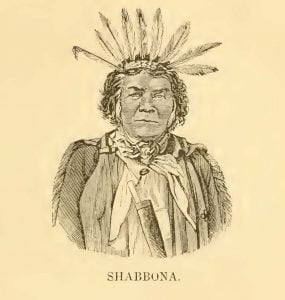
Shabbona

The Pottawatomie Indians, known by various names across different tribes, are part of the Algonquian linguistic family and originally inhabited Michigan’s lower peninsula. Their history reflects a gradual migration from the Great Lakes region, establishing settlements in Illinois, Indiana, and later Kansas and Oklahoma. By the 19th century, they faced significant land loss due to encroaching settlers. Today, the Pottawatomie exist in distinct bands, primarily in Oklahoma and Kansas, with historical significance marked by their connections to local geography.

Treaty of June 5 and 17, 1846

The treaty of June 5 and 17, 1846, formalized the unification of various Pottowautomie bands into a single nation, acknowledging their shared heritage. The agreement allowed these tribes to cede their lands to the United States for $850,000 and established new territories along the Kansas River. It stipulated support for their relocation, including funds for removal and subsistence. The treaty also committed to maintaining peace and friendship, ensuring the Pottowautomie Nation’s recognition and rights in their new homeland.

Treaty of August 19, 1825

The Treaty of August 19, 1825, aimed to foster peace among several Native American tribes, including the Sioux, Chippewa, Sacs and Fox, and others, amidst ongoing conflicts. Appointed commissioners William Clark and Lewis Cass convened at Prairie des Chiens to establish boundaries and promote mutual conciliation. The treaty outlined a series of articles ensuring a perpetual peace among tribes, the establishment of territorial boundaries, and mutual rights for hunting and land claims. It emphasized the United States’ controlling power while allowing tribes agency in their affairs.

Treaty of August 25, 1828

On August 25, 1828, commissioners from the United States established a temporary agreement with the Winnebago and United Tribes of Potawatamie, Chippewa, and Ottawa Indians regarding land in Illinois and Michigan. Due to the impracticality of convening the tribes for a land cession, a provisional boundary was defined, allowing U.S. occupation until a formal treaty could be negotiated in 1829. The U.S. also agreed to provide $20,000 in goods to the tribes as compensation for previous damages caused by white settlers.

Treaty of August 29, 1821

The Treaty of August 29, 1821, was signed in Chicago between U.S. Commissioners Lewis Cass and Solomon Sibley and representatives of the Ottawa, Chippewa, and Pottawatamie tribes. The treaty involved the cession of significant land to the United States while reserving specific tracts for tribal use. It also established annual payments for the tribes and provisions for education and agricultural support. Furthermore, it allowed the U.S. to create roads through Indian territories. The treaty aimed to formalize relations with the tribes amidst westward expansion.