Indian Wampums

Reading The Wampums

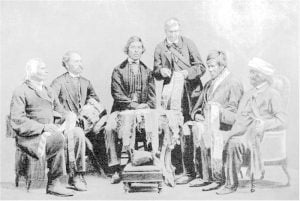
The post highlights the Indian tribes’ reliance on oral traditions and wampum as vital historical records, given their lack of written language. These wampums, made of beads and symbols, conveyed their history and values to future generations. The account emphasizes the loss of authentic Indian history due to extermination and the importance of wampum in preserving their past, including treaties and significant events like the formation of the Iroquois Confederacy. Ultimately, it reflects on the tragic decline of Native American civilization and its cultural heritage.
The Discovery Of This Continent: It’s Results To The Natives

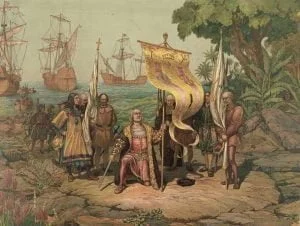
Columbus Landing on Hispaniola

In 1470, Christopher Columbus married Dona Felipa, daughter of a renowned navigator, and settled in Porto Santo, where they shared dreams of discovering lands to the West. Their ambitions fueled Columbus’s determination, leading to his 1492 voyage that resulted in the European discovery of the Americas. However, this event marked the beginning of devastation for native peoples, introducing warfare, disease, and colonization that would decimate their populations and cultures, ultimately transforming their rich, diverse societies into shadows of their former selves.

Native Americans in the Revolutionary War

colonelzebulonbutler

During the Revolutionary War, Native Americans found themselves in a complex position, with both the British and American sides vying for their allegiance. While the British secured many tribes through established relationships and resources, the Americans attempted to win their favor through treaties and gifts, ultimately failing to make significant impacts. Notably, tribes like the Cherokees and the Six Nations often sided with the British, resulting in violent conflicts and retaliatory expeditions by American forces. The war brought unprecedented cruelty, with massacres affecting both sides and deepening animosities.

Origin and History of the Oneidas

Oneida Stone

The Oneida, part of the Iroquois nation, trace their origins to Onondaga, where they reportedly began as two individuals who settled by the Oneida River. They later fortified their position near Oneida Lake, cultivating their tribe. The Oneida stone, a significant rock in their history, became a symbol of their identity, representing the tribe’s connection to the land and its traditional council fire. Their history includes pivotal participation in the Revolutionary War, agriculture, and eventual migration to Wisconsin, where they continue to thrive today.

Oneida Vocabulary

The provided vocabulary list includes essential words and phrases in Oneida, covering various aspects of daily life, emotions, numbers, and actions. Key entries range from common terms like “life” (Yun ha) and “death” (Ya wu ha yah) to numbers, basic verbs, and descriptors of condition (e.g., cold – Yutholah, hot – Yu ta le han). The list facilitates an understanding of the Oneida language and includes both singular and plural forms for personal pronouns, offering a glimpse into the cultural and linguistic richness of the Oneida people.

Letter from Mr. Richard U. Shearman to Henry R. Schoolcraft

In a letter dated October 4, 1845, Richard U. Shearman informs Henry R. Schoolcraft about his enumeration of the Oneida Indians, detailing their living conditions and noting that the tribe consists of 31 families, totaling 157 individuals. Shearman describes the well-constructed homes of the Oneidas and their agricultural practices, highlighting their self-sufficiency. He also mentions his completion of an Indian vocabulary based on the input from an interpreter, despite challenges in accurately representing the sounds of their language.

Exhibit A – First Christian Party of Oneida Indians Report

Exhibit A details the Second Oneida Purchase of 1829, listing various land transactions involving multiple purchasers and the associated costs. It provides acreages, prices per acre, and total amounts paid, along with a valuation of the lands. Additionally, the document includes references to subsequent sales and confirmations from officials, notably involving the First Christian Party in Duck Creek, Wisconsin Territory, who received compensation for 100 acres sold under specific legislative resolutions. This highlights the intersection of land transactions and governance affecting the Oneida community.

Exhibit B – First Christian Party of Oneida Indians Report

The Oneida Purchase of 1824, documented in a resolution from April 1826, outlines the sale of various lots totaling approximately 2,912 acres. Each lot’s acreage, value per acre, and total value are specified, along with the names of purchasers and the amounts paid. Notably, this report provides a detailed financial record of the land transactions, indicating significant activities within the land office during that period. The total value of the purchases amounts to $25,367.30.

First Christian Party of Oneida Indians 1849 Report

The New York Senate Committee on Indian Affairs reported on the petition from the First Christian Party of Oneida Indians for financial relief regarding two significant claims. The first claim seeks interest on $1,504 owed since 1832, reflecting the state’s profit from land sales under a treaty. The second claim concerns the $1,300 and interest from the sale of lot No. 31, arguing the funds were not included in previous appropriations. The committee supports the first claim but denies the second, recommending the funds be used for the benefit of the Oneida community.

Five Nations Burial Customs

In the early 18th century, the Iroquois, or Five Nations, practiced distinctive burial customs reflective of a belief in an afterlife. They often placed bodies in upright positions within mounds, covering them with timber and earth, and adorned the graves with fine clothing and goods like wampum. Regular visits to the graves by relatives were customary, and mounds varied in size across regions. Significant burial sites have been discovered, including prominent graves of figures like Red Jacket, showcasing the spiritual importance of these rituals among the Iroquois.

Treaty of October 22, 1784

On October 22, 1784, at Fort Stanwix, representatives from the United States and the Six Nations signed articles of agreement aimed at establishing peace. The terms included the delivery of hostages by the Six Nations until captured individuals were returned, protection for the Oneida and Tuscarora lands, and the definition of new territorial boundaries, which the Six Nations agreed to cede. Furthermore, the U.S. pledged to provide goods to support the Six Nations in light of their circumstances, illustrating a commitment to humanitarian aid.

Agreement of April 24, 1792

On April 23, 1792, President George Washington ratified an agreement with the Five Nations of Indians, which included the Seneca, Oneida, and others. The United States committed to investing $1,500 annually for their welfare, facilitating access to clothing, livestock, and farming tools, and encouraging skilled craftsmen to settle in their villages. This initiative aimed to promote the prosperity and happiness of these tribes. The agreement was formalized with Washington’s signature and the affixing of the United States seal, underscoring the government’s commitment to these nations.

Treaty of December 2, 1794

On December 2, 1794, a treaty was signed between the United States and the Oneida, Tuscorora, and Stockbridge Indians in recognition of their loyalty and support during the recent war against Great Britain. The treaty stipulated compensation, including $5,000 for individual losses, the construction of mills to support their communities, and funding for a church. In return, the tribes relinquished further claims for compensation, except for certain outstanding military commissions, marking a step towards acknowledging their sacrifices and rebuilding their lives post-war.

Treaty of November 11, 1794

On November 11, 1794, a treaty was proposed between the United States and the Six Nations of Indians to establish perpetual peace and friendship. The treaty acknowledged the land rights of the Oneida, Onondaga, Cayuga, and Seneca nations, while guaranteeing their property and allowing the U.S. to build roads through their territories. The U.S. committed to providing annual goods valued at $10,000 to support the Six Nations. Disputes were to be resolved through mutual complaint, fostering ongoing relations between the parties. However, the treaty was never ratified by the Senate.

Agreement of August 23, 1792

On April 23, 1792, President George Washington ratified an agreement with the Five Nations of Indians, which included the Senecas, Oneidas, and Stockbridge tribes, among others. The United States pledged to allocate $1,500 annually for the purchase of essential goods such as clothing and agricultural tools to enhance the well-being of these tribes. This agreement aimed to foster positive relations and support the development of useful trades within their communities, underscoring early American efforts towards diplomacy and cooperation with Indigenous peoples.

Treaty of January 15, 1838

On January 15, 1838, a treaty was ratified at Buffalo Creek between the United States and New York Indian tribes, including the Seneca, Cayuga, Onondaga, and others. This treaty facilitated their relocation to designated lands in the Indian Territory, in recognition of their dwindling lands in New York due to white settlement. The U.S. committed to supporting their transition with land allotments and financial assistance. This agreement marked a significant step in the federal policy of relocating Native American tribes westward, reflecting both hope for their future and the pressures of expansion.

Treaty of February 3, 1838

On February 3, 1838, a treaty was signed in Washington between the U.S. government and representatives of the Oneida Indians, specifically the First Christian and Orchard parties. The treaty involved the cession of their land claims in exchange for monetary compensation totaling $33,500, intended to reimburse expenses and support community needs, including building a church. It also reserved 100 acres per individual for their settlements. The U.S. took responsibility for treaty-related expenses, with the agreement becoming binding upon ratification.

Wisconsin Oneida Land Patents

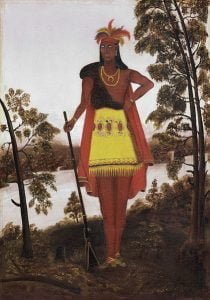
Oneida Chieftain Shikellamy

This document, compiled by Judy White, lists the land patents granted to members of the Wisconsin Oneida Tribe, detailing the names, dates, and respective document and accession numbers for each patentee. It serves as a comprehensive record of land ownership within the tribe, highlighting significant historical transactions and the individuals involved in these land grants. The data spans from 1908 to 1926, reflecting the tribe’s ongoing relationship with land tenure and the legal frameworks surrounding it.

Census of Oneida Indians at Onondaga Reservation, New York, 1896

A June 1896 census of the Oneida Tribe at the Onondaga Reservation in New York lists 173 people recorded for the United States Indian Agent. The roster includes families such as Antone, Bread, Doxtator, George, Johnson, Powles, Scanandoah, and Webster, offering a detailed snapshot of the community at that time.