The More Farm, The Eel River Post

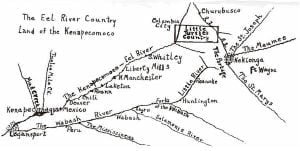
Map of Eel River Country

The More Farm, once owned by early settler Alexander More, is a significant historical site near Eel River. It features a defensible hill and remnants of a trading post, believed to have been established with the help of French or British traders. The site played a crucial role in trade and conflict involving local tribes, particularly under the influence of Little Turtle. After his death, the fort was destroyed during the War of 1812, marking the end of its prominence, yet it remains a key point in local history.
Little Turtle at the Treaty of Greenville

At the Treaty of Greenville in 1795, Chief Little Turtle, a prominent Miami leader, passionately defended his people’s ancestral lands during negotiations with General Wayne. Despite his eloquent pleas, he reluctantly signed the treaty, recognizing the inevitability of American expansion. Afterward, he received government support to transition his people from hunting to agriculture, though this effort largely failed. Throughout his life, Little Turtle advocated for vaccination against smallpox and campaigned against alcohol, seeking to protect his people from its devastating effects. His endeavors, however, met with limited success.

KE-NA-PE-COM-A-QUA

Kenapecomaqua, a significant Miami Indian town in Indiana, thrived for over a century along the Kenapocomoco River, known for its role in early conflicts with settlers. In 1790, Antoine Gamelin’s peace efforts failed there as tensions escalated. General Wilkinson led a punitive expedition in 1791, destroying the village and capturing prisoners. Notable leaders like Shamekunnesa and Charley emerged over the years, engaging in treaties with the U.S. The village’s decline followed white settlement in the 1830s, though its legacy endured in local lore and names.

Little Turtle as a Traveler

Little Turtle was a prominent traveler and leader in the Northwest Territory, intimately familiar with Indian trails and key villages. His diplomatic efforts included attending treaties and visiting figures like Presidents Washington and Jefferson, earning recognition for his statesmanship. Throughout his life, he maintained a commitment to peace, despite strains with his own people and later challenges from the encroaching white settlers. Little Turtle’s legacy includes his influence on Indian policy and his relationship with Captain William Wells, his adopted son. He passed away in 1812, honored for his contributions.

The Early Life of Little Turtle

Michikinikwa, known as Little Turtle, was born in 1751 to the Miami chief Aquenackque, who played a significant role in early American history. Aquenackque led the Miamis in their resistance against the Iroquois and raised a family in Eel River, with Little Turtle eventually becoming a prominent chief. His leadership shone during conflicts with American settlers post-Revolutionary War, particularly in defeating General St. Clair. Despite earlier victories, Little Turtle advised peace after a series of defeats against General Wayne, indicating a pragmatic shift in the face of overwhelming opposition.

Indian Villages in the Eel River Valley

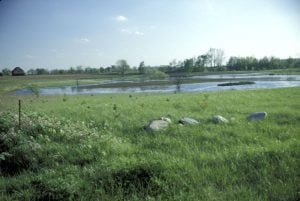
Eel River Bog

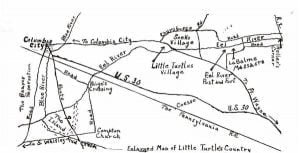
The exact location of Turtle Village remains debated. Calvin Young suggests it was near Blue River Lake in Whitley County, supported by historical evidence. However, Kilsoquah, Little Turtle’s granddaughter, claims it was at the bend of Eel River, lending credence to that site. The destruction of Eel River Post and surrounding villages marked the decline of Miami power, exacerbated by their defeat in the War of 1812. Additionally, The Island served as a strategic retreat for the Miamis against the Potawatomies, showcasing the area’s significance in early indigenous history.

Eel River Trail and Portage

This booklet seeks to illuminate the rich history of the Eel River region before white settlement began just over a century ago, highlighting the extensive Indian presence and trade routes vital to the area. The Kenapocomoco served as a significant trade highway, where battles between Americans and Indians unfolded, including key confrontations involving the renowned chief Little Turtle. It also recounts the tragic La Balme Massacre and the historical significance of trails connecting Kekionga with other Indian settlements, shaping the cultural legacy of the region.

Valley of the Genesee

The Genesee Valley, once a favored territory for the Indigenous peoples, featured a rich landscape of fertile flats bordered by gradually rising hills. These lands, abundant in natural resources, were home to numerous Indian villages. However, as European settlers encroached, they sought to purchase lands from the native inhabitants, often with little understanding of their value to the Indian way of life. The ensuing treaties, such as the one convened at Big Tree in 1797, highlighted the cultural disconnect and the complexities surrounding land ownership and rights between the two groups.

Expedition to the Indian country under General St. Clair

In response to ongoing Indian hostilities, Congress authorized a military expedition led by General St. Clair to restore security to frontier settlements. Departing in September 1791 with over 2,000 troops, St. Clair faced numerous challenges, including the poor quality of recruits and insubordination. After a slow advance and inadequate preparation, the army encountered a fierce surprise attack by Indians on November 3. The battle resulted in significant losses for the Americans, causing widespread insecurity on the frontier and emboldening further Indian attacks, ultimately prompting efforts for peace negotiations.

Indian Appropriation

During a visit to Philadelphia, Iroquois chiefs received an annual appropriation of $1,500 from Congress for their welfare and were engaged in a diplomatic mission to assure western tribes of U.S. intentions. The chiefs, including Red Jacket, were honored and appreciative of the support offered by President Washington to improve their lives. However, tensions persisted as some tribes, instigated by British agents, demanded the Ohio River as their boundary. Despite various councils and negotiations, hostilities continued until General Wayne’s decisive victory, which shifted the balance towards peace.

Pontiac’s War

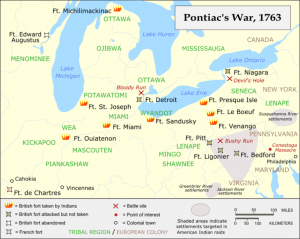
Map of Pontiacs War

In the early 18th century, French settlers cultivated strong ties with Native American tribes around the Great Lakes, contrasting sharply with the English. The Ottowa chief Pontiac emerged as a key figure in resisting British encroachment after they took over French territories in 1760. In a coordinated effort in 1763, Pontiac mobilized a coalition of tribes to assault British forts, notably seizing Michilimackinac. Despite early successes, his campaign ultimately faltered, and he met his end under uncertain circumstances, illustrating the tumultuous relations in post-colonial North America.

The Home of Little Turtle

Enlarged Map of Little Turtle's Country

The term “Ke-na-po-co-mo-co,” derived from the Miami Indian word Kenapekwamakwah, refers to the Eel River, named for its historical abundance of eels. The simplified spelling emphasizes pronunciation, yet some argue the original name possesses a poetic quality akin to other indigenous placenames. The post outlines the significance of the Eel River in connection to figures like Little Turtle and events related to early Indian settlements, offering insight into the region’s history and culture.