Plains Tribes Clothing

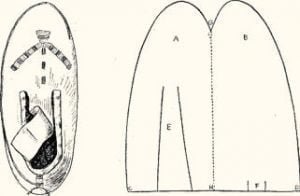
Fig. 47. Arapaho Moccasin with Symbolic Decoration.

In Plains tribes, men’s clothing was simple, often consisting of a breech-cloth and moccasins, with buffalo robes for public appearances. Women’s attire included a sleeveless dress made from deerskin or elkskin, with tribal variations in style. Hair was significant, commonly worn long, with men often featuring distinctive braids and women wearing their hair in two braids. Accessories such as beads and pendants were popular, with minimal tattooing and ear piercings. Overall, clothing and adornment reflected both cultural identity and practicality.
Physical Type of Plains Tribes

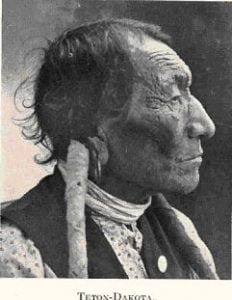
Teton Dakota

The physical characteristics of the Plains Indians reveal that they are primarily tall, with an average height ranging from 66 to 69 inches across various tribes. Most have a reddish chocolate skin tone and uniformly straight black hair. While no comprehensive studies on their anatomy exist, tribal facial features suggest notable differences among groups, influenced by intermarriage. The population in 1910 was approximately 50,208, with 70% identified as full-blooded. Overall, Plains Indians exhibit distinct traits but share similarities with other Native American groups.

Cree Indian Bands, Gens and Clans

The post details various divisions of the Cree, including sub-tribes, bands, and clans, with limited historical information on some. Notable divisions include Alimibegouek, possibly linked to the Chippewa, and Ayabaskawininiwug, known as the Wood Cree. The Bouscoutton are identified as the northernmost Cree division, while Cokah was a band of 100 lodges located at Lac Qu’appele in 1856. The affiliations and contemporary significance of these groups remain unclear.