
Yuchi Dancing

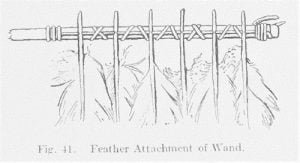
Fig. 41. Feather Attachment of Wand

During the second night of Yuchi ceremonies, various dances were performed around a central fire, predominantly featuring shuffling steps and movements mimicking animal actions. Male dancers held their arms to shield against heat, while women maintained a lower posture. Dancers were adorned with ornaments, including feathered decorations. The dance repertoire included the Feather Dance, Gun Dance, Duck Dance, and others, each reflecting cultural beliefs and communal involvement. The culmination of these festivities marked an essential spiritual renewal for the Yuchi community, closing with a lively Crazy Dance.
The Tablita or Corn Dance

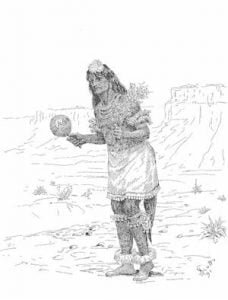
Male Pueblo Dancer

The Tablita or Corn Dance, held in San Domingo, New Mexico, serves as a ceremonial supplication for rain, showcasing the Pueblo’s vibrant culture. In August 1890, 200 dancers, adorned in elaborate costumes and painted with clay and colors, participated in this enduring ritual, marked by mass followed by traditional festivities. The dance emphasizes endurance and grace, with intricate movements synchronized to chants invoking clouds and rain. This communal event also features lighthearted clown performances and concludes with a spirited chicken race, celebrating cultural unity and resilience.