
Earliest Known Traders on Arkansas River
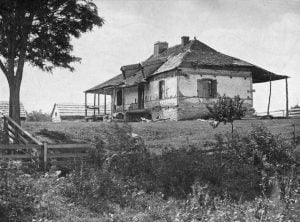
Country Home of Augustus Pierre Chauteau

Before the Louisiana Purchase, early French traders, notably Joseph Bogy, ventured along the Arkansas River, engaging in commerce with local Indian tribes, such as the Osage. Bogy’s expeditions included confronting Choctaw opposition in 1807, leading to government claims for losses. Prominent figures included Nathaniel Pryor and A. P. Chouteau, who established trading posts at the mouth of the Verdigris. These traders influenced the region’s economy, exchanging goods like furs and providing items such as tobacco and tools to Native Americans, fostering significant cultural exchanges.

North America Indian Names of Places in Mississippi, Alabama, Georgia, Florida, and Louisiana

The post examines the significance and origins of North American Indian place names in Mississippi, Alabama, Georgia, Florida, and Louisiana, particularly those derived from the Choctaw and Chickasaw languages. It highlights how these names reflect the rich cultural and linguistic heritage of the Native American tribes, while noting that many translations have become corrupted over time. The text provides numerous examples of place names alongside their original meanings, illustrating the deep historical connections embedded in the geography of the region.

Choctaw Traditions

The Papago tribe prophesied the return of their Messiah, Moctezuma, who would rescue them from suffering, a belief echoed in their open-door custom. The Choctaws shared unique traditions surrounding eclipses, believing them caused by a mischievous black squirrel. During eclipses, they would create loud disturbances to scare it away. Their historical mound, Nunih Waiyah, is venerated as a significant ancestral symbol, reflecting their migration story, while the Choctaws consistently asserted their origins as stemming from a distant land to the west.

Important Men of the Choctaw Indians

The Choctaw Nation has produced numerous significant figures throughout its history, notably Tush-ka Lu-sa, who valiantly defended his people against Spanish forces. While early documentation is scarce, many leaders have emerged from the 18th century onward, whose contributions to their community deserve recognition. This account aims to honor both the living and deceased Choctaw and Chickasaw men, emphasizing their dedication to improving their people’s welfare and the importance of preserving their legacies as examples for future generations.

Choctaw Nation and the Greer County Dispute

1818 Melish Map of the United States

The dispute over Greer County involves the Attorney General of the United States challenging Texas’s claims based on the 1819 Adams-Onís Treaty, which established boundaries between the U.S. and Spain. Despite the treaty, Texas has asserted jurisdiction over the territory in violation of U.S. treaty rights. The case seeks judicial clarification of whether the disputed land falls under U.S. or Texas authority, emphasizing historical claims stemming from significant early treaties and ongoing tensions regarding territorial rights and ownership.

The Meeting in 1811 of Tecumseh and Apushamatahah

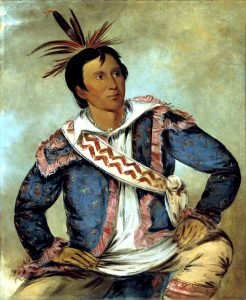
Peter Perkins Pitchlynn was the Choctaw Principal Chief from 1864-1866

In 1811, Tecumseh, the Shawnee leader, met with Apushamatahah, a prominent Choctaw chief, to rally southern tribes against American encroachment amidst looming war between the U.S. and England. Tecumseh passionately urged unity against their common foe, warning of the dire consequences of inaction. Apushamatahah countered with a call for prudence, advocating for peaceful measures. Ultimately, the council resulted in favoring American alliance, thwarting Tecumseh’s ambitions. This pivotal meeting highlighted the contrasting strategies of the two influential leaders, shaping tribal responses during a critical historical period.