Abington Massachusetts Birth Records

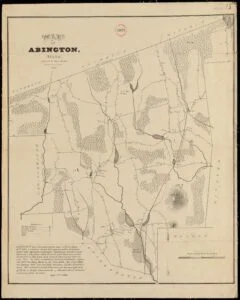
1830 Map of Abington, Massachusetts

Volume 1 of the Abington, Massachusetts vital records details births recorded in the town up to 1850, featuring comprehensive research from town records, cemeteries, and church documents. Established in 1712, Abington’s jurisdictional changes may affect genealogical searches. The records also include separate listings for Black families, primarily by given names. Additionally, various surnames are cataloged, emphasizing the need to consider alternate spellings. For marriages and deaths, researchers should consult Volume 2.

Weymouth ways and Weymouth people

Weymouth ways and Weymouth people

Edward Hunt’s “Weymouth ways and Weymouth people: Reminiscences” takes the reader back in Weymouth Massachusetts past to the 1830s through the 1880s as he provides glimpses into the people of the community. These reminiscences were mostly printed in the Weymouth Gazette and provide a fair example of early New England village life as it occurred in the mid 1800s. Of specific interest to the genealogist will be the Hunt material scattered throughout, but most specifically 286-295, and of course, those lucky enough to have had somebody “remembered” by Edward.

The Settlers of Narraguagus Valley Maine

Narraguagus Valley Some Account of its Early Settlement and Settlers

The early settlement of the Narraguagus River in Washington County, Maine, involved significant developments in nearby towns such as Steuben, Milbridge, Harrington, and Cherryfield. Established between 1791 and 1816, these towns evolved from former townships. Key early settlers included Jabez Dorman, John Densmore, Ichabod Willey, and Samuel Colson, who arrived around 1757. Their families contributed to the growth of the region, establishing roots and communal records that reflect the intertwined histories of these communities. Notably, many surnames from the early settlers persist in the area today.

Humboldt Mining Company

The Humboldt Mining Company, established in 1881 by Horose Sloan and others, oversees 320 acres near Canyon City known for its gold-rich old river channel. Previously worked since 1862, it averages nearly a million dollars in annual yield. The company has developed an 8½-mile ditch with a 1,000-inch water capacity and implemented advanced equipment, including giant hydraulic machinery and extensive piping. General manager Ira Sproul guides operations, which encompass significant adjacent creek bottom areas.

Biographical Sketch of Andreas L. Sproul

Andreas L. Sproul, born on February 18, 1863, in Annapolis County, Nova Scotia, is a notable business figure in Ontario. He began his maritime career at a young age, eventually becoming captain of the vessel David J. Adams. After moving to Grant County, Oregon, in 1887, he transitioned to sheep and horse farming before establishing the Ontario Livery and Feed Stable in 1894. Appointed postmaster in 1899, Sproul’s community involvement includes serving as a councilman and being nominated for sheriff. He is married to Ella Dale and has one son, Harold.