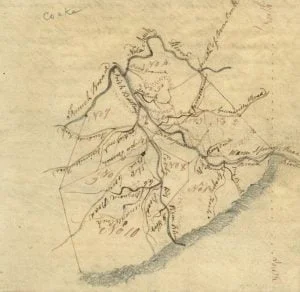
Essex County Massachusetts Probate Records 1665-1674
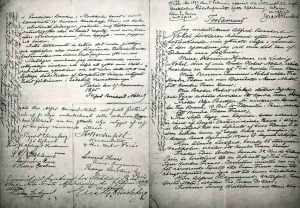
Sample Last Will and Testament

The “Governor and Company of Massachusetts Bay” established a judicial system in 1628, with a General Court in Boston and quarterly courts in major towns like Salem and Ipswich by 1635. These courts managed probate matters, and after Essex County’s formation in 1643, individual probate courts were later established in 1692. These are the probate records from 1665 to 1674, sourced from various original documents, including detailed wills and estate settlements.
Essex County Massachusetts Probate Records 1635-1664

Sample Last Will and Testament

The “Governor and Company of Massachusetts Bay” established a judicial system in 1628, with a General Court in Boston and quarterly courts in major towns like Salem and Ipswich by 1635. These courts managed probate matters, and after Essex County’s formation in 1643, individual probate courts were later established in 1692. These are the probate records from 1635 to 1664, sourced from various original documents, including detailed wills and estate settlements.
Genealogy of John and Christian Fretz

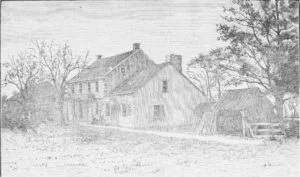
Old Fretz Homestead, Bedminster

A brief history of John and Christian Fretz and a complete genealogical family register, is a record of people who crossed an ocean for their beliefs, carved homes out of wilderness, and built churches where they could worship in peace. It’s brings to light the kind of history that’s often overlooked: the slow, steady work of building a life and heritage. In putting this record together, Rev. Fretz gave thousands of descendants a way to connect with their past, and a reason to be proud of it.

History of Natrona County, Wyoming

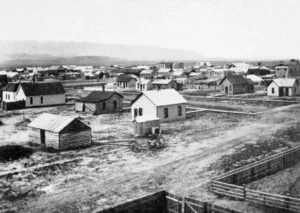
Casper Wyoming in 1894

For individuals researching ancestors who lived in Natrona County between 1888 and 1922, this book offers valuable context and potential leads. It includes names of county officials, war veterans, pioneers, and individuals involved in notable local events, as well as detailed accounts of institutions such as schools, churches, newspapers, and civic organizations. Descriptions of towns, industries, and public records provide insight into the communities where ancestors may have lived or worked. While not a genealogical record in and of itself, the book’s extensive local detail can help place family histories within the broader social and economic framework of the time. And who knows, perhaps your ancestor was one of the more colorful citizens portrayed…

1819 Cherokee Reservation List

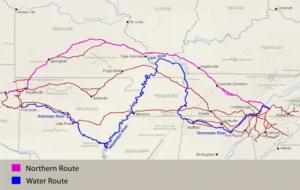
Map of the principal routes taken by Cherokee removal parties in the late 1830s.

This specific roll is of a list of 146 heads of families entitled to reservations under the Treaty with the Cherokee of the 27th February, 1819.

1838 Cherokee Muster Roll 1

The muster roll details the arrival of Lt. Deas and a large group of Cherokees to the West on May 1, 1838. While most were in the Northern Georgia area, some like William Davis and Robert Brown were from Alabama, and others like the Timberlake’s were from Tennessee.

Genealogies of Cornish New Hampshire

History of Cornish New Hampshire

Volume II of History of the Town of Cornish, New Hampshire, with Genealogical Record, 1763–1910, compiled by William Henry Child and published in 1911, presents a detailed genealogical account of the families who settled in Cornish from its founding through the early 20th century.

Ashfield Massachusetts Vital Records

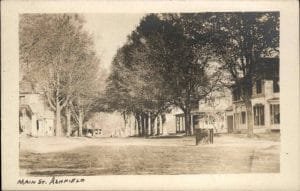
Main Street, Ashfield, Massachusetts

Alphabetical indexes to the vital records of Ashfield, Massachusetts, up to the year 1850, supplemented by information from bible records, church registers, cemetery inscriptions and other sources. PDF file is free to read and download.

Ridge Cemetery, Grant Township, Indiana

Ridge Cemetery, Waterloo, Indiana

Ridge Cemetery is off County Road 43 in Waterloo, Indiana. This book is one of an ongoing series of free cemetery books placing genealogies with cemetery monuments. The cemetery survey was conducted before 2009 as the book was compiled then. Some of the family pages detail several generations of genealogy for those buried in the cemetery.

Genealogy of Woodland, Idaho Families

Woodland Friends Church Sign

This book is based upon data secured by personal interviews and various other reliable sources of information concerning Woodland Idaho genealogy and history under the editorial supervision of Edna L. Egleston in 1944.

Shoalwater Bay Indian Tribe

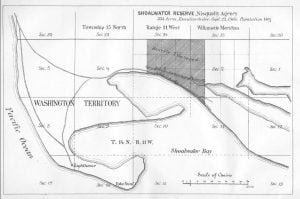
Shoalwater Reserve, Nisqually Agency

The Shoalwater Bay Indian Tribe resides in Pacific County, Washington, near Willapa Bay. Established by a Presidential Executive Order in 1866, their reservation encompasses 355 acres. The tribe, federally recognized since 1971, comprises descendants of various Native American groups, including the Lower Chehalis and Chinook. Historically, the tribe preserved their land and cultural practices by refusing an unfavorable treaty in 1855, thereby maintaining their fishing and hunting rights. The tribe’s constitution, ratified in 1971, solidified their sovereignty and aimed to protect tribal resources and identity.

Statement No. 10 – Samuel Mallet of Bay Center

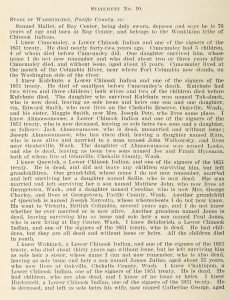
Statement No 10, part 1

In Statement No. 10, Samuel Mallet, a 76-year-old member of the Waukikum tribe, recounts the fates of various Lower Chinook Indians who signed an unratified treaty with the U.S. in 1851. Mallet details the lives and descendants of these individuals, many of whom have died without heirs, while others left surviving relatives located in Washington. His testimony offers a glimpse into the lineage and historical context of the Lower Chinook tribe’s connection to the treaty and their subsequent circumstances.

Lower Chinook, Kathlamet, Tillamook, and Clatsop Indians, Alive in 1906

In 1906, Charles E. McChesney compiled a list of the Lower Chinook, Kathlamet, Tillamook, and Clatsop Indians, along with their heirs, who had treaty agreements with the U.S. government since 1851. The document includes numerous names and corresponding addresses across various locations, such as Oregon, Washington, and California. This registration underscores the ongoing recognition of these tribes and serves as an important historical record of their existence and relocations during that period.

A Comprehensive History of Minnehaha County, South Dakota

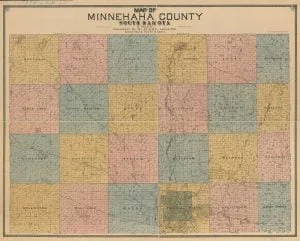
1893 Map of Minnehaha County, South Dakota

A Comprehensive History of Minnehaha County, South Dakota: Its Background, Her Pioneers, Their Record of Achievement and Development” by Charles A. Smith is an extensive and detailed chronicle of the county’s past, encapsulating its evolution from its earliest days. This work, published in 1958, spans 504 pages, elaborately documenting the county’s journey through various phases of development. Particularly noteworthy are the chapters on the City of Sioux Falls, which provide a comprehensive overview of its growth, municipal enterprises, public buildings, and transportation systems. As well, for genealogists, the few biographies in chapter 13 of part 1.

History of Ferndale and Ten Mile Townships, Washington

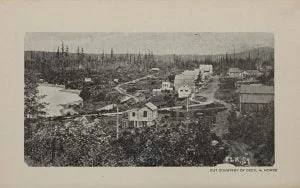
Elk Street, Morse Hardware

“Early History of Ferndale and Ten Mile Townships, Whatcom County, Washington,” authored by Chris C. Siegel and published by Cox Brothers & Williams, Inc. in Bellingham, Washington, in 1948, is an account of the early settlement and development of the Ferndale and Ten Mile townships. This book, spanning 110 pages, offers a detailed narrative focusing on the period from the arrival of the first settlers up until the year 1901, which coincides with the end of the author’s residence in the area. The continuation of the history beyond this point was intentionally left for future historians.

History of Buffalo New York

Buffalo Village from the Light House, 1828

“History of the City of Buffalo and Erie County” by Henry Perry Smith offers a comprehensive account of the development and significant events in Buffalo and Erie County, New York. Published in 1884 by D. Mason & Co. in Syracuse, New York, this two-volume work delves into the early settlement, growth, and transformation of the area. Volume II focuses on the history of Buffalo, New York. For the detailed history of Erie County, readers should refer to Volume I.

History of Erie County New York

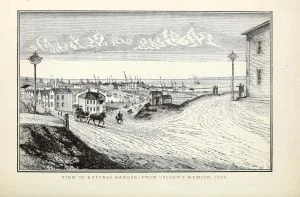
View of Buffalo Harbor, 1826

“History of the City of Buffalo and Erie County” by Henry Perry Smith, published in 1884, offers an extensive and detailed account of the development of Buffalo and Erie County. This two-volume work, enriched with illustrations and biographical sketches, serves as a comprehensive resource for understanding the historical progression of the region from its earliest days through the 19th century. Volume I focuses on the history of Erie County, New York, and its townships, excluding Buffalo. For the detailed history of Buffalo, readers should refer to Volume II.

The San Antonio Story

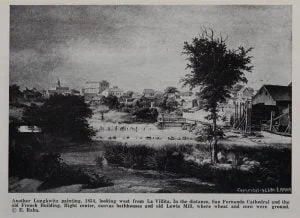
San Antonio Texas in 1854 looking west from La Villita

“The San Antonio Story” by Sam Woolford, with contributions from his wife Bess Carroll Woolford, is a history of San Antonio, Texas. Published in 1950 by Joske’s of Texas, the book was conceived as a remedy for the lack of historical knowledge among San Antonio’s school children, a concern identified by Herbert U. Rhodius, chairman of the Municipal Advertising Commission of San Antonio in 1948-49. Rhodius and his colleagues believed that a readable and authentic history could address this educational gap, making it suitable supplementary reading for public junior high schools.

Records of Ingham County Michigan Pioneer Families

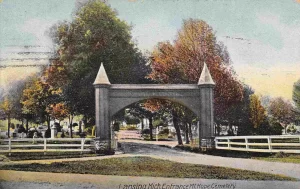
Entrance to Mt Hope Cemetery, Lansing, Michigan

These records were typed from manuscript copies of the original records made by George L. Hammell, which were willed to the Michigan State Library by Mr. Hammell of E. Lansing, Mich. who died Sept. 26, 1952. They consist of a variety of typed sources including Bible records, cemetery records, family records, and probate records for early families of Ingham County, Michigan.

Over the Misty Blue Hills: The Story of Cocke County, Tennessee

1836 Map of Cocke County, Tennessee

“Over the Misty Blue Hills: The Story of Cocke County, Tennessee,” written by Ruth Webb O’Dell and published in 1951, provides a historical account of Cocke County. The book covers various aspects of Cocke County’s history, including its political, social, religious, and industrial developments. The contents are divided into several detailed sections: the political history of Cocke County, the significance of local names, the natural resources and setting, early settlers, religious history, industrial development, and notable figures from the county. Additionally, it delves into specific family histories, offering insights into the lives of many influential families such as the Allens, Burnetts, Huff, McMahan, and many others.