Vital Records of Sheffield Massachusetts, 1733-1792

Map of Sheffield, Harstville, Southfield and New Marlborough Massachusetts

The vital records of Sheffield, Massachusetts from 1733 to 1792 detail the town’s historical births, marriages, and deaths. While names and dates are transcribed accurately, some wording has been abbreviated for clarity. Marriage records often specify the union of couples, while birth records typically include parental names. Notably, some families lack marriage entries, starting instead with a child’s birth. The records also document a few out-of-wedlock births, emphasizing lineage through parental names, even in adult death records.
History of the Town of Cornwall Connecticut

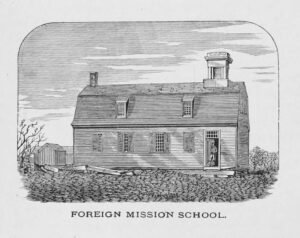
Foreign Mission School, Cornwall, Connecticut

The History of the Town of Cornwall Connecticut is a comprehensive account of the town’s evolution from colonial organization in 1731 to its involvement in national events like the Civil War. They include detailed geographical descriptions, ecclesiastical histories of local churches, and biographical sketches of families such as the Sedgwicks and Golds. The records also reflect social life, farming, early fashion, and the noteworthy Foreign Mission School.

History of Long Beach, California

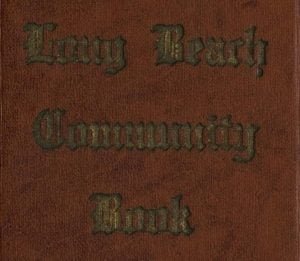
Long Beach Community Book

The “Long Beach Community Book,” authored by Walter H. Case and published in 1948 by A.H. Cawston, is an extensive exploration of the history and development of Long Beach, California. The book is divided into two main sections: a historical narrative and biographical sketches. The first part of the book offers a detailed account of Long Beach’s evolution from its early beginnings to a thriving city. It covers various aspects of the city’s growth, including its geographical advantages, municipal governance, public facilities, educational institutions, and notable events such as epochal oil discoveries and the impact of wartime activities. The narrative also addresses challenges faced by the city, such as land subsidence and the major issue of tideland rights. The second part of the book comprises biographical sketches of significant Long Beach citizens, both past and present, highlighting their contributions to the community.

The Amidon Family of Rehoboth, MA

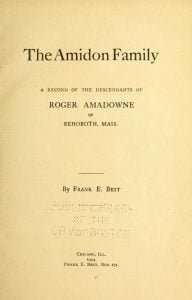
The Amidon Family

The Amidon Family genealogy book details the lineage of Roger Amadowne, a French Huguenot who fled to England and later to America after the revocation of the Edict of Nantes. Documented in Salem, Massachusetts in 1637, variations of his surname include Amadon, Amidown, and Ammidon. The work, organized with biographical sketches and two helpful indexes, presents the family’s history and is richly illustrated. Originally published in 1904, it serves as a valuable resource for descendants and historians alike.

Families of Ancient New Haven

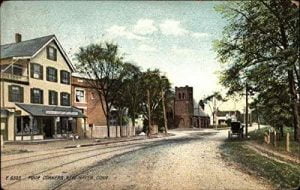
Four Corners New Haven Connecticut

The Families of Ancient New Haven compilation includes the families of the ancient town of New Haven, covering the present towns of New Haven, East Haven, North Haven, Hamden, Bethany, Woodbridge and West Haven. These families are brought down to the heads of families in the First Census (1790), and include the generation born about 1790 to 1800. Descendants in the male line who removed from this region are also given, if obtainable, to about 1800, unless they have been adequately set forth in published genealogies.

Weymouth ways and Weymouth people

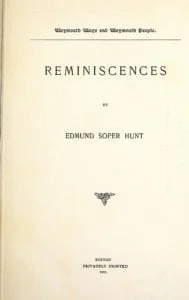
Weymouth ways and Weymouth people

Edward Hunt’s “Weymouth ways and Weymouth people: Reminiscences” takes the reader back in Weymouth Massachusetts past to the 1830s through the 1880s as he provides glimpses into the people of the community. These reminiscences were mostly printed in the Weymouth Gazette and provide a fair example of early New England village life as it occurred in the mid 1800s. Of specific interest to the genealogist will be the Hunt material scattered throughout, but most specifically 286-295, and of course, those lucky enough to have had somebody “remembered” by Edward.

Dunbar Genealogy of Narraguagus Valley Maine

Narraguagus Valley Some Account of its Early Settlement and Settlers

The Dunbar family lineage traces back to Obed and Abigail Dunbar, early settlers from Taunton, Massachusetts, who established residence in Steuben. Their descendants include several notable unions, such as Caleb Dunbar with Lovina Marston, and others like Josiah, Manning, and John Dunbar with their respective spouses. The family includes multiple branches and connections to other families, with records of marriages and children spanning several generations, although some records are incomplete or lost.

Treaty of February 15, 1861

On February 18, 1861, a treaty was signed at Fort Wise between U.S. commissioners and chiefs of the Arapahoe and Cheyenne tribes, ceding their lands except for a designated reservation. This agreement aimed to promote individual land ownership among tribe members, facilitating agricultural development. The U.S. pledged annual financial support for fifteen years, alongside resources for education, agriculture, and infrastructure. Additionally, provisions were made to encourage all tribe members to reunite and participate in the benefits of the treaty, reinforcing U.S. obligations towards the tribes’ welfare.

Treaty of February 18, 1861

On February 18, 1861, at Fort Wise, U.S. commissioners and chiefs of the Arapahoe and Cheyenne tribes signed a treaty whereby the tribes ceded their lands while retaining a designated reservation. The agreement aimed to establish settled agricultural practices among the tribes by assigning individual plots of land, promoting their welfare through various supports, such as financial aid and agricultural resources. The treaty emphasized the tribes’ rights and outlined provisions for education, land ownership, and future tribal assistance, reinforcing the U.S. commitment to their integration and development.