History of Natrona County, Wyoming

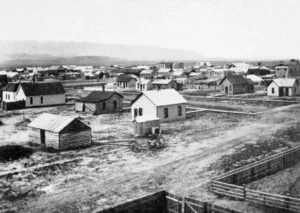
Casper Wyoming in 1894

For individuals researching ancestors who lived in Natrona County between 1888 and 1922, this book offers valuable context and potential leads. It includes names of county officials, war veterans, pioneers, and individuals involved in notable local events, as well as detailed accounts of institutions such as schools, churches, newspapers, and civic organizations. Descriptions of towns, industries, and public records provide insight into the communities where ancestors may have lived or worked. While not a genealogical record in and of itself, the book’s extensive local detail can help place family histories within the broader social and economic framework of the time. And who knows, perhaps your ancestor was one of the more colorful citizens portrayed…
Indian Warfare Between Texas and Mexico

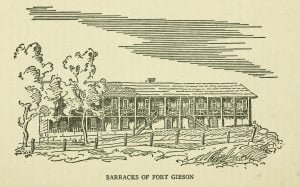
Barracks of Fort Gibson

In 1836, Major Chouteau explored the region between the Red River and the Colorado River, encountering numerous Comanche, Kiowa, and Kiowa Apache camps during their buffalo migration. Despite initial suspicion, he engaged in discussions with tribal leaders, ultimately facilitating a treaty in May 1837, aimed at peace among the tribes and protection for traders. However, amidst rising tensions due to Mexican influence and Indian warfare, further conflicts loomed, highlighting the precarious nature of relations between the tribes and the encroaching settlers in Texas.

Governor Stokes’s Uncompleted Plans

In March 1836, Governor Stokes became the sub-agent for the Cherokee, Seneca, and Shawnee tribes at Fort Gibson, receiving a modest salary of $750 annually. He faced numerous challenges, including a cramped office space and subordination to a disbursing officer, complicating his relations with the tribes. Stokes advocated for the rights of the Half-Breed reserves of the Osage Nation but struggled to secure assistance for them. Despite his dedication, his term ended without reappointment, and he passed away in November 1842, leaving a significant legacy.

Genealogy of the Goff Family of Attleboro, Mass.

Maj. William Hunt Goff, born April 10, 1845, in Rehoboth, Massachusetts, is a prominent figure in Attleboro’s history, descending from the Goff family, which has roots in the area since 1720. Notable for his service in the Civil War and his subsequent career as a builder and contractor, Goff also played a significant role in local governance and military organization. His family, including his father Albert and brother Frederic, continued the legacy of public service and community engagement in Attleboro and beyond.