History of Montville, Connecticut 1640-1896

Samson Occum House in Montville, Connecticut

This history of Montville, Connecticut spans from 1640 to 1896, highlighting the interactions between early colonial settlers and the Mohegan tribe, particularly regarding land disputes and legal challenges. The text, largely genealogical, traces the ancestry of local families across over 500 pages while detailing the region’s evolution from native subsistence to a burgeoning Colonial economy complete with industries like grist-mills, saw-mills, and the manufacturers of bog-iron and textiles.

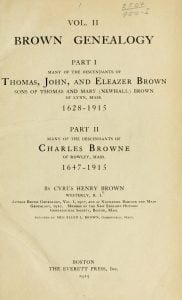
Brown Genealogy

Brown Genealogy

In 1895, Cyrus Henry Brown began collecting family records of the Brown family, initially with the intention of only going back to his great-grandfathers. As others became interested in the project, they decided to trace the family lineage back to Thomas Brown and his wife Mary Newhall, both born in the early 1600s in Lynn, Massachusetts. Thomas, John, and Eleazer, three of their sons, later moved to Stonington, Connecticut around 1688. When North Stonington was established in 1807, the three brothers were living in the southern part of the town. Wheeler’s “History of Stonington” contains 400 records of early descendants of the Brown family, taken from the town records of Stonington. However, many others remain unidentified, as they are not recorded in the Stonington town records. For around a century, the descendants of the three brothers lived in Stonington before eventually migrating to other towns in Connecticut and New York State, which was then mostly undeveloped. He would eventually write this second volume of his Brown Genealogy adding to and correcting the previous edition. This book is free to search, read, and/or download.

Holman Family of Attleboro Massachusetts

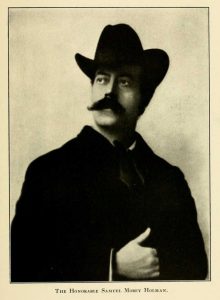
Samuel Morey Holman

The Holman family has been a significant presence in Massachusetts for over two centuries, deeply involved in the social, religious, and educational spheres of Attleboro. Their lineage traces back to Solomon Holman, an early settler believed to have arrived from Bermuda, whose descendants include notable figures like Rev. Nathan Holman and Dr. David Emory Holman. The family has contributed richly to local and national life, with members excelling in various professions, including ministry, medicine, and the arts, particularly through Samuel Francis Holman, an acclaimed artist in Paris.

Richard Dexter Genealogy, 1642-1904

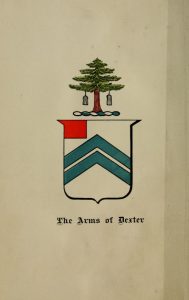
Arms of Dexter

Being a history of the descendants of Richard Dexter of Malden, Massachusetts, from the notes of John Haven Dexter and original researches. Richard Dexter, who was admitted an inhabitant of Boston (New England), Feb. 28, 1642, came from within ten miles of the town of Slane, Co. Meath, Ireland, and belonged to a branch of that family of Dexter who were descendants of Richard de Excester, the Lord Justice of Ireland. He, with his wife Bridget, and three or more children, fled to England from the great Irish Massacre of the Protestants which commenced Oct. 27, 1641. When Richard Dexter and family left England and by what vessel, we are unable to state, but he could not have remained there long, as we know he was living at Boston prior to Feb. 28, 1642.

Lovering Family Genealogy of Taunton Massachusetts

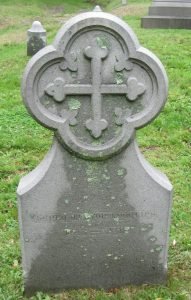
Henry Morton Lovering Gravestone

The Lovering family has played a significant role in Taunton, Massachusetts, since the nineteenth century, with notable figures like Willard Lovering, who rose from humble beginnings to become a prominent manufacturer, bank president, and state assemblyman. His sons, including William C. and Henry Morton Lovering, followed in his footsteps, contributing to local business and politics. This line descends from English immigrants, with roots tracing back to Aldham, Suffolk. The Loverings were integral to Taunton’s manufacturing success, particularly through the Whittenton Mills.

Slave Narrative of John Evans

John Evans, born into slavery on August 15, 1859, in North Carolina, recounts his life experiences. Raised by his mother, Hattie Newbury, he remained with the Newberry family after emancipation, where he learned manners and fishing. John became a well-known figure at Wrightsville Beach, selling fish and later earning money by entertaining summer visitors with his contagious laugh. He reflects on his life, emphasizing that hard work and good manners led to his success, even as his vitality wanes with age.