Abington Massachusetts Marriage and Death Records
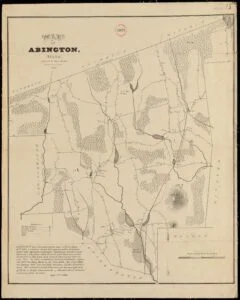
1830 Map of Abington, Massachusetts

Volume 2 of the Abington, Massachusetts vital records compiles marriage and death records up to 1850, complementing Volume 1, which contains birth records. Established in 1712, Abington’s boundaries have shifted, affecting historical jurisdiction. Extensive research from town records, cemeteries, and family Bibles ensured comprehensive documentation, including the identification of Black families recorded by given names. The volume is organized alphabetically by marriages and deaths.
Abington Massachusetts Birth Records

1830 Map of Abington, Massachusetts

Volume 1 of the Abington, Massachusetts vital records details births recorded in the town up to 1850, featuring comprehensive research from town records, cemeteries, and church documents. Established in 1712, Abington’s jurisdictional changes may affect genealogical searches. The records also include separate listings for Black families, primarily by given names. Additionally, various surnames are cataloged, emphasizing the need to consider alternate spellings. For marriages and deaths, researchers should consult Volume 2.

Marriages of Charlotte County Virginia, 1784-1815

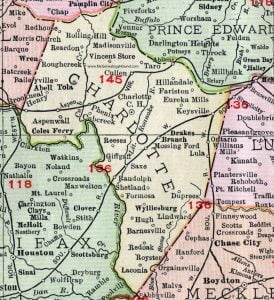
1911 Map of Charlotte County Virginia

This volume, “Marriages of Charlotte County, Virginia, 1784-1815,” compiles the marriage bonds and minister’s returns from Charlotte County during the specified period. The original work was painstakingly copied by Catherine Lindsay Knorr and published in 1951. The book spans 119 pages and includes a wealth of historical data on marriages that took place in this Virginia county. This publication presents several challenges for readers. Some pages are slightly tattered and torn, and the manuscript features irregular pagination. Additionally, there are tight or nonexistent margins, particularly at the bottom of the pages, and one page is typed on different paper than the rest.

Index to Articles found in the El Farol Newspaper 1905-1906

El Farol Masthead

The Lincoln County New Mexico online archives contains pdf’s of all remaining copies of the El Farol Newspaper of Capitan NM, but doesn’t have an index to the newspaper. C. W. Barnum, an active member of AHGP, and state coordinator for the New Mexico AHGP recently invested his time and energy into providing an every person index to the various extant issues. He has shared this wonderful index with AccessGenealogy in hopes that it will reach a wider audience. Enjoy!

Treaty of May 6, 1828

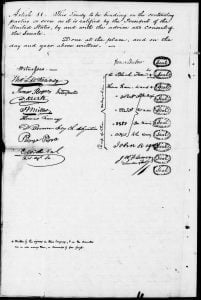
Treaty of May 6, 1828, page 9

The Treaty of May 6, 1828, negotiated by Secretary of War James Barbour, resulted in the Western Cherokee ceding their Arkansas lands to the U.S. in exchange for new territory in present-day Oklahoma, guaranteed to remain theirs forever. Acknowledging the unfavorable conditions in Arkansas amid westward expansion, the treaty aimed to prevent conflict and improve their future. The Cherokee relocated quickly, leaving behind farms for white settlers. The treaty also included provisions for education and compensation for their losses, as the Cherokee sought stability amid increasing pressures.

Treaty of January 17, 1837

Treaty of January 17, 1837 page 7

The Treaty of January 17, 1837, between the Choctaw and Chickasaw tribes allowed the Chickasaws to form a district within Choctaw territory while maintaining a degree of autonomy. The agreement, made under pressure from U.S. expansion policies, ensured the Chickasaws received equal representation in the Choctaw council and outlined financial arrangements, including a payment of $530,000 to the Choctaws. This treaty illustrates the complexities of Native American negotiations during a time of displacement and serves as a precursor to later agreements that sought to solidify tribal governance.

List 6, Choctaw Freedmen

List of Choctaw Freedmen whose names were omitted from final rolls because no application was made or by. reason of mistake or oversight. Shows the names of 281 persons, all minors except 4. The approved roll of minor Choctaw freedmen contains 473 names. The large percentage of omissions in this class is explained elsewhere. It is quite probable that there are others of this class whose claims have not yet been presented or disclosed.