History of Hampton New Hampshire vol 2

1892 Map of Hampton NH

The original version of this monumental work was published in 2 volumes. Volume 1 contains the history of the town of Hampton, New Hampshire from its settlement in 1638 to the autumn of 1892 and can be found here. Volume 2 featured the genealogical and biographical details of the early families of Hampton, NH up to the autumn of 1892 and this is the volume shown below. This manuscript was meticulously researched by Joseph Dow up until his death in 1889. Unfortunately his death preceded the final compilation of the genealogies and his daughter, Lucy Ellen Dow, took on the task after his decease. For genealogists this is an important fact. Lucy admits in her preface that she had difficulty bringing the genealogies down to date (1892) for lack of full understanding of Josiah Page’s notes and for the lack of accurate town records. As she laments about the town records “but whole decades are passed over with scarcely an entry of birth or marriage.” Indeed they are.
Peace Attempts with Western Prairie Indians, 1833

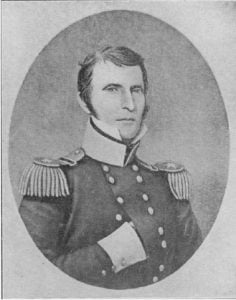
General Henry Leavenworth

In 1830, the Treaty of Dancing Rabbit Creek initiated the relocation of the Choctaw Indians to territories between the Canadian and Red rivers. However, the Choctaw faced threats from Comanche, Kiowa, and Wichita tribes, who attacked traders and settlers. In May 1833, Colonel Arbuckle sent a military expedition to protect the traveling Choctaw and assert U.S. power. Despite efforts, the expedition suffered losses, including ranger George B. Abbay, who was captured, and ultimately failed to achieve its objectives, highlighting the challenges of westward expansion.

Memoirs of the Durant and Crowder Families

The Durant family, led by Louis Durant, arrived in the Choctaw Nation around 1770 alongside the LeFlore brothers. Louis married a Choctaw woman, and they had five children, including sons who fought in the Creek War of 1812. Margaret, one of Louis’s daughters, married Eli Crowder, known as Muscokubi for his battlefield prowess. Crowder lived to 102 and had multiple wives and children. Notably, his son Louis became a respected interpreter in the Choctaw Nation, illustrating the family’s prominence and contributions within their community.

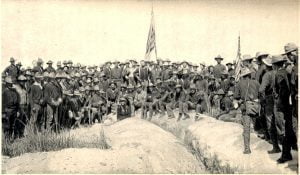
Rough Riders

Rough Riders

The compiled military service records of 1,235 Rough Riders, including Theodore Roosevelt, have been digitized. Each record features individual jackets detailing the soldier’s name, organization, rank, and medical records. The records also contain personal information and documentation descriptions. Discharges occurred for various reasons, such as age, ability, discipline issues, or hardship. This initiative provides significant insights into the personnel of the 1st U.S. Volunteer Cavalry during the Spanish-American War.