Abington Massachusetts Marriage and Death Records
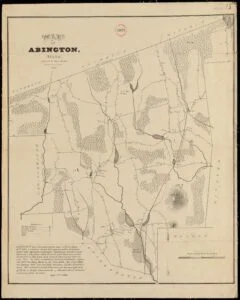
1830 Map of Abington, Massachusetts

Volume 2 of the Abington, Massachusetts vital records compiles marriage and death records up to 1850, complementing Volume 1, which contains birth records. Established in 1712, Abington’s boundaries have shifted, affecting historical jurisdiction. Extensive research from town records, cemeteries, and family Bibles ensured comprehensive documentation, including the identification of Black families recorded by given names. The volume is organized alphabetically by marriages and deaths.

Abington Massachusetts Birth Records

1830 Map of Abington, Massachusetts

Volume 1 of the Abington, Massachusetts vital records details births recorded in the town up to 1850, featuring comprehensive research from town records, cemeteries, and church documents. Established in 1712, Abington’s jurisdictional changes may affect genealogical searches. The records also include separate listings for Black families, primarily by given names. Additionally, various surnames are cataloged, emphasizing the need to consider alternate spellings. For marriages and deaths, researchers should consult Volume 2.

Vital Records of Sheffield Massachusetts, 1733-1792

Map of Sheffield, Harstville, Southfield and New Marlborough Massachusetts

The vital records of Sheffield, Massachusetts from 1733 to 1792 detail the town’s historical births, marriages, and deaths. While names and dates are transcribed accurately, some wording has been abbreviated for clarity. Marriage records often specify the union of couples, while birth records typically include parental names. Notably, some families lack marriage entries, starting instead with a child’s birth. The records also document a few out-of-wedlock births, emphasizing lineage through parental names, even in adult death records.

Essex County Massachusetts Probate Records 1675-1681

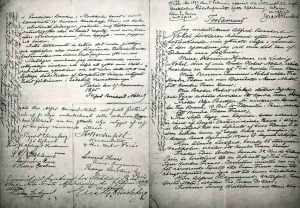
Sample Last Will and Testament

The “Governor and Company of Massachusetts Bay” established a judicial system in 1628, with a General Court in Boston and quarterly courts in major towns like Salem and Ipswich by 1635. These courts managed probate matters, and after Essex County’s formation in 1643, individual probate courts were later established in 1692. These are the probate records from 1675 to 1681, sourced from various original documents, including detailed wills and estate settlements.

Beal Genealogy of Abington Massachusetts

Old Families of Southeastern Massachusetts

The Beal family of Abington, Massachusetts, descends from immigrant John Beal, who arrived in 1635. Over generations, the family has played a significant role in the community, notably through George A. Beal, a distinguished public figure and businessman. His contributions included numerous public offices, reflecting a commitment to civic duty. The Beals have connections to early Puritan settlers and intermarriages with prominent local families, including the Reeds. This lineage continues to influence Abington’s history, emphasizing their longstanding presence in the area.

Ancestors of Nelson Sherman of Carver and Brockton, Massachusetts

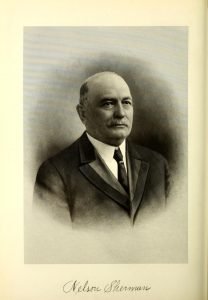
Nelson Sherman

Nelson Sherman, who was for many years extensively engaged in agricultural pursuits in the town of Carver, Mass., and is now making his home in the city of Brockton, is regarded as one of the substantial men of Plymouth county. He is a descendant of several of this Commonwealth’s earliest settled and most prominent families, and was born March 14, 1841, in North Carver, son of Henry and Christinai (Crocker) Sherman.

Leach Genealogy of Bridgewater, Massachusetts

James Cushing Leach

The Leach family has been integral to Bridgewater, Massachusetts, since its early settlement, with roots tracing back to Lawrence Leach, an immigrant from England in 1629. His descendants, including Giles Leach, a town founder, and James Cushing Leach, a prominent businessman and politician, have significantly influenced the community. The Leach lineage is marked by contributions to public service, education, and local governance, fostering a rich heritage in the region. The genealogy reflects a lineage of resilience and commitment to civic duty, underscoring the family’s enduring legacy.

Genealogy of the Goff Family of Attleboro, Mass.

Maj. William Hunt Goff, born April 10, 1845, in Rehoboth, Massachusetts, is a prominent figure in Attleboro’s history, descending from the Goff family, which has roots in the area since 1720. Notable for his service in the Civil War and his subsequent career as a builder and contractor, Goff also played a significant role in local governance and military organization. His family, including his father Albert and brother Frederic, continued the legacy of public service and community engagement in Attleboro and beyond.

1923 Historical and Pictorial Directory of Angola Indiana

1923 Angola Indiana Directory Book Cover

Luedders’ historical and pictorial city directory of Angola, Indiana for the year 1923, containing an historical compilation of items of local interest, a complete canvass of names in the city, which includes every member of the family, college students, families on rural lines, directory of officers of county, city, lodges, churches, societies, a directory of streets, and a classified business directory.

List of the Principal Pioneer Settlers in Norwich Vermont

In 1771, the population of Norwich, Vermont, was recorded at 206 people in forty families, highlighting its growth since being chartered by New Hampshire. The town was part of Gloucester County after 1772, previously belonging to Cumberland County. The census showed a predominance of youth, with 92 children under sixteen. The list of pioneer settlers includes notable names such as Daniel Baldwin, Ebenezer Ball, and Medad Benton, many of whom contributed to the establishment of the community by clearing land and building essential structures.

Cattaraugus Indian Reservation Map and Occupants, 1890

Theodore F. Jimerson (De-hah-teh), Cattaraugus Seneca

The Cattaraugus Indian Reservation, established in 1890, spans parts of Cattaraugus, Chautauqua, and Erie Counties, New York. It is primarily occupied by the Seneca Nation, claiming rights over land where white settlers reside. The area, a result of treaties in the late 18th and early 19th centuries, is characterized by fertile land, waterways, and a network of roads connecting it to nearby towns. Despite rich resources, the region struggles with legal disputes regarding land ownership and infrastructure inadequacies affecting transport and communication.

1896 St. Regis Indians Census

A June 1896 census of the St. Regis Tribe of Indians of New York Agency, taken by Alexander Solomon for U.S. Indian Agent J. R. Jewell, records 1,161 family members. The document lists households by surname, given name, and number in household, offering a detailed snapshot of the tribe’s community at the time.

Surnames Bacon to Buzzard

This document contains genealogical statements regarding various individuals and families of Creek, Choctaw, Chickasaw, and Mississippi Choctaw descent who sought recognition and enrollment in tribal rolls. The records, primarily from 1909 reports, detail claimants’ ancestry, enrollment issues, and tribal affiliations. Many individuals were denied enrollment due to factional disputes, legal technicalities, or failure to apply within deadlines. The document includes references to official reports and affidavits, offering insights into the complexities of Native American citizenship and land rights during the early 20th century.