
Indian Warfare Between Texas and Mexico
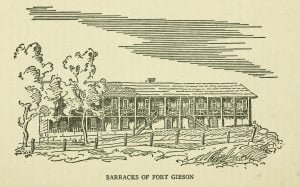
Barracks of Fort Gibson

In 1836, Major Chouteau explored the region between the Red River and the Colorado River, encountering numerous Comanche, Kiowa, and Kiowa Apache camps during their buffalo migration. Despite initial suspicion, he engaged in discussions with tribal leaders, ultimately facilitating a treaty in May 1837, aimed at peace among the tribes and protection for traders. However, amidst rising tensions due to Mexican influence and Indian warfare, further conflicts loomed, highlighting the precarious nature of relations between the tribes and the encroaching settlers in Texas.
Expeditions of Fowler and James to Santa Fe, 1821

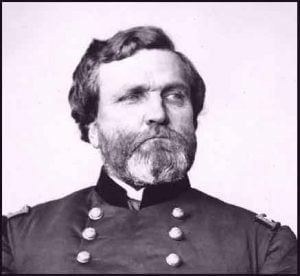
General Thomas James

Following Pike’s return from Santa Fe, interest surged for further exploration. In 1821, expeditions led by Major Jacob Fowler and General Thomas James departed towards Santa Fe after witnessing the impact of previous travelers’ accounts. Fowler’s party advanced from Fort Smith, while James’s group left St. Louis with a keel boat, trading goods with local tribes. Both parties faced significant challenges but eventually reached Santa Fe, paving the way for continued American trade in the region, culminating in further expeditions and encounters with the Comanche.

Baldwin County Georgia Marriages 1806-1850

This index compiles 1,352 Baldwin County, Georgia marriage records from court documents covering 1806 to 1850. It lists groom, bride, and marriage date entries in chronological order, offering a valuable genealogical resource for tracing family history, local relationships, and early county residents across more than four decades.

Henry W. Ivey

Corporal Henry W. Ivey served in Battery F of the 113th Field Artillery, part of the 30th Division, beginning his military service on June 9, 1917, in Concord, North Carolina. After training at Camp Sevier, South Carolina, he was deployed to France on May 29, 1918. Ivey participated in significant engagements including the St. Mihiel and Argonne Offensives, as well as the Woevre Sector. He returned to the United States on March 19, 1919, and was mustered out on June 10, 1919.

Worth J. Ivey

Sergt. Worth J. Ivey, of the 1st Corps, Artillery Park Co. No. 2, hailed from Guilford County, the son of W. F. and Mrs. Mollie Ivey. He entered military service on March 7, 1918, in High Point, N.C., and was initially stationed at Camp Jackson, S.C. Ivey later served in France, participating in key battles such as Chateau-Thierry and Meuse-Argonne. He returned to the U.S. on August 3, 1919, and was mustered out at Camp Lee, Virginia, a week later.

Surnames Isaac to Johnson

This document contains genealogical statements regarding various individuals and families of Creek, Choctaw, Chickasaw, and Mississippi Choctaw descent who sought recognition and enrollment in tribal rolls. The records, primarily from 1909 reports, detail claimants’ ancestry, enrollment issues, and tribal affiliations. Many individuals were denied enrollment due to factional disputes, legal technicalities, or failure to apply within deadlines. The document includes references to official reports and affidavits, offering insights into the complexities of Native American citizenship and land rights during the early 20th century.

Why I Am a Daughter of the Confederacy

Eleanor S. Ivey reflects on her experiences during the Civil War, detailing the initial enthusiasm and commitment of her community to the Confederate cause. As men left for battle, women supported them by sewing flags and preparing supplies. Despite the hardships, there were moments of joy, such as weddings and the arrival of soldiers on furlough. The eventual news of Lee’s surrender brought sorrow, yet Ivey emphasizes the enduring spirit and sacrifice of those who fought for the South, preserving the memory of their struggle.