Vital Records of Bellingham, Massachusetts

Vital Records of Bellingham Massachusetts to the year 1850

Alphabetical indexes to the vital records of Bellingham, Massachusetts, up to the year 1850, supplemented by information from bible records, church registers, cemetery inscriptions and other private sources to include the diary kept by Samuel Wight and his daughters.
Medway Massachusetts vital records

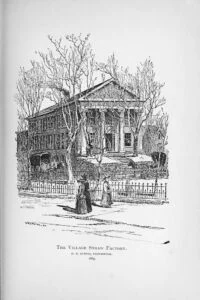
Medway Village Straw Factory

Alphabetical indexes to the vital records of Medway, Massachusetts, up to the year 1850, supplemented by information from church registers, cemetery inscriptions and other private sources to include Rev. Dr. Jacob Ide’s account of Marriages and Deaths, 1814-1849.

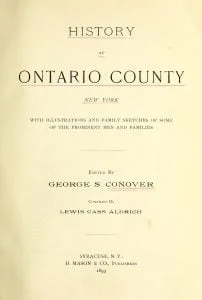
History of Ontario County, New York, part 2

History of Ontario County, New York

The History of Ontario County, New York genealogical section provides an extensive array of surnames, indicating the comprehensive nature of the section in Part 2. These genealogies not only serves as a reference for individuals researching family histories but also reflects the diverse settler and immigrant populations that have contributed to the fabric of Ontario County. Each surname represents a family’s journey, struggles, and contributions to the county’s development over centuries.

Recreations of Slaves

During the slavery period, various forms of recreation, such as ballads, ring dancing, and folk singing, were prevalent among enslaved people. The ballad highlighted a rivalry between Jeff Davis and Lincoln, reflecting social sentiments. Ring dancing involved children performing within a drawn circle, accompanied by hand clapping and tambourine music. Folk song gatherings became popular among both black and white communities. Other pastimes included sports like hurdle racing and “free-for-all” contests, featuring physical challenges with improvised weapons, often accompanied by music played on banjos and guitars.

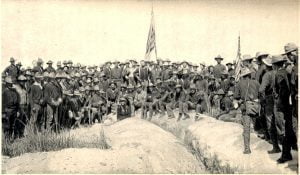
Rough Riders

Rough Riders

The compiled military service records of 1,235 Rough Riders, including Theodore Roosevelt, have been digitized. Each record features individual jackets detailing the soldier’s name, organization, rank, and medical records. The records also contain personal information and documentation descriptions. Discharges occurred for various reasons, such as age, ability, discipline issues, or hardship. This initiative provides significant insights into the personnel of the 1st U.S. Volunteer Cavalry during the Spanish-American War.

Biographical Sketch of David Force

David Force, born circa 1758 in France, became an orphan amid the upheaval of the French Revolution. He was brought to America by a Quaker guardian and lived in Princeton during the 1777 battle. Although unable to enlist due to his guardian’s pacifism, Force assisted in caring for the wounded. He later married Jerusha Opdyke, whose home served as a hospital. Their descendants included numerous medical professionals. Force’s family name, originally La Force, is still retained by some descendants.

Biographical Sketch of Benjamin Force

Benjamin Force, born in 1793 in New Jersey, was a notable pioneer in Steuben County, New York, where he dedicated his life to farming. A staunch Whig turned Republican and an ardent Abolitionist, his home served as a station on the Underground Railroad. He was married twice, first to Sophia Caswell and later to Sarah Russell, with a total of six children. His grandson, also named Benjamin, died in the Union Army during the Civil War. Force passed away in 1873.

Biography of Chester B. Force

Chester B. Force, born in 1832 in Steuben County, New York, was primarily a farmer and a talented musician. Educated in public schools, he lived near Geneva, New York, and was a Republican and a member of the Christian church. In 1860, he married Catherine Cromwell Winter, a descendant of early American settlers, including revolutionary soldiers. They had several children, notably Ida Agnes and Susie E. Force, who continued the family legacy in the region until the fifth generation.

Buying and Selling Slaves

In the Purchase Region during slavery, slave trading occurred irregularly, primarily at owners’ homes, with prices influenced by the age and health of the slaves, sometimes reaching up to $1,000 for strong young males. Sales often resulted in heartbreaking separations of families, particularly between mothers and children. Living conditions varied widely among slaves, reflecting the dispositions of their owners. Additionally, relationships between white owners and enslaved women were not uncommon, complicating familial ties. Following emancipation, some former slaves chose to remain with their owners rather than face the uncertainties of freedom.