History of Shelburne Vermont

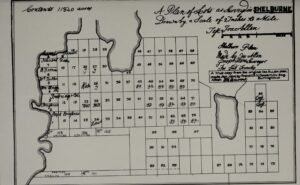
Plan of Shelburn Vermont

The history of Shelburne, Vermont, traces its charter in 1763 through the challenges faced by early settlers, including conflicts with New York and a Revolutionary War siege. It chronicles the town’s economic shifts from potash and sheep farming to the establishment of the Webb Estate and Shelburne Museum. The narrative details the development of civic infrastructure, including schools and utilities, and reflects on the post-war population boom that transformed Shelburne into a suburban community focused on recreation and craftsmanship.
Families of Ancient New Haven

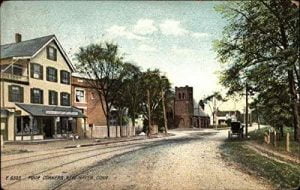
Four Corners New Haven Connecticut

The Families of Ancient New Haven compilation includes the families of the ancient town of New Haven, covering the present towns of New Haven, East Haven, North Haven, Hamden, Bethany, Woodbridge and West Haven. These families are brought down to the heads of families in the First Census (1790), and include the generation born about 1790 to 1800. Descendants in the male line who removed from this region are also given, if obtainable, to about 1800, unless they have been adequately set forth in published genealogies.

The genealogy and history of the Ingalls family in America

The genealogy and history of the Ingalls family in America

Edmund Ingalls, son of Robert, was born about 1598 in Skirbeck, Lincolnshire, England. He immigrated in 1628 to Salem, Massachusetts and with his brother, Francis, founded Lynn, Massachusetts in 1629. He married Ann, fathered nine children, and died in 1648.

Genealogical and Family History of Vermont

Genealogical and Family History of the State of Vermont vol 1

Hiram Charlton took on the publication of the Genealogical and Family History of the State of Vermont for Lewis Publishing. In it, he enlisted the assistance of living residents of the state in providing biographical and genealogical details about their family, and then he published all 1104 family histories in two distinct volumes.

Church History of Norwich Vermont

The first generation of Norwich settlers accomplished a significant community milestone by constructing a meeting house for public worship within a decade of settlement. This project involved the entire community, showcasing their determination despite limited resources. A committee ultimately selected the location after significant debate, with the cornerstone laid in 1778. Delays due to the Revolutionary War slowed progress, but by 1785, the building was completed and became a site for various civic activities, including sessions of the Vermont Legislature. The meeting house served the town until 1817 when a new structure was erected due to growing needs.

Norwich Vermont Proposed Union with New Hampshire

In 1782, the towns of Newbury, Moretown, Norwich, and Hartford considered uniting with New Hampshire following Vermont’s failed attempt at a union with New Hampshire towns. They expressed a desire for this union, emphasizing mutual benefits and historical claims. Committees were formed to deliberate and send a memorial to the New Hampshire General Court seeking jurisdiction over their territory, citing previous affiliations and a need for defense. The appeal highlighted the communities’ struggles under Vermont and their hopes for a beneficial re-alignment with New Hampshire.

Norwich Vermont in the Controversy with New York

The political struggle between New York and the New Hampshire Grants primarily affected settlers’ titles and local governance. Norwich, largely detached from these tensions, operated under New Hampshire Grants without significant interference from New York. Town records seldom reference New York, reflecting a quiet disregard for its authority. While other towns sought charters from New York, Norwich maintained its practices, opting for traditional New England governance. When Vermont declared independence in 1777, Norwich citizens actively participated, culminating in the formation of a separate state, solidifying their break from New York’s jurisdiction.