
History of St. Joseph Church Prairie du Rocher Illinois
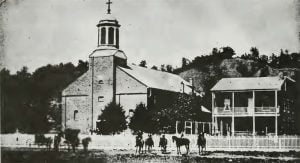
St. Joseph's Church and Rectory as originally built in 1858 and 1868 respectively

St. Joseph Church in Prairie du Rocher, Illinois, was established in 1722 as a chapel linked to the church of Ste. Anne at Fort Chartres. Following the founding of Fort Chartres in 1718 by Pierre Duque Boisbriant, the local community built a log chapel for the French settlers. Over time, the church gained prominence as Ste. Anne fell into disrepair, becoming a key parish for the French in the region. The current Romanesque church structure dates from 1858, embodying the parish’s rich history and cultural heritage.
Early Migration to Fort de Chartres

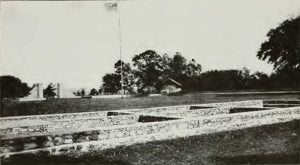
The ruins of Fort de Chartres with powder magazine intact

The history of Prairie du Rocher is intricately linked to Fort de Chartres and the Catholic Church, dating back to 1682 when La Salle claimed the territory for France. In 1717, the Illinois Country transitioned from Quebec to Louisiana’s jurisdiction. Commandant Pierre Duque Boisbriant established Fort de Chartres in 1720 to protect settlers and maintain French control. Despite its strategic location and role in French colonial governance, the fort faced neglect and flooding, leading to its eventual abandonment post-1763. Restoration efforts continue at the site today.

The Discovery Of This Continent: It’s Results To The Natives

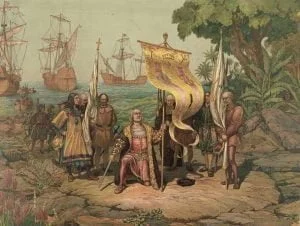
Columbus Landing on Hispaniola

In 1470, Christopher Columbus married Dona Felipa, daughter of a renowned navigator, and settled in Porto Santo, where they shared dreams of discovering lands to the West. Their ambitions fueled Columbus’s determination, leading to his 1492 voyage that resulted in the European discovery of the Americas. However, this event marked the beginning of devastation for native peoples, introducing warfare, disease, and colonization that would decimate their populations and cultures, ultimately transforming their rich, diverse societies into shadows of their former selves.

The French In Alabama And Mississippi

History of Alabama and incidentally of Georgia and Mississippi, from the earliest period

Following nearly a century and a half of European absence after De Soto’s invasion, French explorers, including Father Marquette and La Salle, began to navigate and document the Mississippi River. Their efforts established ties to France’s colonial ambitions, leading to the founding of Louisiana in honor of Louis XIV. As Iberville and his brothers pursued further colonization in the early 18th century, they faced challenges such as famine, conflicts with Indigenous tribes, and political strife among settlers. Ultimately, these factors severely impacted the colony’s stability and growth in Alabama and Mississippi.