Richard Dexter Genealogy, 1642-1904

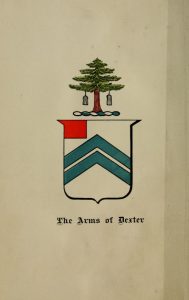
Arms of Dexter

Being a history of the descendants of Richard Dexter of Malden, Massachusetts, from the notes of John Haven Dexter and original researches. Richard Dexter, who was admitted an inhabitant of Boston (New England), Feb. 28, 1642, came from within ten miles of the town of Slane, Co. Meath, Ireland, and belonged to a branch of that family of Dexter who were descendants of Richard de Excester, the Lord Justice of Ireland. He, with his wife Bridget, and three or more children, fled to England from the great Irish Massacre of the Protestants which commenced Oct. 27, 1641. When Richard Dexter and family left England and by what vessel, we are unable to state, but he could not have remained there long, as we know he was living at Boston prior to Feb. 28, 1642.
Louisiana Land Patents – Choctaw Tribe

A detailed listing of Louisiana land patents for the Choctaw Tribe, organized by patentee name, date, document number, and accession number. The record includes many Native and non-Native grantees and spans patents issued from the 1840s through the early 1900s, offering a valuable reference for historical land and genealogy research.

Slave Narrative of Prince Bee

Prince Bee, an 85-year-old former slave from Red Bird, Oklahoma, recounts his early experiences after being sold to Major Bee. He remembers the kindness of Major Bee’s daughter, Mary, who provided food and care for the enslaved children. Despite restrictions on education, he retained a strong belief in the old-time religion. He shares eerie experiences with haunts and reflects on the harsher realities of post-war life, including brutal whippings. Bee emphasizes the need for leadership and a more substantive faith among today’s youth.

Bee Family Census Records

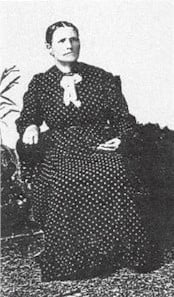
Louisa Jane "Elia" Bell Bee Waller Moore

This post delves into the lineage of Jasper N. Bee, focusing on census records that trace his family history from Indiana to Oklahoma. It highlights the diverse backgrounds of his parents, William and Louisa Bell, and their children, illustrating the family’s move from Indiana to Missouri and eventually to Indian Territory. The records reveal details about marriages, births, and the family’s agricultural lifestyle over the decades, emphasizing the challenges of tracing maternal ancestry. Jasper’s connections with his offspring are also noted in later census data.

Fort Smith Courthouse Photos

Ft. Smith Courthouse 1889

The federal district court for the Western District of Arkansas was established in 1851, initially based in Van Buren. In 1876, following the closure of Fort Smith by the Army, the court relocated to Fort Smith and operated from the old barracks. Judge Isaac C. Parker served as the district judge for twenty-one years during a tumultuous period of western expansion, overseeing thousands of cases, including many capital crimes, earning him the title of the “Hanging Judge.” His tenure was marked by significant violence against law enforcement.

Bee Trouble, Jasper Newton “Tuck” Bee

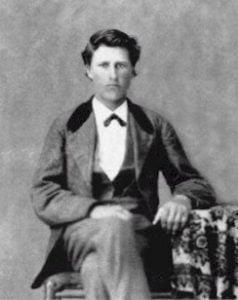
Jasper Newton "Tuck" Bee

Jasper Newton Tuck Bee, originally named Bea, traces his lineage back to a Scottish immigrant, Conrad Bea, who moved to America in 1838. Jasper worked as a carpenter and had two wives, Julia Ann Hildebrand and Hannah Brock, simultaneously, resulting in children from both marriages. His tumultuous life included a stint in prison after a deadly altercation. Family history reveals a complex narrative, with descendants uncovering stories of Jasper’s conflicts and relationships, enriching the family’s genealogy.

Trial Record and Legal Papers – Jasper Newton Bee

Jasper Newton "Tuck" Bee

In October 1882, Jasper Newton Bee was arrested in Arkansas for allegedly assaulting Goodson McD. Moore with an ax, an act purportedly charged as attempted murder. After various hearings and witness testimonies, Bee was found guilty on November 10, 1882, and sentenced to two years of hard labor at a correctional facility in Detroit. His conviction stemmed from a violent confrontation that left Moore severely injured. Bee was escorted to the prison by U.S. Marshal Thomas Boles, arriving in December 1882.

1894 Hinckley Minnesota Forest Fire Deaths

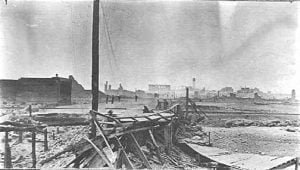
1894 Hinckley Minnesota Forest Fire

A detailed account of the 1894 Hinckley forest fire in Minnesota describes how drought, hurricane-force winds and smoldering fires turned the region into an inferno. It recounts the destruction of Hinckley, Brook Park, Pokegama and nearby settlements, desperate escapes by train and refuge in ponds and pits, and the confirmed death toll of 413.