Wallowa County Oregon Marriages 1887-1983
4,837 Wallowa County Oregon marriages from the beginning 1887 through 1983.

4,837 Wallowa County Oregon marriages from the beginning 1887 through 1983.
The database contains 16,485 marriages from Baker County, Oregon.
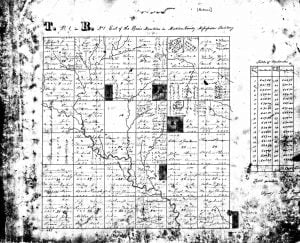
These township plat maps began with the Public Lands Survey in the United States initiated by the Land Ordinance Act of 1785, and this collection includes maps for all or parts of Alabama, Illinois, Indiana, Iowa, Kansas, Mississippi, Missouri, Ohio, Oklahoma, Oregon, Washington, and Wisconsin. Maps were prepared from survey field notes taken by deputy surveyors and can include physical details and man-made improvements. They also indicate township and section lines, section numbers, acreage of holdings, and sometimes names of landholders.
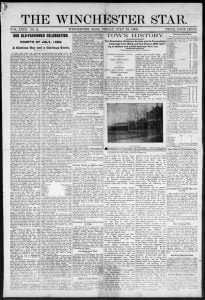
Small Town Papers gives you access to the people, places and events recorded in real time over the decades or even centuries! Browse and search the scanned newspaper archive from 1846 up to the current edition! Their archives contain millions of names of ancestors not found anywhere else. Enhance your Ancestry research with their high resolution scanned newspaper archive. Find distant relatives and discover your ethnic heritage by reading the articles about family and friends written back in the day.

The post discusses the connection between ancient mounds in North America and the indigenous tribes, refuting the notion that these structures were built by a distinct race known as the Mound Builders. Evidence presented includes similarities in skull structure among various tribes and the fortified nature of their towns. Early European explorers observed these communities engaged in agriculture and crafting, challenging the idea of indigenous nomadism. The author argues that the mounds are the work of Native Americans, the true ancestors of today’s tribes, and emphasizes the importance of understanding their legacy.

In April 1873, tensions escalated between the U.S. military and the Modoc people. Following a series of intense skirmishes, the Modoc, led by Captain Jack, engaged in guerrilla warfare and ultimately suffered significant losses. Key battles resulted in the deaths of several soldiers and Modoc warriors, and their stronghold was threatened as troops cut off their water supply. The situation culminated in a tragic ambush, where General Canby and Reverend Dr. Thomas were killed during peace negotiations, solidifying the conflict’s brutality and complexity.
On June 24, 1877, Troop H of the First Cavalry departed Mount Idaho for Slate Creek, facing challenging terrain and inclement weather during their journey. They joined General Howard’s column to pursue hostiles after the Battle of White Bird. Following arduous scouting and a battle near Clearwater, despite suffering casualties, the troops failed to decisively defeat the Indian forces, who managed a strategic retreat. The campaign concluded in October 1877, marking one of the most significant episodes in Indian warfare history.
In a military movement ordered by General Howard, a troop of thirty enlisted men and three officers crossed the Salmon River to pursue the retreating Nez Percé Indians. Despite difficult conditions—including a torrential rainstorm and challenging terrain—the command advanced, only to find that the hostiles had crossed the river ahead of them. Following skirmishes and a defensive stance near the Clearwater River, Colonel Miller’s troops conducted a successful charge against the Indians. The engagement demonstrated the Nez Percé’s resilience, marking a significant moment in the campaign.
General Gibbon mobilized his troops in response to the Nez Percés approaching Fort Missoula, managing to cover 150 miles in seven days. After rendezvousing with additional forces, he pursued the Nez Percés through difficult terrain. A surprise attack on their camp was launched at dawn, resulting in a fierce battle. Despite initial success, Indian reinforcements rallied and retaliated, leading to intense combat and significant casualties on both sides. Ultimately, the soldiers endured harsh conditions and executed strategic maneuvers to maintain their position, facing fierce resistance until the Nez Percés retreated.
In June 1877, amidst widespread fear and rumors of violence, troops rapidly gathered at Fort Lapwai due to escalating tensions with Nez Percé forces. By June 21, additional reinforcements arrived from various military posts across the West. On July 11-12, after intense skirmishes, a significant battle unfolded along the Clearwater River. Nez Percé warriors, leveraging their tactical advantage, engaged U.S. troops, resulting in heavy skirmishing and strategic maneuvers. Ultimately, the U.S. forces captured the Nez Percé camp, inflicting substantial casualties on the opposition.
In response to Chief Joseph’s narrative published in the North American Review, General O. O. Howard defends his actions during dealings with the Nez Perce. He asserts that Joseph misrepresents historical treaties and events concerning land rights and conflicts. Howard contends that he lacked full authority in managing Indian affairs, highlighting failed offers for peace involving land. He emphasizes that his intent was to maintain order and facilitate a peaceful resolution, countering Joseph’s claims that he instigated hostilities leading to the war.
Rock Creek Cemetery in Baker County, Oregon, preserves the burial records of a once-vanished local community near the former town of Rock Creek. This detailed cemetery listing includes names, dates, family relationships, veterans, infants, and graves with missing or unreadable markers, offering a valuable historical record contributed by Belva Ticknor.
In late November 1872, Superintendent Odeneal sought to negotiate with Captain Jack of the Modoc Indians but instead dispatched troops to force their relocation. Major Jackson led a small troop to the Modoc camp, where initial attempts at dialogue failed, leading to an armed confrontation sparked by Scar-faced Charley. The engagement quickly escalated, resulting in casualties among both sides. Ultimately, the soldiers took control of the camp but faced backlash for the aggressive approach rather than peaceful negotiation, marking a critical moment in the Modoc conflict.
The Modocs, a small band of Native Americans in Oregon, resisted relocation from their ancestral lands, leading to military intervention. Their attempt to resist was met with unexpected armed conflict on November 29, 1872, resulting in a retreat to the lava beds, where they utilized natural defenses against the troops. Despite efforts to suppress them, the Modocs remained elusive. Eventually, after ongoing skirmishes and the failure of peace negotiations, Captain Jack and his remaining followers were captured, marking the end of the Modoc War.
Brigadier General H. C. Hasbrouck chronicles the movements of his unit from Redding, California, to Promontory Point in May 1873, detailing engagements with the Modoc tribe. On May 10, his forces were attacked at Sorass Lake, leading to a brief but intense battle. Following a series of maneuvers and skirmishes, including a pursuit that revealed the Modocs’ fatigue and desire to surrender, Hasbrouck sought to end hostilities through negotiation. By May 20, he learned of the Modocs’ intention to surrender unconditionally.
During the Modoc War in 1873, a series of tragic events unfolded in the lava-beds, culminating in the assassination of General Canby and Peace Commissioners. Despite prior warnings, a meeting aimed at ending hostilities resulted in chaos, as Modoc forces ambushed the commissioners. Lieutenant Adams observed the attack, and troops rushed to the scene only to find Canby and Dr. Thomas dead, while Mr. Meacham was injured but alive. The massacre deeply affected the camp, transforming it into a place of mourning for fallen leaders.
Following the Little Big Horn campaign, the Seventh Cavalry spent the winter of 1876-77 quietly reorganizing. In early April 1877, they received orders to scout the Yellowstone Valley, anticipating participation in a campaign against the Nez Perces. Despite initial rumors of conflicts, the regiment remained focused on their duties until reports of violence prompted a swift mobilization. Encountering logistical challenges and an escalating confrontation, they engaged in a series of skirmishes while pursuing the Nez Perces, ultimately leading to the decision to cross the Missouri River in pursuit of the fleeing enemy.
The Modoc Indians, considered superior to other Digger tribes, had become discontented living on the Klamath Reservation due to a colder climate and conflicts with the Klamath tribe. Led by Captain Jack and John Schonchin, a faction of the Modocs left the reservation to return to their ancestral lands, ignoring attempts from Indian agents to compel their return. Tensions escalated, leading to a military intervention in late 1872, culminating in skirmishes as troops attempted to enforce compliance with governmental orders.
During the Modoc Indian War in 1873, a soldier recounts the harrowing experience of carrying wounded comrades through the treacherous lava-beds after a brutal attack. As the relief command retrieved the injured, they faced harsh weather, difficult terrain, and the threat of hostile forces. Despite the challenges, they persevered, navigating darkness and snow while caring for the wounded, including Lieut. George Harris. His mother made a relentless journey to comfort him before his death, embodying a poignant story of devotion amid tragedy.