Condition of 16 New Mexico Indian Pueblos in 1890
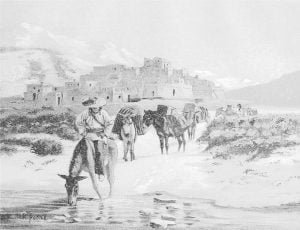
Pack Train Leaving Pueblo Of Taos, New Mexico

In 1890, a report by Frederick P. Muller examined 15 New Mexico Pueblos, highlighting a marked deterioration in their condition, particularly those near Santa Fe. The pueblos possess significant land grants, yet their agricultural viability is hindered by reliance on irrigation rather than rainfall. Proximity to white settlements has led to land encroachment and diminished rights for the Pueblos. Despite their initial strategic land choices, the Pueblos struggle with squatting and loss of territory, undermining their ability to sustain their communities.

An Odd People at Home

Charles P. Lummis provides a detailed examination of Pueblo home life, emphasizing their unique social structure, which favors maternal lineage over paternal, and clan systems over nuclear families. Marriages are arranged with strict adherence to clan traditions. The Pueblo family dynamic features active paternal involvement in child-rearing, with mothers owning the household. Their customs also include a dual naming system incorporating both Spanish and indigenous names. Death rituals involve elaborate preparations for the afterlife, demonstrating a rich cultural heritage that resonates with centuries-old traditions.

Pueblo Indians of New Mexico and their Customs

Map Showing Location of Pueblos in New Mexico

The Pueblos of New Mexico have preserved many of their customs over centuries, reflecting stability amidst change. Marriages involve unique courtship rituals, with women choosing their partners and traditions upheld through ceremonies. The community emphasizes respect for women and children, with indoor responsibilities assigned primarily to women. Corn remains a staple food, processed into tortillas, while pottery-making is a respected craft. The Pueblos, though nominally Catholic, maintain their traditional practices and social structures, demonstrating resilience in the face of external pressures.

Jicarilla Apache Reservation

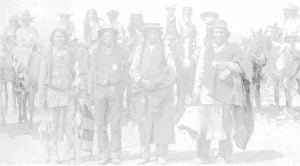
Jicarilla Apaches: Governor and Rulers in the Foreground

In September 1890, Special Agent George B. Meston reported on the Jicarilla Apache Reservation in New Mexico, home to 808 individuals. Spanning 416,000 acres, the largely unallotted land features timber and grazing areas, although agricultural activity is limited. The Apaches primarily engage in stock raising and some farming, with modest output recorded. The community remains culturally distinct with practices such as polygamous marriages and a lack of formal schooling. Their health is reportedly fair, though malnutrition and substance use are noted concerns.

Mescalero Apache Reservation

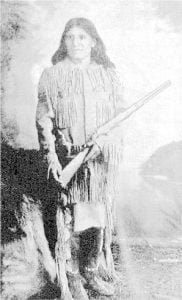
Horse Thief, Mescalero Apache Indian

The Mescalero Apache Reservation, established in 1873-1874, spans 474,240 acres in New Mexico, characterized by rugged terrain unsuitable for extensive agriculture. The Mescalero Apache community, numbering 513 in 1890, primarily relies on government rations, supplemented by limited agriculture and livestock. Cultural practices include traditional marriage customs and a notable adherence to superstitions. Educational efforts face challenges due to parental resistance, although some children show promise. The integration of western medical practices is improving health conditions, while community dynamics reflect a blend of traditional and modern influences.

Report on the 19 Pueblos of New Mexico

The 1864 report by Indian Agent John Ward outlines key observations regarding the 19 Pueblos of New Mexico. It reflects on the limited historical knowledge and traditions of the Pueblo Indians, noting their shared dialects despite geographical distances. The report highlights the absence of formal education and chronic health issues, particularly due to smallpox. Despite an increase in some populations, a general decline is noted. Social structures, including governance and agricultural practices, are discussed, emphasizing their industrious nature and reliance on traditional customs amidst neglect from authorities.

Condition of the New Mexico Indians in 1890

Map Showing Location of Pueblos in New Mexico

In 1890, the Pueblo Indians of New Mexico, citizens of the United States, numbered 8,554 individuals, living across 19 pueblos. In addition, the Mescalero and Jicarilla Apache populations were documented, totaling over 1,300. The Mescalero Apaches, established on their reservation since 1874, and the Jicarilla Apaches, living in close-knit bands, showcased a blend of cultural traditions and adaptation. Overall, the New Mexico Indian population reflected a diverse yet unified community within the complexities of reservation life.

Biographical Sketch of Oscar Lyle McSpadden

Oscar Lyle McSpadden, born November 2, 1892, received his education in Chelsea and married Georgia Craig in September 1920. He is noted for his work in stock raising with Milam McSpadden near Magdalena, New Mexico, where he has contributed significantly to community development. McSpadden is also a member of the Masonic order, holding the 32nd degree, and he attended Business College in Coffeyville, Kansas, before his endeavors in New Mexico’s stock industry.

Treaty of June 1, 1868

Navajo, 1 June 1868 Treaty (1)

The Treaty of June 1, 1868, allowed approximately 8,000 Navajos to return from forced relocation to a designated reservation in New Mexico and Arizona. This treaty marked the end of longstanding conflicts with U.S. forces and established the Navajo as a unified legal entity. It promised peace, agricultural support, and educational provisions, encouraging the Navajo to settle and farm. The treaty’s signatories included key Navajo leaders and U.S. officials, and it laid the foundation for the tribe’s recovery and growth in subsequent years.

Biographical Sketch of Luther C. Challis

Luther C. Challis, a pivotal figure in Atchison’s development, was born on January 26, 1829, in New Jersey. He moved west in 1855, becoming one of Atchison’s first merchants and later a banker. Notably, he played a crucial role in railroad expansion, authoring legislation for the Central Branch of the Union Pacific Railroad and negotiating land rights with the Kickapoo Indians. He was also involved in establishing the Atchison St. Joseph Railway and the Atchison, Topeka, and Santa Fe Railroad. Challis passed away on July 26, 1894.

Biography of William F. M. Arny

William F. M. Arny, born March 6, 1813, in Washington, D.C., emerged as a beloved figure in Kansas despite not being a native. After a notable role as a secretary for prominent preacher Alexander Campbell, he became an influential force in the Republican Party and settled in Kansas in 1857. Arny contributed significantly to the Leavenworth constitutional convention and managed relief efforts during the grasshopper plague. Appointed by Lincoln as secretary of New Mexico Territory, he died on September 18, 1881, leaving behind a legacy of selflessness and service.

Biography of John J. Ingalls

John J. Ingalls, born on December 29, 1833, in Middletown, Massachusetts, emerged as a prominent figure in Kansas’s political and literary landscape. A graduate of Williams College, he moved to Kansas in 1858, contributing to the state’s constitutional foundation and serving in various political roles, including a notable eighteen-year tenure in the U.S. Senate. Renowned for his eloquence and intellect, Ingalls was respected as a writer and scholar, leaving a lasting legacy in both politics and literature upon his death on August 16, 1900.