Dartmouth Massachusetts vital records

Vital Records of Dartmouth Massachusetts to 1850

The Vital Records of Dartmouth Massachusetts to 1850 are alphabetical indexes to the manuscript records of the town of Dartmouth, supplemented by information from family bible records, church registers, cemetery inscriptions, and other sources, showing the vital records of the town inhabitants from its earliest dates to 1850. These records were printed as three separate books, volume 1 contains the birth records, volume 2 contains the marriage records, and volume 3 contains the death records. You can access all three of them for free here.

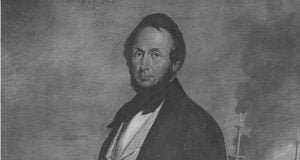
Hough Family of New Bedford, Massachusetts

The Hough family of New Bedford, Massachusetts, traces its roots to William Hough, an English carpenter who settled in Gloucester before moving to New London, Connecticut, in the mid-17th century. Notable descendants include Dr. George T. Hough, a distinguished physician and city physician in New Bedford, and his son, Garry de Neuville Hough, who continued the medical legacy. George Anthony Hough, another descendant, made his mark in journalism and public service. The family’s contributions to medicine and local governance highlight their significant role in the community’s history.

Descendants of Philip Trafford from Dartmouth and Fall River, MA

The Trafford family, originating from Lancashire, England, has maintained an unbroken lineage dating back to Randolphus de Trafford, who flourished around 1030. Thomas Trafford, a descendant who fled England during the Catholic persecution, settled in Dartmouth, MA, around 1690. His line produced notable figures in the industrial sector, particularly in cotton manufacturing in Dartmouth and Fall River. Successive generations, including prominent names like William Bradford Trafford and his sons, played significant roles in local business and civic life, establishing a lasting legacy in the community.

Descendants of William Eddy in New Bedford, Massachusetts

p. 102 of the 1877-8 Greenough's Directory of the City of New Bedford, Massachusetts

The Eddy family of New Bedford, Massachusetts, traces its roots to William Eddy, an English vicar who emigrated from Kent in the early 17th century. His son, Samuel, arrived in Plymouth in 1630 and established a prosperous lineage. Later descendants, like Job Eddy, became successful merchants and founders of the Eddy dry goods business. George M. Eddy further expanded the family enterprise into a prominent retail establishment in New Bedford, while also contributing to local organizations like the Y.M.C.A. and St. Luke’s Hospital.

Howland Family of Dartmouth and New Bedford, Massachusetts

Abraham Howland

The Howland family, rooted in New England since the 17th century, significantly influenced Dartmouth and New Bedford’s economic landscape. Notable for their roles in whaling and later the cotton industry, the family’s ventures established New Bedford as a crucial maritime and manufacturing hub. Key figures, including Nathaniel, Capt. John, and Hon. Abraham H. Howland, contributed to local governance and community well-being. Their philanthropy, reflected in substantial library donations and public service, underscores the Howlands’ enduring legacy in the region’s history.

Ancestors of the Rufus W. Bassett Family of Fall River, Massachusetts

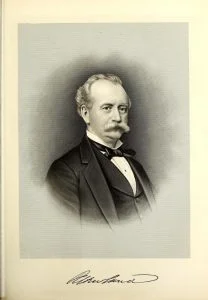
f w bassett

The Bassett family of Fall River, Massachusetts, descends from William Bassett, who emigrated from England in 1620. Prominent members include Hon. Rufus W. Bassett, a significant figure in local politics and business, serving on various councils and boards. The family’s lineage includes several generations, with connections across Massachusetts towns such as Duxbury, Bridgewater, and Rochester. Notably, Rufus W. Bassett’s contributions to the city’s governance and his family’s rich history reflect the enduring legacy of the Bassett lineage within the region.

The Westport-Freetown-Fall River Massachusetts Tripp Family

The Tripp family, originally from Portsmouth, R.I., became notable figures in Massachusetts, particularly in Westport, Freetown, and Fall River. The lineage traces back to Hon. John Tripp, a founder of Portsmouth in 1638, with descendants like Philip J. and Azariah S. Tripp holding significant roles in their communities. Philip J. served as a state senator, while Azariah was a prominent banker. Both men contributed to social reforms and civic activities, exemplifying the values of hard work and integrity that defined their family’s legacy.

Ancestors of George Mitchell Hooper of Bridgewater, MA

George Mitchell Hooper

The Hooper family, established in New England by William Hooper in 1635, has deep roots in Bridgewater, MA. His son, John Hooper, settled in Bridgewater and had several descendants involved in various local endeavors. George Mitchell Hooper, born in 1838, engaged in the brick manufacturing business and served in local government, reflecting the family’s long-standing commitment to community service. His marriage to Jane Hayward further connected the Hoopers to influential local families, including the Mitchells, whose ancestry traces back to early colonial times.

Family and Ancestry of Williams Watkins of New Bedford, MA

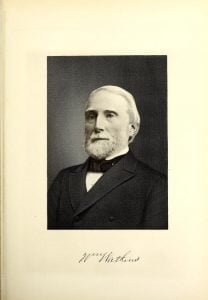
William Watkins

William Watkins, a significant figure in New Bedford’s commercial landscape, was known for his integrity and community contributions. He descended from an English William Watkins who immigrated during the Revolutionary War. Capt. Thomas Watkins, a master mariner and his father, paved the way for William, who ventured into the ship chandlery and iron trade in 1840 and thrived until 1878. A trusted banker and trustee, he served prominently in several financial institutions. Married to Melissa M. Kollock, they had three children. William passed away in 1900, leaving a lasting legacy.

Howland Family of Duxbury, MA

howland

Arthur and Henry Howland arrived in Plymouth Colony before 1625, deeply rooted in the Society of Friends. Arthur settled in Marshfield, while Henry became a prominent figure in Duxbury, serving as a constable and landowner. His legacy of integrity and thrift continued through his children, notably Zoeth, who was active in community affairs until his death in 1676. The Howlands excelled in various trades, with descendants like Peleg C. Howland emerging as influential figures in banking and local governance, reflecting their family’s enduring respectability.

Free Massachusetts Vital Records

Vital Records of Bellingham Massachusetts to 1850

This is a collection of free vital records books for Massachusetts towns, most of them known as “Tan Books.” Generally, these records go up to 1850 at which, the genealogist can use the census records to assist in identifying the family connections further. They’re called “tan books” because they were bound by tan cloth. Included with this article is an account of why and how these manuscripts were published along with links to all 274 Massachusetts vital record books which can be freely read.

Biographical Sketch of Allen, Frederick Slocum

Frederick Slocum Allen, born December 25, 1837, in Westport, Bristol County, had limited formal education before embarking on a whaling voyage to the Arctic at age sixteen. After three and a half years in the whaling industry, he assisted his father as a boat-keeper and innovated windlass models, exhibiting them at the National Museum in Washington. Active in local affairs, he served as justice of the peace for fourteen years and received a silver medal for a lifeboat design at the 1887 International Maritime Exposition. He married Florencia C. Austin in 1860 and resides on Cuttyhunk Island.