Iowa County History and Genealogy Books Online

These are free books online where you can research your Iowa ancestry. This list contains county and local history, genealogical and biographical books, as well as atlases and farm plats.

These are free books online where you can research your Iowa ancestry. This list contains county and local history, genealogical and biographical books, as well as atlases and farm plats.

This collection contains digital atlases, farm directories, and plat books for all 99 Iowa counties. We have collated these from a variety of online sources, and provide them here as a single source for all online Iowa County Atlases, Farm Directories, and Plat Books.
The Fox Indians, also known as Beshdeke or “red earth people,” are linked to the Algonquian family and are associated with the Sauk and Kickapoo tribes. Historically, they resided near Lake Winnebago and the Fox River. They engaged in numerous conflicts with the Chippewa and the French, notably planning an attack on Fort Detroit in 1712. Following various relocations, they settled in Iowa and acquired land near Tama City in the 19th century. Their population has fluctuated, with notable connections to significant historical events and geographic landmarks.
D.B. Hendricks, a prominent merchant and financier in Elgin, was born on February 6, 1855, in Ohio. He began his career in farming before moving to Iowa and later engaging in sawmilling and sheep raising in the West. In 1891, he established a successful general merchandise store in Elgin, later expanding into lumber and banking. A respected community member, he has served in various fraternal organizations and as a town councilman. He married Allie Miles in 1889 and is recognized as a leading figure in his region.
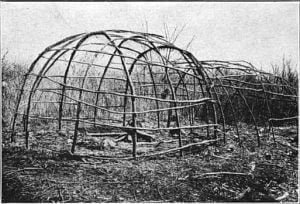
The Sauk and Fox tribes established villages near the Mississippi River, primarily using bark houses during the summer and dome-shaped lodges in winter. By the mid-18th century, these tribes were recognized for their agricultural practices, cultivating corn and other crops, and relying on seasonal hunting. In 1817, the villages were noted for their size and prosperity, but they faced challenges, including a militia attack in 1831. Over time, the tribes moved to Kansas and Iowa, continuing their agricultural and hunting traditions.
Oliver Farrar Emerson, born on May 24, 1860, in Traer, Iowa, was a notable university professor. After earning degrees from Iowa College and Cornell University, he held various educational positions, including superintendent of schools and principal of the Academy of Iowa College. In 1896, he became a professor of English at Western Reserve University. Emerson authored significant works on the English language and contributed to various academic publications. He was an active member of the Modern Language Association of America and served as president of the American Dialect Society in 1905.
Frank Eugene Wettstein, born on June 6, 1867, in Rochelle, Illinois, was an influential banker and real estate developer. Educated at Rochelle High School, he married Maud Wagoner in 1896 and had two sons. A member of the Illinois National Guard, Wettstein founded the First National Bank in La Porte City, Iowa, in 1889 and another in Dysort in 1900. He held various leadership roles in Cleveland, including vice president of Guarantee Title Trust Co. and chairman of the Cleveland Homeopathic Medical College.
Orion Littell Rider, born on January 7, 1874, in Mason County, Illinois, was a prominent attorney in Vinita. A Grinnell College graduate, he pursued law at Drake University, becoming valedictorian. His legal career included roles as assistant U.S. district attorney and counsel in Alaska. Rider served as Vinita’s mayor and was active in the Rotary Club, American Legion, and fraternal organizations. A U.S. Army veteran, Rider’s commitment to public service and community well-being has established him as a respected figure in Vinita.
Captain Lyman C. Waite, born in 1844 in Wisconsin, was instrumental in the early development of Riverside, California. A Civil War veteran, he rose through the ranks to achieve the rank of Captain, participating in numerous significant battles. After the war, he pursued education and law before settling in Riverside in 1870 with only $50. Waite established the first nursery in the colony and became a prominent businessman, contributing to various local enterprises, including banking and water companies. He was married to Lillian M. Shugart, with whom he had four children.
Edwin Hart, born in 1835 in Cortland County, New York, emerged as a prominent horticulturist in Riverside, California. After moving to the West in search of opportunity, he became a farmer in Wisconsin and later Iowa, where he served in the Civil War. In 1873, he settled in Riverside, acquiring land that he transformed into a successful horticultural enterprise, specializing in raisins and citrus fruits. A civic-minded individual, Hart contributed to local initiatives and was active in his church and the Grand Army of the Republic. He had two marriages and two children.
Dr. Kelita Davis Shugart was a key figure in the establishment of Riverside, California, having moved there in 1870 as part of the Southern California Colony Association. He was instrumental in selecting land for the colony and planting the first citrus trees and olive trees in Riverside. In addition to his horticultural pursuits, Dr. Shugart was an active community member, involved in organizing schools and participating in politics. A respected physician, he also made significant contributions to the local medical society and was a devoted family man.
Doctor Albert M. Beal, born on October 31, 1853, in Rock Island County, combined a rich educational background with a profound understanding of human nature in his medical practice. Initially an educator, he earned both Bachelor and Master of Arts degrees before studying law and passing the bar exam. He graduated from the College of Physicians and Surgeons in 1894 and established a successful practice in Moline. An active community member, he served as mayor and was involved in his local church and fraternal organizations. Beal married twice, having six children.
Iowa Cemetery Transcriptions, Story to Union
Hector Baxter, born on June 16, 1834, in Argyleshire, Scotland, immigrated to the United States in 1877. Initially a shoemaker, he transitioned to farming after purchasing 160 acres in Tama County, Iowa, which he sold in 1881 to acquire 320 acres in Ida County. There, he built a home and barn, specializing in farming and stock-raising, particularly shorthorn cattle. He married Margaret Stuart, and they had seven children: Nellie, John, James, William, Mary, Hector M., and Stuart.