Missionaries Among the Choctaw

In 1832, the Choctaw gathered in despair at Hebron, led by missionary Calvin Cushman, before their forced removal westward. Their sorrow, evident in their mournful cries, reflected the profound anguish of a community facing loss of homeland and identity. While most missionaries returned home, Cushman and a few others remained committed to aiding the Choctaw, enduring their suffering and striving for their moral and intellectual uplift. The narrative also highlights the integrity of the missionaries, exemplified by Mr. Bardwell’s honorable horse trade, demonstrating their ethical commitment amidst challenging circumstances.
Missionaries among the Native Americans

Missionaries, notably Rev. Cyrus Kingsbury, began their work among the Choctaws in 1818, establishing the first Protestant mission in the region. Initially met with goodwill, the missionaries faced challenges, including local superstitions, exemplified by the tragic killing of a woman accused of witchcraft. Over time, the missionaries gained the trust of the Choctaws, promoting education and moral teachings. Their efforts led to the formation of schools, churches, and local governance, fostering a significant spiritual and social transformation among the Choctaw Nation.

Olcott Family of Norwich Vermont

Hon. Peter Olcott, born on April 25, 1733, in Bolton, Connecticut, moved to Norwich, Vermont, in the 1770s. He was a prominent community leader, serving in various public offices including first justice of the peace and Lieutenant Governor. His influence helped establish the town’s first meeting house and burying ground. Olcott was also active in military affairs during the American Revolution. He died on September 12, 1808, leaving a legacy through his numerous children and significant contributions to Norwich’s early governance and development.

Biography of Doctor Ira Davis

Doctor Ira Davis, born around 1797 in Dracut, Massachusetts, began his medical practice in Norwich Plain in 1830, serving the community until his death in 1873. In addition to his medical career, he was active in local journalism, co-editing the Vermont Enquirer, and was instrumental in establishing the Episcopal church and Norwich University. A politically engaged figure, he served as town clerk and postmaster. He married three times, fathering several children, including Doctor George Davis, a physician in Manchester, New Hampshire.

Narrative of the Captivity of Frances Noble – Indian Captivities

Narrative of the captivity of Frances Noble, who was, among others, taken by the Indians from Swan Island, in Maine, about the year 1755; compiled by John Kelly, Esq. of Concord, New Hampshire, from the minutes and memoranda of Phinehas Merrill. Esq. of Stratham, in the same state; and by the Former Gen. Tleman communicated for publication to the editors of the Historical Collections of New Hampshire.

Narrative of the Captivity of Nehemiah How

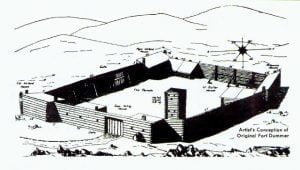
Fort Dummer

A Narrative of the captivity of Nehemiah How, who was taken by the Indians at the Great Meadow Fort above Fort Dummer, where he was an inhabitant, October 11th, 1745. Giving an account of what he met with in his traveling to Canada, and while he was in prison there. Together with an account of Mr. How’s death at Canada. Exceedingly valuable for the many items of exact intelligence therein recorded, relative to so many of the present inhabitants of New England, through those friends who endured the hardships of captivity in the mountain deserts and the damps of loathsome prisons. Had the author lived to have returned, and published his narrative himself, he doubtless would have made it far more valuable, but he was cut off while a prisoner, by the prison fever, in the fifty-fifth year of his age, after a captivity of one year, seven months, and fifteen days. He died May 25th, 1747, in the hospital at Quebec, after a sickness of about ten days. He was a husband and father, and greatly beloved by all who knew him.

John Gyles Captivity Narrative – Indian Captivities

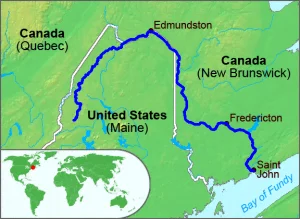
St John River Map

John Gyles captivity narrative provides a stunning display of Abenaki culture and lifestyle, as it was in the 1690’s. John was 10 years old when he was taken captive in the attack on Pemaquid (Bristol Maine) and his narrative provides an accounting of his harrowing treatment by his Indian captors, as well as the three years exile with his French owners at Jemseg New Bruswick. His faith in Christ remains central in the well-being of his mind throughout his ordeal.

Narrative of the Captivity of Mrs. Mary Rowlandson – Indian Captivities

In February 1676, during King Philip’s War, Mrs. Mary Rowlandson was captured by Native Americans after her home in Lancaster was attacked. She witnessed horrific violence and loss, including the deaths of family members and friends, as the assailants burned homes and killed indiscriminately. Throughout her captivity, she endured immense physical and emotional suffering, facing starvation and constant fear. Yet, she found strength in her faith, documenting her ordeal and reflecting on God’s providence. Ultimately, she was redeemed after many harrowing weeks, reuniting with her husband but mourning the loss of her child and other relatives.

King Philip’s War – Indian Wars

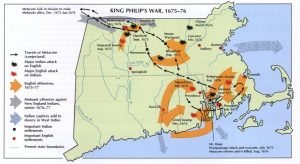
King Philips War Map

After the death of Massasoit, his son Alexander, despite maintaining peaceful relations with the English, was captured under suspicion of conspiracy and died shortly thereafter. His brother, Philip, succeeded him and initially continued to uphold treaties while secretly uniting New England tribes against English encroachment. Tensions escalated after the murder of an informant, leading to widespread conflict. Philip’s leadership during King Philip’s War culminated in significant losses for both sides, ultimately resulting in his death and the disbandment of resistance among Native tribes in New England.

Biographical Sketch of Crispus Attucks

Crispus Attucks, a half-Indian, half-African American from Framingham, Massachusetts, is recognized as the first casualty of the Boston Massacre on March 5, 1770, marking a pivotal moment in the American Revolutionary struggle. His leadership during a confrontation between colonists and British troops led to his death, along with three others, igniting colonial resistance against British rule. Though details about his life are debated, Attucks is remembered as a sailor of notable stature. A monument honoring him was erected in Boston in 1888.

Emily Marshall, Mrs. William Foster Otis

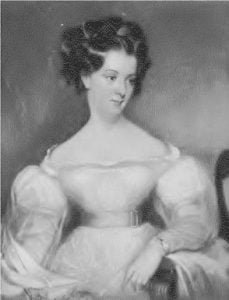
Emily Marshall

Emily Marshall Otis, celebrated for her extraordinary beauty, was a prominent figure in 19th-century Boston society. Born in 1807 to a notable merchant family, she embodied the ideal of feminine grace and charm. Her presence captivated many, inspiring admiration and devotion. Despite her remarkable looks, she displayed humility and kindness, deeply impacting those around her. Married to William Foster Otis, her life was tragically brief, ending in 1836, but her legacy as a timeless emblem of beauty and character endures in American history.

Timothy Fuller

Timothy Fuller, born on July 11, 1778, in Chilmark, Massachusetts, was a prominent lawyer and politician, serving in various capacities including the Massachusetts Senate and Congress. A Harvard graduate, he was known for his advocacy of freedom and rights. He married Margaret Crane in 1809, who was admired for her character and devotion. Fuller’s legacy includes his writings and the successful careers of his five sons in law and business, notably his brother Henry, who was highly regarded in the legal profession. He passed away from cholera on October 1, 1835.

Biography of Rev. Arthur Buckminster Fuller

Rev. Arthur Buckminster Fuller, born on August 10, 1822, was educated by his father and sister before attending Harvard College, graduating in 1843. He taught at Belvidere Academy and preached as a missionary. Ordained in 1848, he served several Unitarian churches, including a notable pastorate in Boston. Active in civic duties, he was elected chaplain of the Massachusetts legislature and contributed to various publications. Enlisting as a chaplain in the Civil War, he was killed in action on December 11, 1862. His life was documented by contemporaries.

Biographical Sketch of Eugene Fuller

Eugene Fuller, born on May 14, 1815, in Cambridge, Massachusetts, was the second child of Timothy and Margaret Fuller. He studied law at the Dane Law School and practiced in Charlestown before moving to New Orleans to work in journalism. After suffering health issues due to sun-stroke, he attempted to seek treatment in New York. Tragically, on June 21, 1859, during his journey, he was lost overboard and never seen again.

Biographical Sketch of Richard Frederick Fuller

Richard Frederick Fuller, the fourth son, graduated from Harvard University in 1844 and pursued law, completing his studies at Harvard Law School and under his uncle’s guidance. Admitted to the bar in December 1846, he practiced law successfully in Boston. Initially entering the mercantile field at age sixteen, he switched back to academics, graduating among the top of his class. Fuller was known for his literary interests, deep religious convictions, and love for nature. He passed away on May 30, 1869, at his home in Wayland.

Biography of Charles Eastman Staniels

Charles Eastman Staniels, born on December 27, 1844, in Lowell, Massachusetts, was a distinguished life insurance agent in Concord, New Hampshire. The son of Edward L. Staniels and Ruth Bradley Eastman, he pursued various business endeavors after briefly enlisting during the Civil War. Staniels transitioned from commercial travel to managing a manufacturing establishment before focusing on insurance. Highly respected in his field, he held leadership roles in several professional organizations and maintained active community involvement, including military service and political engagement as a Republican. He was married to Eva F. Tuttle and had three children.

Biography of Henry Tubbs

Henry Tubbs, born February 24, 1831, in Peterboro, N.H., was a distinguished dentist in Newport and a descendant of early Plymouth Colony settler William Tubbs. After brief stints in retail and dry goods, he pursued dentistry, establishing his practice in Newport in 1860. Tubbs married Mary A. Rogers in 1865, raising three children. Politically active as a Republican, he served in the State legislature and was involved in local Masonic organizations. His success was the result of his own determination and hard work.

Biography of Dr. Rufus Merrill Weeks

Dr. Rufus Merrill Weeks, born on December 15, 1854, in Gilford, N.H., is a prominent dentist in Suncook and Pembroke. He hails from a notable family; his grandfather, Benjamin Weeks, was a successful farmer and public servant. Rufus grew up in a family of eight, with his father William excelling in farming and politics as a Republican. After studying dentistry in Manchester and Boston, Dr. Weeks established his practice in 1875. He is an esteemed Mason and married to Luella B. Hoyt.

Biography of Mrs. Mary Elizabeth Cooke Partridge

Mrs. Mary Elizabeth Cooke Partridge, a prominent Claremont musician and dedicated temperance advocate, was born to Godfrey and Abigail Cooke. Her family lineage includes Captain John Cooke, a Revolutionary War veteran. Educated in music, she built a successful piano teaching career and contributed significantly to local temperance efforts, serving in leadership roles within the Women’s Christian Temperance Union. She championed reforms for women’s care and almshouse improvements, leaving a lasting impact on her community. Her daughter continues this legacy of philanthropy and music.