
Political Secessionism And Crime

From the onset of mining in 1862, Idaho transformed from an obscure region to a U.S. territory. Amid a flood of immigrants, territorial organization began, led by figures like Governor William H. Wallace. However, the influx included many secessionists, fostering a lawless environment marked by crime, notably in Boise County, where violent acts surged. Early governance struggled against the lawlessness, and vigilance committees emerged in response to rampant criminality. Legislative disputes and political tensions further complicated Idaho’s governance during this tumultuous period.
The First Settlements the March of Progress

The first white settlements in Idaho were initiated by Jesuit missionaries prior to 1863, with Fort Hall established by Nathaniel J. Wyeth in 1834 as a crucial trading post. Early settlements were sparse due to harsh conditions and Native American hostilities. The 1862 discovery of gold in the Boise Basin spurred significant migration, leading to the rapid establishment of towns like Idaho City and Centerville. By 1863, as settlements flourished, Fort Boise was constructed for protection against Indigenous attacks, marking a pivotal era in Idaho’s development.

The Hecla Group

The Hecla mine, located in Burke, Idaho, originated with the Hecla and Katie May claims established in 1885. Acquired by the Hecla Mining Company, it reported significant lead-silver ore shipments by 1898. Following a reorganization that year, the company expanded its holdings, acquiring additional claims, leading to a total of fifteen lode claims and a mill-site over approximately 250 acres. Currently operated by a workforce of twenty, the mine continues to yield ore, which is processed at a nearby mill.

The Standard Group Of Mineral Claims

The Standard group of mineral claims includes several patented lode claims in the Coeur d’Alene silver-lead mineral belt in Idaho, initially located in 1885. Acquired by the Standard Mining Company in 1891, the claims have been consistently productive, generating significant dividends and extensive tunneling operations. The ore, primarily silver-lead, is processed at a nearby concentrator. By 1899, the company had shipped over 68,000 tons of concentrates, yielding considerable profits, while maintaining a robust management and operational structure.

The Lead Belt Of The Coeur d’Alenes

Lead was first discovered in the Coeur d’Alenes mining district of Idaho in 1884, with significant mines like the Tiger and Bunker Hill Sullivan being established shortly after. The region, initially difficult to access, has evolved into a major lead-producing area, contributing substantially to U.S. output. The district comprises several areas with varying ore characteristics, and production has increased steadily. Despite facing challenges, including labor disputes, the camp shows signs of prosperity and future growth, supported by robust mining operations and shipping infrastructure.

The Coeur d’Alene Mining District

The Coeur d’Alene Mining District, initially noted for gold discoveries in the 1880s, rapidly evolved into a prominent lead and silver mining region. By 1884, bustling towns like Eagle City and Murray emerged to support thousands of prospectors, leading to significant quartz lode discoveries. Development continued through new mining operations and the establishment of vital transportation routes, promoting ongoing mineral extraction. By the late 1890s, the district was a major contributor to the nation’s lead and silver output, employing over two thousand workers and bolstering the local economy.

Labor Troubles In The Coeur d’Alene District

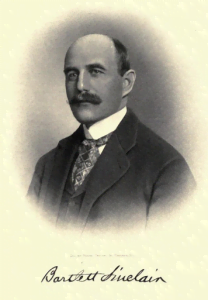
Bartlett Sinclair

H. H. Smith chronicles the violent labor disputes in the Coeur d’Alene mining district, culminating in the destruction of the Bunker Hill and Sullivan mill on April 29, 1899. This act resulted in significant financial loss and loss of life, marking a decade-long conflict between labor and capital. The strife began in 1891, with escalating tensions leading to armed confrontations and violent reprisals, including murders. Despite attempts at resolution, the situation remained unstable, prompting federal intervention and the imposition of martial law to curb the unrest.

1859 Petition for Bitterroot County, Montana

In the winter of 1859, settlers from Bitterroot Valley and the Flathead agency presented a petition to the Washington legislature for the establishment of Bitterroot County. The petition garnered 77 signatures, predominantly from members of the Mullan wagon-road company, with few actual pioneers included. Although the petition was not formally presented until the 1860-1861 session, it ultimately contributed to the creation of Shoshone and Missoula counties in the region. Notable signatories included W.W. Johnson, J.A. Mullan, and G.C. Taliaferro, among others.

Biography of Edward H. Moffitt

Edward H. Moffitt, born in Allegheny City, Pennsylvania, on August 22, 1845, was a prominent figure in the Coeur d’Alene Hardware Company in Wallace, Idaho. After serving in the Civil War, he transitioned from a grocery business in Illinois to mining in Colorado. Moffitt settled in Idaho in 1884 and became instrumental in the establishment of the hardware company. Married to Effie J. Colborn, he is known for his business acumen and community involvement, embodying a progressive spirit as a reliable public figure and Democrat.

Biography of Walter Allen Jones

Walter Allen Jones, born on May 5, 1855, in Pottsville, Pennsylvania, is a prominent attorney in northern Idaho, known for his remarkable legal abilities. After studying law under Hon. W. H. M. Oram, he was admitted to the bar in 1878. In 1886, he moved to Idaho, practicing law across civil and federal courts, including the U.S. Supreme Court. Jones has held various political roles and is recognized for his effective litigation strategies. He married Frances M. Thomas in 1880, sharing a strong community reputation.

Biography of Robert E. McFarland

Robert E. McFarland, born on November 21, 1857, in Missouri, distinguished himself as Idaho’s attorney general through his adept legal abilities and dedication to public service. A member of a notable family with ancestral ties to early American history, he was educated at Central College and studied law under prominent figures before beginning his legal career in New Mexico. He moved to Idaho in 1894, engaged in diverse legal roles, and became renowned for his expertise in criminal law. McFarland, a Democrat, married Marie Pendy and had three children.

Biography of Caleb S. Stone, M. D.

Dr. Caleb S. Stone, born May 10, 1859, in Missouri, is a prominent physician and surgeon in Idaho, having established his practice in Wallace. After graduating from Louisville Medical College in 1883, he practiced in Colorado and later moved to Idaho in 1889. Dr. Stone has served as a surgeon for various mining companies and railways, and he is also the county health officer. Married to Mary Ervin, they have a son and are known for their hospitality. He holds membership in several medical associations and is a respected community member.

Biography of William W. Woods

William W. Woods, born January 24, 1841, in Burlington, Iowa, was a prominent Idaho lawyer known for his expertise in mining litigation. After enlisting in the Fourth Iowa Volunteer Cavalry during the Civil War and achieving the rank of major, he resumed law studies and was admitted to the bar in 1866. Woods practiced in Iowa before moving to Salt Lake City, and later to Idaho, where he gained high standing in the legal community. A committed Democrat, he participated in the 1890 constitutional convention but preferred to focus on his legal career.

Biography of Peter J. Holohan

Peter J. Holohan, an early settler of Wallace, Idaho, was born in Hardin County, Kentucky, to Irish immigrant parents. He moved to Iowa as a child and later settled in Idaho in the late 1870s. Holohan initially gained success by supplying mining camps before establishing a partnership in the Holohan McKinlay tobacco and cigar business. He is noted for his real estate ventures and mining activities. A prominent Democrat and community figure, he married Mildred Sebastian and has two children.

Biography of William F. Herrington

Dr. William F. Herrington, born on September 12, 1861, in Jefferson County, Missouri, transitioned successfully from medicine to business. After earning his medical degree in 1889, he practiced in Missouri and Washington before settling in Wallace, Idaho, where he notably served at Providence Hospital. In 1895, he shifted to real estate and insurance, co-founding a leading firm in Shoshone County. Active in politics and community service, Herrington is a devoted Democrat and a member of several fraternal organizations, with a family of four children.

Biography of Alexander D. McKinlay

Alexander D. McKinlay, born on February 20, 1853, in Iowa, was a notable figure in the American West, exemplifying bravery through his military service in the Nez Perces and Bannack Indian wars. After moving to Idaho in 1877, he became a successful farmer and business owner in Wallace. McKinlay held various public offices, including justice of the peace and city council member. He was politically active as a Republican and later a Populist, and he contributed significantly to his community’s development. McKinlay’s legacy is marked by his courageous deeds and public spirit.

Biography of Henry F. Samuels

Henry F. Samuels, born on April 4, 1869, in Mississippi, has emerged as a distinguished lawyer in Idaho’s younger legal community. He grew up in Indiana, overcoming financial hardships to pursue education, eventually studying law in Nebraska and at the University of Michigan. After relocating to Idaho in 1892, he practiced in Grangeville and later Wallace, where he became the elected prosecuting attorney of Shoshone County in 1898. A devoted family man, Samuels exemplifies perseverance and commitment in his legal career.

Biography of Alexander E. Mayhew

Alexander E. Mayhew, born in Philadelphia in 1830, has had a distinguished career in law and public service across the western United States. After studying law at the University of Pennsylvania, he practiced in Kansas and Colorado before moving to Montana, where he served as prosecuting attorney and a state legislator. Settling in Idaho in 1884, he held various legislative roles and was elected the first judicial district judge, known for his integrity and dedication to justice. Mayhew’s influence and commitment to public service have established him as a respected leader in Idaho.

Fanning, Floyd – Obituary

Floyd Fanning, 74, passed away on March 1 in La Grande, Oregon, after a prolonged illness. Born on June 7, 1905, in Alberta, Canada, he married Hilda Juanita Ticer in 1936. Fanning worked for the Oregon State Highway Department and later for Bunker Hills Mines, Wallowa Saw Mill, and Wallowa Memorial Hospital until his retirement in 1970. He was a long-standing member of the IOOF. He is survived by his wife, four children, a brother, and numerous grandchildren. Graveside services are scheduled for Wednesday at Wallowa Cemetery.

Lyon, Everett M. – Obituary

Everett M. Lyon, 83, passed away on April 9, surrounded by family. Born on May 20, 1923, in Wallace, Idaho, he grew up in Leavenworth, Washington. Lyon worked at the Leavenworth Fish Hatchery and later as a riveter at Boeing before spending 35 years in Pilot Rock at a sawmill. He is survived by his wife, Esther, and five children, along with numerous grandchildren and great-grandchildren. Funeral services are scheduled for Tuesday in Mount Vernon, with burial at Grandview Cemetery, La Grande.