Early Mississippi Marriages 1800-1900

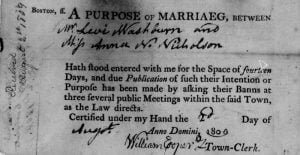
Marriage Intention

The following database represents a collection of 151,208 early Mississippi marriage records. The earliest occurs in 1800, the latest in 1900. The counties represented in the database: Adams, Amite, Carroll, Claiborne, Copiah, Franklin, Harrison, Hinds, Itawamba, Jefferson, Lafayette, Lauderdale, Lawrence, Leake, Lowndes, Madison, Marshall, Monroe, Noubee, Noxubee, Pontotoc, Rankin, Sunflower, Tippah, Tishomingo, Warren, Wilkinson, Winston, Yalobusha, and Yazoo.
Chickasaw Religion

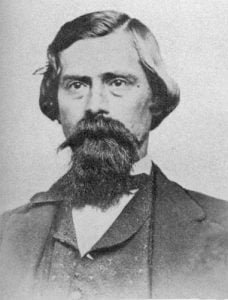
Holmes Colbert

The Chickasaws, unlike the Choctaws, approached natural phenomena like eclipses rationally, viewing them as “sun hidden” rather than omens. Their history includes the notable town of Pakitakohlih, where De Soto’s army wintered in 1540. The Chickasaws fiercely defended their land against French incursions but eventually faced forced removal, leaving behind cherished memories of their homeland. Despite hardships, they maintained their spiritual beliefs and rebuilt their society, demonstrating resilience and determination. Nevertheless, their struggles intensified with further encroachments on their territory and autonomy.

Slave Narrative of Robert Williams

Robert Williams reflects on his life as a slave, recalling his early years in Mississippi and the pain of being separated from his family. He shares memories of working under various masters, the hardships of slave life, and the Civil War’s impact on his world. After emancipation, he navigated a new life while still tied to his former master, learning the value of work and the significance of freedom. Williams acknowledges the importance of education and his desire to read, expressing pride in Abraham Lincoln’s role in their liberation.

Biography of James Augustus Carter

James Augustus Carter, born on October 30, 1858, in Pontotoc County, Mississippi, is a prominent editor of the Baxter County Citizen, a newspaper supporting the Democratic Party. After serving as county assessor, he purchased the Citizen in 1886, significantly increasing its circulation. An advocate for democracy and various reforms, Carter actively participates in community and church affairs. He is also involved in local Masonic organizations. He married Sallie Hogan and has one daughter, Carrie, continuing his family legacy in Baxter County.

Biography of Capt. James Berrien Harper

Capt. James Berrien Harper, born on November 17, 1833, in Franklin County, Georgia, was a notable farmer in Barren Creek Township, Arkansas. After his father’s death in 1851, he supported his family and enlisted in the Confederate Army in 1862, rising to first lieutenant. Captured twice yet unscathed, he returned home post-war to rebuild his life through cotton hauling. He settled in Arkansas, developing his 240-acre farm. Married to May C. Little, they had seven children and were active in the Methodist Church and Democratic politics.

Biography of Joseph M. Henley

Joseph M. Henley, born in 1847 in Franklin County, Georgia, is a notable farmer in Buckhorn Township. The son of John S. Henley, a Methodist minister and Union supporter, Joseph joined the Confederate Army at fifteen but was later discharged due to disability. After moving to Arkansas in 1868, he acquired and improved a 140-acre tract in Gobler Flat. Married to Elizabeth Hawkins, they had five children and are respected members of the Christian Church and the local community.

Biography of Capt. Lewis A. McPherson

Capt. Lewis A. McPherson, born on October 2, 1840, in Alabama, is a notable figure from Mountain Home Township. His family moved to Arkansas in 1844 before returning to Mississippi. A veteran of the Confederate army, McPherson served in multiple engagements during the Civil War. Following the war, he embraced farming and was active in his community, supporting the Democratic Party and the Missionary Baptist Church. A respected Mason, he has held numerous leadership positions and is known for his integrity and commitment to public service.

Chickasaw Tribe

The Chickasaw Indians, a prominent Muskhogean tribe, inhabited areas of northern Mississippi, primarily around Pontotoc and Union counties, and first appeared in European narratives around 1540. Renowned for their warrior spirit and independence, they engaged in numerous conflicts with neighboring tribes, such as the Choctaw and Creeks. Their interactions with European powers were marked by hostility towards the French. Following treaties in the 18th and 19th centuries, they began migrating to lands west of the Mississippi, eventually establishing distinct territories separate from the Choctaw.

Chickasaw Indians

The Chickasaw Indians, part of the Muskhogean group and closely related to the Choctaw, originally inhabited northern Mississippi. They were first encountered by Europeans in 1541 under De Soto, showcasing their warlike nature. As staunch allies of the English, they resisted French expansion. However, increasing land pressures led to their relocation to present-day Oklahoma between 1837 and 1847. The Chickasaw established a government modeled after the U.S. before merging into Oklahoma, with historical populations ranging from 1,900 in 1715 to around 11,000 by 1923.