
Fort Gibson Conference with the Indians, 1834

Catlin Painting a Chief at the Base of the Rocky Mountains

In September 1834, Colonel Dodge convened a significant council at Fort Gibson with chiefs from various tribes, including the Osage, Cherokee, and Kiowa, following earlier negotiations with the Comanche and others. More than 150 representatives attended amidst an atmosphere of curiosity and caution. The conference aimed to solidify peace and arrange future treaties, which were essential for the U.S. expansion into the Southwest. Despite the potential for violence, Dodge successfully navigated tensions, ensuring safe resolutions and presenting gifts to symbolize friendship.
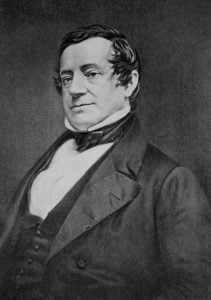
Washington Irving at Fort Gibson, 1832

Irving Washington

The McIntosh Creeks established productive farms along the Arkansas River, but their land was mistakenly included in the 1828 treaty with the Cherokee, leading to tensions and grievances. The Creeks petitioned the government for aid against attacks from other Indian bands. In response, Congress set up a commission to address these issues, appointing three commissioners, including Montford Stokes. Eventually, Washington Irving joined the commission’s journey from St. Louis to Fort Gibson, experiencing the rich tapestry of frontier life and the challenges faced by the tribes.

Lee, Harley Essex – Obituary

Harley E. Lee, a notable figure in Kansas City real estate, passed away on June 13, 1960, at the age of 75. Originally from Ottumwa, Iowa, he relocated from Oklahoma City in 1922 and played a key role in developing a prominent housing area in Leewood. Lee was one of five brothers who co-founded the Lee Hotel in Oklahoma City. He is survived by his wife, Ruth, a daughter, and four grandchildren. Funeral services are scheduled for Wednesday.

Biographical Sketch of B. H. Markham

Bettie Ann Skinner, born April 12, 1888, in the family of James Walker and Lucy Cordelia Skinner, married Baird Hackett Markham in 1909. The couple had two children, Jewell Marie and Baird Hackett. Baird Markham, an accomplished businessman and community leader in Oklahoma City, owned the Markham Motor Company and held various club memberships. He also served in the National Guard, attaining the rank of Colonel. Bettie Ann and Baird Markham were active members of the Presbyterian church.

Biographical Sketch of Maude Ella Webb

James Forrest Webb, born in 1862 in Gwinnett County, Georgia, married Elizabeth Parker in 1882. They had a daughter, Maude Ella Webb, born in 1890. Educated at the Female Seminary, Maude currently serves as a cashier in a drug store in Oklahoma City.

Biographical Sketch of Mrs.Thomas H. Owen

Louise Scott, born August 23, 1877, near Vinita, was the daughter of James Orval and Mary E. Hall. Educated at Vinita and Harrell Institute, she graduated from the latter. On November 2, 1898, she married Luman Franklin Parker, who passed away in 1912. Subsequently, she wed Thomas H. Owen on March 12, 1916, and they settled in Oklahoma City.

Biographical Sketch of Mrs. John R. Alley

Clara Eva Hicks was born on February 10, 1890, in Tahlequah to Edward Daniel and Elizabeth Henryetta Hicks. She graduated from the Female Seminary and married John Reed Alley in Claremore on August 15, 1908. They had a son, Lawrence, in 1910. Clara and John were active members of the Presbyterian Church, and John worked as a contractor in Oklahoma City. Their family connections extend through notable relatives, including Mrs. Edward Daniel Hicks and Mrs. James K. Blake, both notable figures in the community.

Biographical Sketch of Mrs. Hubert Ambrister

Julia Theresa Patton, daughter of William and Jane Patton, wed Dr. Francis Bartow Fite, with their daughter Frances born in Muskogee in 1893. She attended National Cathedral School and graduated from Vassar College before marrying Hubert Ambrister in 1920. Hubert, son of Samuel A. Ambrister, is a law practitioner in Oklahoma City and served in the Aviation Corps during World War I. The Adair family, linked to Thomas James Adair, has deep roots in Tahlequah, with their accomplished daughter Emily a graduate of Northeastern Oklahoma State Normal.

Biographical Sketch of Mrs. William R. Samuel

Minnie L. Hayden, born on April 5, 1879, in Chouteau, was the daughter of Clement and Rebecca Caroline Bryan Hayden. After her education in Liberty, Missouri, she married William Ruben Samuel on April 21, 1901. William, a graduate of Stephens College, served as Secretary of the State Bankers Association and as State Insurance Commissioner. The couple, residents of Oklahoma City and members of the Methodist church, had one daughter, Rebecca Ann Samuel, born on October 3, 1917.

Biographical Sketch of Mrs. Roy Letteer

Lahoma Lucile, born on May 4, 1900, in Skiatook, is the daughter of Chief William Charles Rogers and Nannie Haynie. After her education in Skiatook, she married Roy Letteer in Oklahoma City on October 19, 1920. They welcomed their daughter, Jane E. Letteer, on September 11, 1921. Notably, Mrs. Letteer is a descendant of prominent Cherokee leaders, being the granddaughter of Chief William Charles Rogers and the great-granddaughter of Captain John Rogers, the last chief of the Old Settler Cherokees.

Slave Narrative of Alice Alexander

Alice Alexander, born in 1849 in Louisiana, reflects on her early life during slavery, recalling her family’s transition after her mother’s master died. They moved to Mississippi where they lived in a log hut and faced hardship, subsisting on corn bread and molasses. Despite limited memories of slavery, Alice shares stories of a cruel overseer and her mother’s resilience. After emancipation, her family sought prosperity in Oklahoma, although education opportunities fell short. Now at 88, Alice cherishes her home and family, having worked tirelessly throughout her life.

Slave Narrative of Jane Montgomery

Jane Montgomery, born March 15, 1857, in Homer, Louisiana, reflects on her early life as a slave. Her parents, Sarah Strong and Edmond Beavers, were bought by her master. She describes living conditions, family dynamics, and the limited food available. Jane recalls her mother’s protection from punishment and the absence of patrollers. After the Civil War, the realization of freedom came slowly. Jane later married Trole Kemp and raised ten children, emphasizing the importance of education and acknowledging notable figures like Abraham Lincoln and Booker T. Washington.

Slave Narrative of Hal Hutson

Hal Hutson, born in Galveston, Tennessee, in 1847, recounts his childhood as a slave on Master Brown’s plantation. He lived in one-room log huts with his family, endured harsh labor, and faced the overseer’s brutality. Despite restrictions, he learned to read and write, sharing knowledge with white children. After the Civil War, Hutson celebrated his newfound freedom but continued working for wages. A devout Christian and community member, he reflects on his life and family, emphasizing the importance of education and gratitude for emancipation.

Slave Narrative of Mattie Hariman

Mattie Hariman, born January 2, 1859, in Gunalis, Texas, reflects on her life as a slave under Master William Henry Edward. The plantation, with 40 slaves, provided relatively mild conditions, with a caring Mistress who taught religious lessons. Hariman’s mother discovered their impending freedom, leading to their emancipation on June 19, 1865. Despite the harsh realities of life post-slavery, Hariman expresses a nostalgic longing for the order of the past, critiquing behaviors of some in her community. She has four children and two grandchildren.

Slave Narrative of Doc Daniel Dowdy

Doc Daniel Dowdy, born June 6, 1856, in Madison County, Georgia, recounts his life as a slave and the hardships faced by his family. With nine brothers and one twin sister, he describes the conditions of their living and working on the plantation, the pain of witnessing family members sold, and the brutal treatment of slaves. After emancipation, he moved to Oklahoma in 1906, reflecting on figures like Abraham Lincoln and Booker T. Washington, while still actively participating in his community and church.

Slave Narrative of Hannah McFarland

Hannah McFarland, born on February 29, 1853, in Georgetown, South Carolina, recounts her experiences as the daughter of a free father and enslaved mother. Despite her father’s wealth, her mother remained enslaved by the Sampson family. Hannah faced hardships, including abuse from caretakers and the challenges of war. She later moved to Oklahoma, reflecting on her life and the differences between regions. A Methodist, she emphasizes the importance of faith and recounts her marriage and family life, noting that only one of her twelve children survives today.

Slave Narrative of Stephen McCray

Stephen McCray, born in 1850 in Alabama, recalls his childhood as the son of enslaved parents. He describes living in log huts and working as a child, mainly assisting with cooking and fishing. Marriage required permission from the master, and the threat of violence loomed over enslaved people, notably from patrollers and the Klu Klux Klan. Although McCray had no formal education, he reflects on his experiences and beliefs about slavery, ultimately advocating for individual freedom and faith in God following a personal conversion.

Slave Narrative of George Conrad, Jr.

George Conrad, Jr., born on February 23, 1860, in Kentucky, recounts his life as a slave and later as a soldier. He describes his family’s history, the dynamics of life under their master, Joe Conrad, and the agricultural practices of the time. Conrad shares personal memories, including his father’s enlistment in the army, the hardships faced, and the treatment of slaves. He also discusses his military service in the U.S. Army after emancipation, providing insight into his experiences during and post-Civil War, along with reflections on notable historical figures.

Slave Narrative of Betty Foreman Chessier

Betty Foreman Chessier, born on July 11, 1843, in Raleigh, North Carolina, recounts her experiences as a slave under Governor Manley. Separated from her family, she worked in the Big House, had minimal clothing, and was not allowed to learn. She witnessed the Civil War’s impact and the chaos of Union soldiers’ arrival, which changed her life. After the war, she relocated to Oklahoma with her child. Chessier emphasizes the value of freedom, prayer, and the influential figures of Lincoln and Booker T. Washington in her narrative.