Alabama Funeral Home Records

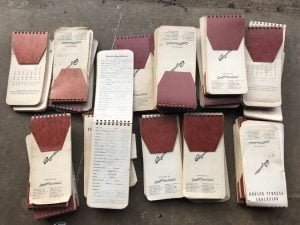
Funeral Log Books

This page links to known Alabama Funeral Records whether they be available online or offline. Funeral records are an invaluable source of genealogical information that can provide insight into the lives and deaths of our ancestors. They offer a wealth of details on the deceased and their family, including their names, ages, dates of death, causes of death, and other key information. While funeral records can be found in a variety of places, genealogists must be careful when interpreting the information they contain, paying close attention to accuracy and cultural context. By using funeral records in their research, genealogists can gain a deeper understanding of their ancestors and build a more complete picture of their family history.
North America Indian Names of Places in Mississippi, Alabama, Georgia, Florida, and Louisiana

The post examines the significance and origins of North American Indian place names in Mississippi, Alabama, Georgia, Florida, and Louisiana, particularly those derived from the Choctaw and Chickasaw languages. It highlights how these names reflect the rich cultural and linguistic heritage of the Native American tribes, while noting that many translations have become corrupted over time. The text provides numerous examples of place names alongside their original meanings, illustrating the deep historical connections embedded in the geography of the region.

Memoirs of the LeFlore Family

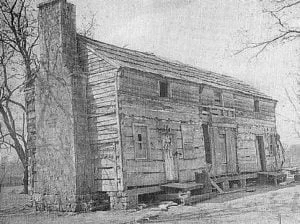
The Old Farm House: The Pioneer Home of a Choctaw Chief, Leflore, and of the Oak Hill School

The Cravat and LeFlore families are significant figures among the Choctaws. John Cravat, a Frenchman, integrated into the community through marriage, fathering notable descendants. Major Louis LeFlore and his brother Michael, also of French descent, played crucial roles in the Choctaw Nation, with Louis becoming a respected chief. Their lineage boasts influential figures, including Basil LeFlore, renowned for his moral integrity and public service. The families contributed to the cultural and historical landscape of the Choctaws, persisting as prominent citizens within the nation.

Memoirs of Nathaniel Folsom

The memoirs of Nathaniel Folsom recount his life, beginning in North Carolina in 1756 and his family’s journey to the Choctaw Nation. Folsom details his early education, family struggles, and life as a trader among the Choctaws for thirty years. He describes significant cultural practices, community dynamics, and his eventual conversion to Christianity. Folsom, who had two wives and fathered twenty-four children, emphasizes his moral values and enduring ties to the Choctaw people until his death in 1833.

Memoirs of John Pitchlynn

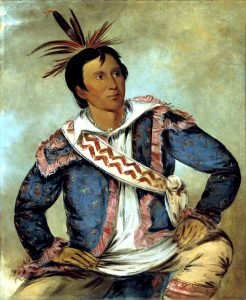
Peter Perkins Pitchlynn was the Choctaw Principal Chief from 1864-1866

John Pitchlynn was a notable figure in the Choctaw Nation, recognized as a benefactor who integrated into their society by marrying a Choctaw woman and serving as an interpreter for the U.S. government. He gained the respect of both the Choctaws and missionaries through his moral conduct. His son, Peter P. Pitchlynn, became a prominent leader and advocate for education and peace among tribes, notably facilitating a treaty with the Osages. Known for his integrity and leadership, Peter’s legacy reflects the potential for collaborative progress within Native communities.

Mound Builders

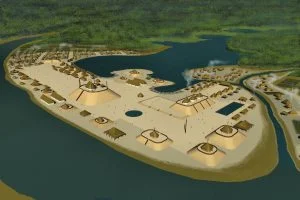
Bottle Creek Mounds

The post discusses the connection between ancient mounds in North America and the indigenous tribes, refuting the notion that these structures were built by a distinct race known as the Mound Builders. Evidence presented includes similarities in skull structure among various tribes and the fortified nature of their towns. Early European explorers observed these communities engaged in agriculture and crafting, challenging the idea of indigenous nomadism. The author argues that the mounds are the work of Native Americans, the true ancestors of today’s tribes, and emphasizes the importance of understanding their legacy.

Choctaw Culture

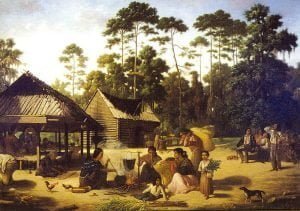
Choctaw Village near the Chefuncte, The women appear to be making dye to color the strips of cane beside them, by François Bernard, 1869

The Choctaw people historically relied on unwritten customs for governance, engaging in barter without contracts or money, resulting in a society free of lawyers and prisons. Their beliefs emphasized respect for the dead and a connection to nature. Despite a lack of written language, they conveyed knowledge through symbols and oral traditions. The Choctaws demonstrated remarkable advancements in agriculture and intellectual capacity, sustaining social equality without established hierarchies. Their governance reflected communal interests, prioritizing the well-being of their tribe above individual gain.

The Biloxi and Pascagoulas

In 1712, French explorer Iberville anchored near what is now Ship Island and discovered a peculiar island animal, naming it Cat Island. They then encountered the Biloxi tribe, a Choctaw clan, which led to the establishment of Biloxi, the oldest town in Mississippi. Eastward, they found the Pascagoulas, also a Choctaw clan. The name Pascagoula means “Bread People.” Local traditions among the Pascagoulas recount a legendary encounter with a mysterious white man who, alongside the tribe, was entranced by a siren, leading to their demise.

Prominent White Men among the Chickasaws

Holmes Colbert

In the early days, a few cultured white men, drawn by the Chickasaw way of life, integrated into the nation. Notably, figures such as James Gunn, Logan Colbert, and Malcomb McGee became part of Chickasaw society, aiding in moral and educational advancements. Despite myths of a McIntosh, who was misrepresented as influential, the true contributions of these men remain significant. They sought genuine connections with the Chickasaws, contrasting sharply with later intruders motivated by avarice, casting a long shadow over indigenous relationships.

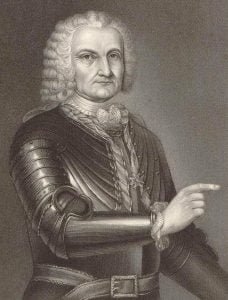
Gov. Perier and Bienville

Bienville

The English colonists, wary of French expansion along the Mississippi, fostered conflicts between French and Native American tribes, particularly igniting animosity with the Chickasaws after a failed French escort led to their warriors’ deaths. Bienville, the French governor, attempted to use the Choctaws against the Chickasaws but faced significant resistance. Subsequent military expeditions by both Bienville and d’Artaguette ended in disastrous defeats against Chickasaw defenses. Ultimately, the Chickasaws showcased their resilience, marking critical victories that hindered French ambitions in the region.

The Discovery Of This Continent: It’s Results To The Natives

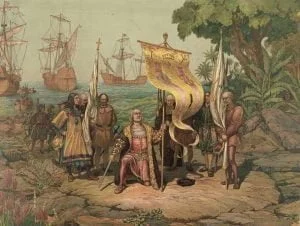
Columbus Landing on Hispaniola

In 1470, Christopher Columbus married Dona Felipa, daughter of a renowned navigator, and settled in Porto Santo, where they shared dreams of discovering lands to the West. Their ambitions fueled Columbus’s determination, leading to his 1492 voyage that resulted in the European discovery of the Americas. However, this event marked the beginning of devastation for native peoples, introducing warfare, disease, and colonization that would decimate their populations and cultures, ultimately transforming their rich, diverse societies into shadows of their former selves.

The Meeting in 1811 of Tecumseh and Apushamatahah

Peter Perkins Pitchlynn was the Choctaw Principal Chief from 1864-1866

In 1811, Tecumseh, the Shawnee leader, met with Apushamatahah, a prominent Choctaw chief, to rally southern tribes against American encroachment amidst looming war between the U.S. and England. Tecumseh passionately urged unity against their common foe, warning of the dire consequences of inaction. Apushamatahah countered with a call for prudence, advocating for peaceful measures. Ultimately, the council resulted in favoring American alliance, thwarting Tecumseh’s ambitions. This pivotal meeting highlighted the contrasting strategies of the two influential leaders, shaping tribal responses during a critical historical period.

The Seminole War of 1816 and 1817 – Indian Wars

colonel clinch

In the aftermath of the War of 1812, British agents Edward Nicholls and James Woodbine rallied Indigenous and Black groups in Florida to challenge U.S. expansion. They fortified a stronghold that Colonel Clinch besieged, resulting in the fort’s destruction and a significant enemy casualty count. Following further conflicts and the rise of General Jackson, who captured key territories, the U.S. ultimately took control of Florida in 1819, resolving lingering tensions with Spain and concluding the Seminole War for the time being.

Mobile County Alabama Marriage Records

Mobile County, Alabama, offers extensive online marriage records through various archives, including Alabama GenWeb and Ancestry.com. These records span from 1800 to 1969, detailing names of brides and grooms alongside their marriage dates. Key collections include a compilation of miscellaneous marriages and information extracted from county courthouse documents. Researchers can explore a wealth of historical data housed in formats ranging from microfilm to digital databases, providing a vital resource for understanding the region’s marital history.

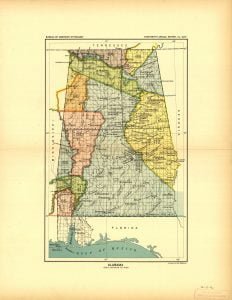
Alabama Land Cessions Map

Alabama Land Cessions Map

The Alabama Land Cessions map, created by A. Hoen Company in 1896, documents 16 specific land cessions made through treaties and agreements between the United States and various Native American tribes prior to that year. It serves as a reference for Charles C. Royce’s compilation of Indian land cessions across the U.S., providing insights into historical land negotiations involving the Choctaws, Cherokees, and Chickasaws. Each cession is linked to treaties, detailing boundaries and land relinquishments throughout Alabama.

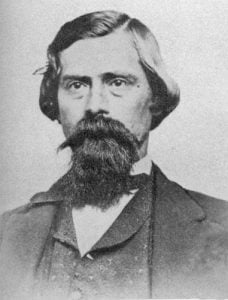
Biographical Sketch of Judge Mark W. Delahay

Judge Mark W. Delahay, a native of Maryland and a leading figure in Kansas’s early history, was a pioneering newspaper editor and Federal judge. After moving to Leavenworth in 1855, he founded the Leavenworth Register and supported the free-state movement. Delahay attended the Topeka convention and played a vital role in the establishment of the Republican Party in Kansas. Appointed as U.S. district judge by President Lincoln, he served until 1873. He passed away in Kansas City on May 8, 1879.

Slave Narrative of Aunt Betty Cofer

Aunt Betty Cofer, born in 1856, shares her memories of life as a slave on the Jones plantation in North Carolina. Despite the hardships of slavery, she recounts her experiences with fondness for Miss Ella, the daughter of the plantation owners, who treated her kindly. Aunt Betty describes the daily life of enslaved people, including their work, education, and the importance of community. She also reflects on freedom and the lasting bonds with the Jones family, remaining a cherished figure in their legacy.

Biography of Quitman U. Newell, M. D.

Dr. Quitman U. Newell, born on June 14, 1886, in Alabama, is a distinguished gynecologist and obstetrician in St. Louis. Graduating from the University of Alabama in 1911, he has held various prominent positions, including obstetrician at the St. Louis Maternity Hospital, while contributing extensively to medical literature. His military service during World War I included significant surgical roles. Married in 1920, Dr. Newell is also active in numerous professional and fraternal organizations, exemplifying dedication and resilience throughout his successful medical career.

Fort Morgan, Mobile Bay, Alabama

Mobile Bay, a pivotal site in early American history, hosted Fort Louis de la Mobile, the first settlement’s protector, evolving through diverse control. Notably, Fort Morgan, initially Fort Bowyer, was a significant defensive structure during the War of 1812, where Major Lawrence famously repelled a British assault. Later, it played a crucial role in the Civil War but fell to Union forces led by Farragut after a protracted siege. Today, Fort Morgan stands in ruins, reflecting its storied past on the shores of Mobile Bay.

Mobile Indians

The Mobile Indians, possibly derived from the Choctaw word for paddle, were historically located near the confluence of the Alabama and Tombigbee Rivers. Known for their chief Tuscaloosa, they fiercely opposed Spanish invaders in 1540, suffering significant casualties. Their population was once substantial, estimated at 6,000 to 7,000. However, by the 18th century, their numbers dwindled, possibly merging with the Choctaw Nation. The tribe’s historical significance stems from their resistance to colonization, giving their name to the city of Mobile in Alabama.