Early Mississippi Marriages 1800-1900

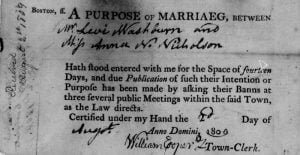
Marriage Intention

The following database represents a collection of 151,208 early Mississippi marriage records. The earliest occurs in 1800, the latest in 1900. The counties represented in the database: Adams, Amite, Carroll, Claiborne, Copiah, Franklin, Harrison, Hinds, Itawamba, Jefferson, Lafayette, Lauderdale, Lawrence, Leake, Lowndes, Madison, Marshall, Monroe, Noubee, Noxubee, Pontotoc, Rankin, Sunflower, Tippah, Tishomingo, Warren, Wilkinson, Winston, Yalobusha, and Yazoo.

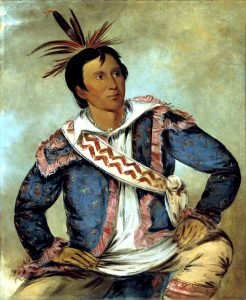
North America Indian Names of Places in Mississippi, Alabama, Georgia, Florida, and Louisiana

The post examines the significance and origins of North American Indian place names in Mississippi, Alabama, Georgia, Florida, and Louisiana, particularly those derived from the Choctaw and Chickasaw languages. It highlights how these names reflect the rich cultural and linguistic heritage of the Native American tribes, while noting that many translations have become corrupted over time. The text provides numerous examples of place names alongside their original meanings, illustrating the deep historical connections embedded in the geography of the region.

Choctaw Nation and the Greer County Dispute

1818 Melish Map of the United States

The dispute over Greer County involves the Attorney General of the United States challenging Texas’s claims based on the 1819 Adams-Onís Treaty, which established boundaries between the U.S. and Spain. Despite the treaty, Texas has asserted jurisdiction over the territory in violation of U.S. treaty rights. The case seeks judicial clarification of whether the disputed land falls under U.S. or Texas authority, emphasizing historical claims stemming from significant early treaties and ongoing tensions regarding territorial rights and ownership.

The Meeting in 1811 of Tecumseh and Apushamatahah

Peter Perkins Pitchlynn was the Choctaw Principal Chief from 1864-1866

In 1811, Tecumseh, the Shawnee leader, met with Apushamatahah, a prominent Choctaw chief, to rally southern tribes against American encroachment amidst looming war between the U.S. and England. Tecumseh passionately urged unity against their common foe, warning of the dire consequences of inaction. Apushamatahah countered with a call for prudence, advocating for peaceful measures. Ultimately, the council resulted in favoring American alliance, thwarting Tecumseh’s ambitions. This pivotal meeting highlighted the contrasting strategies of the two influential leaders, shaping tribal responses during a critical historical period.

Pitchlynn Choctaw Family – List of Mixed Bloods

Peter Perkins Pitchlynn was the Choctaw Principal Chief from 1864-1866

The Pitchlynn Choctaw family, while small in number, holds a significant historical position in the Old Southwest and Indian Territory. Isaac Pitchlynn was alive in 1804, and his son John Pitchlynn, Jr. served as the Choctaw interpreter at the 1786 Treaty of Hopewell. The family played a crucial role in mediating between the Choctaw Nation and the United States, engaging with early presidents and facilitating treaties. Their legacy includes promoting cooperation and adaptation during a time of profound change leading up to Indian removal.

Slave Narrative of Anna Baker

Anna Baker, an 80-year-old former slave from Mississippi, recounts her experiences during slavery and the years following the Civil War. Born near Tuscaloosa, Alabama, she grew up under Master Morgan Clemens, who valued her for her intelligence. After emancipation, Baker was reunited with her mother, Harriet, and learned to read and write. Now living alone in Aberdeen, she relies on a government loan for her home and looks forward to potential assistance from old age pensions, maintaining her faith in the Lord.

Slave Narrative of Jim Allen

Jim Allen, an 87-year-old former slave from West Point, Mississippi, recounts his life experiences during slavery. Born in Russell County, Alabama, he describes his family’s separation due to debts and the nature of his work as a boy. He reflects on the treatment he received from his owners, highlighting both kindness and harsh realities of slavery, including punishment and the constant watch of patrollers. After the Civil War, he navigated a changing society, marrying young and contributing to his community, while cherishing his memories of old traditions and beliefs.

Biography of Daniel W. Feemster

Daniel W. Feemster, born in 1853 in Lowndes County, Mississippi, is a notable merchant and produce dealer in Noble, Missouri. His father, Rev. Zenus E. Feemster, was an influential Independent Presbyterian and Congregational minister. Daniel pursued education at Tuscom College and began farming at twenty before transitioning to business due to health issues. He is a dedicated community member, founding Noble Academy and serving as a justice of the peace and notary public. Feemster’s commitment to civic duty and education highlights his prominent role in the area.

Biography of Hiram W. Lewis, Col.

Colonel Hiram W. Lewis was a prominent figure in Wichita and Kansas, known for his business acumen and civic contributions. Enlisting in the Civil War as a private, he rose to corporal and was wounded at Chickamauga. After a decade in Mississippi, he moved to Wichita around 1875, where he became a banker, founding several banks, including the Kansas National Bank. A staunch supporter of temperance and education, he helped establish the Lewis Academy. Lewis passed away on February 12, 1912, leaving a lasting legacy in Wichita.