Threads of ancestors, Telford – Ritchie – Mize

Threads of ancestors, Telford - Ritchie - Mize: a link among the days which binds the generations each with each

“Threads of Ancestors: Telford – Ritchie – Mize: A Link Among the Days Which Binds the Generations Each with Each,” authored by Leila Ritchie Mize and Jessie Julia Mize, explores the intricate tapestry of family lineage and migration across continents and centuries. Tracing roots back to Alexander Telford Sr., who settled near Rockbridge, Virginia around 1760, this book delves into the journeys and settlements of his descendants across the United States. Highlighting the Scotch-Irish origins of these families, the authors meticulously draw upon an extensive array of sources, including family Bibles, historical records, and personal diaries, to provide a detailed account of the Telford, Ritchie, and Mize families. Their narrative not only charts the genealogical paths of these families but also illuminates their substantial roles in the historical and cultural development of the regions they inhabited. This work stands as a testament to the enduring bonds and shared heritage that link successive generations, forming a foundational piece for both family members and historians interested in the Scotch-Irish contribution to American history.

Peace Attempts with Western Prairie Indians, 1833

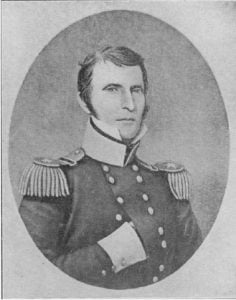
General Henry Leavenworth

In 1830, the Treaty of Dancing Rabbit Creek initiated the relocation of the Choctaw Indians to territories between the Canadian and Red rivers. However, the Choctaw faced threats from Comanche, Kiowa, and Wichita tribes, who attacked traders and settlers. In May 1833, Colonel Arbuckle sent a military expedition to protect the traveling Choctaw and assert U.S. power. Despite efforts, the expedition suffered losses, including ranger George B. Abbay, who was captured, and ultimately failed to achieve its objectives, highlighting the challenges of westward expansion.

Wright Family of Boston, MA

The Wright family, an early Boston lineage, traces its origins to Richard Wright, who settled in Plymouth around 1644. Over generations, the family intermarried with prominent New England clans like the Adams and Wentworths. Notable descendants include Theodore Francis Wright, a significant figure in the New Jerusalem Church, and Augustus Hunt Wright, a Civil War veteran and community leader in Abington. Their legacy reflects the family’s deep roots in American history and its contributions to religion, education, and civic life in Massachusetts.

Descendants of Charles Keith of Bridgewater, Massachusetts

Rev. James Keith

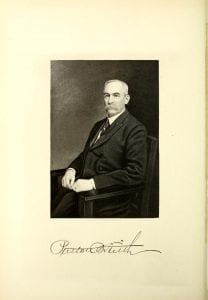
Charles Keith, born in 1794, married Mehitable Perkins in 1817, and they had several children, including Charles Perkins Keith, who became a prominent shoe manufacturer in Brockton, Massachusetts. Charles Perkins Keith’s business thrived from the mid-19th century, establishing a legacy in the shoe industry. His sons, Preston Bond and Rufus Perkins Keith, continued this tradition, holding significant roles in local manufacturing and banks while actively contributing to the community and the South Congregational Church. The Keith family remains a notable presence in Bridgewater’s history.

Washington Irving at Fort Gibson, 1832

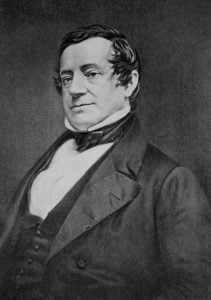
Irving Washington

The McIntosh Creeks established productive farms along the Arkansas River, but their land was mistakenly included in the 1828 treaty with the Cherokee, leading to tensions and grievances. The Creeks petitioned the government for aid against attacks from other Indian bands. In response, Congress set up a commission to address these issues, appointing three commissioners, including Montford Stokes. Eventually, Washington Irving joined the commission’s journey from St. Louis to Fort Gibson, experiencing the rich tapestry of frontier life and the challenges faced by the tribes.

The Discovery Of This Continent: It’s Results To The Natives

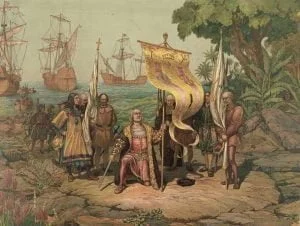
Columbus Landing on Hispaniola

In 1470, Christopher Columbus married Dona Felipa, daughter of a renowned navigator, and settled in Porto Santo, where they shared dreams of discovering lands to the West. Their ambitions fueled Columbus’s determination, leading to his 1492 voyage that resulted in the European discovery of the Americas. However, this event marked the beginning of devastation for native peoples, introducing warfare, disease, and colonization that would decimate their populations and cultures, ultimately transforming their rich, diverse societies into shadows of their former selves.

Through Ohio And Kentucky

From October 18 to November 3, the traveler and a companion journeyed through Ohio and Kentucky, encountering muddy roads, hilly terrain, and varying degrees of settlement. They observed a decline in land quality and hospitality as they moved westward, noting indifferent buildings and unwelcoming locals. Key stops included Siers, Freeport, Zanesville, Chillicothe, and Louisville, where they experienced both hospitality and disappointment. The journey concluded with reflections on the changing landscapes and the people met along the way, contrasting Ohio’s and Kentucky’s societal characteristics.

Biography of the Hensley Brothers

Samuel and Benjamin Hensley, of an English lineage, settled in Virginia before moving westward. Samuel married twice, having several children, including Samuel, Jr. and William. William’s line produced notable members, including Thomas Hensley, a war veteran who migrated to Missouri with his family. After various challenges including a boat sinking, he settled in St. Louis County, where he became a respected Baptist minister. His courtship with Harriet Rust was marked by a chance encounter that blossomed into a lasting marriage, resulting in nine children.

Biographical Sketch of John McGhee

John McGhee, originally from Ireland, married English native Margaret Adams, and together they migrated to Shelby County, Kentucky, where they had several children: Lynch, Emily, Margaret, James, Washington, Nancy, and Rice. Lynch, a physician, later moved to St. Louis after remarrying. Washington, who died in 1828, left behind a widow, Julia Sibley, and four children. Margaret and her children relocated to Montgomery County, Missouri, in 1841, where she continued to live well into her later years.

Biographical Sketch of George Godfrey

George Godfrey resided in Ritford, England, and with his wife Mary Ostick, settled in several locations in Pennsylvania and Missouri during the early 19th century. His lineage includes several sons, notably Thomas, who moved to Canada, and John, who ventured to California. Godfrey’s contributions extended to his active role within the Methodist Church, reflecting a strong commitment to his faith. His family also spread across the United States, with branches in Kentucky and Missouri, showcasing a diverse and widespread legacy.

Slave Narrative of Angie Boyce

Angie Boyce, born on March 14, 1861, at the Breeding Plantation in Adair County, Kentucky, recounts her early life in slavery and the struggle for freedom. Her parents, Henry and Margaret King, were enslaved by James Breeding, a Methodist minister known for his kindness. The family faced severe challenges, including a traumatic arrest during their attempted escape to Indiana, where they were jailed. Eventually, they were exonerated and returned to Indiana, where Angie now resides.

Slave Narrative of John Eubanks

John Eubanks, born June 6, 1839, in Kentucky, reflects on his life as a slave on the Everett plantation, recalling harsh conditions and limited clothing. Despite the brutality, he experienced relatively lenient treatment from his owner’s daughter, Becky. Eubanks describes his enlistment in the Union Army and participation in significant battles during the Civil War. After the war, he married and worked various jobs, eventually settling in Gary, Indiana, where he lives with his daughter at the age of 98, sharing vivid memories of his past.

Slave Narrative of John Rudd

In an interview conducted by Lauana Creel, 83-year-old John Rudd recounts his experiences as a former slave, emphasizing the severe hardships and cruelties he endured. Born on December 25, 1854, in Kentucky, Rudd vividly recalls the trauma of being sold at auction and witnessing the brutal treatment of fellow slaves. He highlights the challenges faced by his mother, Liza, and their eventual reunion after the Civil War. Rudd’s life reflects the painful legacy of slavery and the resilience required to overcome it.

Slave Narrative of Thomas Lewis

In a 1937 interview, Thomas Lewis recounts his life as a former slave born in Kentucky in 1857. Freed at age seven, he describes the challenges faced by freed Black families in Indiana, including violent raids by white farmers. Lewis shares experiences of Civil War soldiers interacting with his family and the harsh realities of slavery, emphasizing the brutality of slave owners and the haunting legacy of violence endured by Black people. He has lived in Bloomington since his family’s relocation during his youth.

Biography of George Octavius Boone

George Octavius Boone, born on December 25, 1861, in Louisville, Kentucky, moved to Kansas in 1881 and worked as a commercial traveler for over thirty-five years, including a longstanding affiliation with the Topeka Daily Capital. Descended from a family with roots dating back to 1516, he was educated at the Virginia Military Institute. Boone married Myrtle Hughes in 1887 and had five children. His grandfather, John William Boone, a War of 1812 veteran, significantly influenced his early life.

Biographical Sketch of Gen. John A. Halderman

Gen. John A. Halderman, born in Kentucky, became a prominent figure in Kansas, excelling in law, military, and diplomacy. After moving to Leavenworth in 1854, he held various roles, including private secretary to the first territorial governor and probate judge. He served as a major in the Civil War and later as a major-general in the state militia. Appointed consul to Bangkok and the first U.S. minister to Siam, he received several honors from foreign governments. Halderman returned to Leavenworth in 1885, later lived in Washington, D.C., and died in 1908.

Slave Narrative of Susan Dale Sanders

Susan Dale Sanders, born in a log cabin in Spencer County, Kentucky, recounts her life as a slave under Master Rueben Dale, who treated her family well. She describes her childhood of hard work, family gatherings, and the community spirit among slaves. After the Civil War, she was informed of her freedom by Mrs. Lovell, her master’s daughter, and continued to work for her. Sanders eventually married William Sanders, had six children, and reflects on the beliefs and traditions of her upbringing.

Slave Narrative of Joana Owens

Joana Owens, an elderly former slave, recounts her life in Kentucky. Born to enslaved parents, she lived under the harsh rule of Master Nolan Barr in Hawesville, where she and her family faced brutal treatment. At around fourteen, she witnessed the severe punishments meted out to slaves. After emancipation, Joana married and relocated to Louisville. She recalls childhood memories of watching red hospital boats bringing wounded soldiers and singing with her sister along the river. Her narrative reflects the struggles and resilience of enslaved individuals.

Slave Narrative of Martha J. Jones

Martha J. Jones, born in Buckingham County, Virginia, in 1847, shared her memories of the Civil War during an interview at age 90. She recounted her upbringing on a large farm and her father’s involvement in West Virginia’s legislature. Three of her brothers fought for the Confederacy, with one dying in battle. Married to Union Army lieutenant John R. Jones, she eventually settled in New Castle, Kentucky. Jones noted her father’s humane treatment of their three slaves, contrasting with her uncle’s practices of buying and trading slaves.