Early Mississippi Marriages 1800-1900

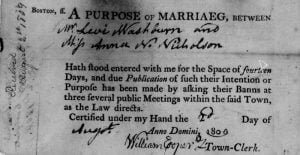
Marriage Intention

The following database represents a collection of 151,208 early Mississippi marriage records. The earliest occurs in 1800, the latest in 1900. The counties represented in the database: Adams, Amite, Carroll, Claiborne, Copiah, Franklin, Harrison, Hinds, Itawamba, Jefferson, Lafayette, Lauderdale, Lawrence, Leake, Lowndes, Madison, Marshall, Monroe, Noubee, Noxubee, Pontotoc, Rankin, Sunflower, Tippah, Tishomingo, Warren, Wilkinson, Winston, Yalobusha, and Yazoo.

North America Indian Names of Places in Mississippi, Alabama, Georgia, Florida, and Louisiana

The post examines the significance and origins of North American Indian place names in Mississippi, Alabama, Georgia, Florida, and Louisiana, particularly those derived from the Choctaw and Chickasaw languages. It highlights how these names reflect the rich cultural and linguistic heritage of the Native American tribes, while noting that many translations have become corrupted over time. The text provides numerous examples of place names alongside their original meanings, illustrating the deep historical connections embedded in the geography of the region.

Slave Narrative of Nettie Henry

Nettie Henry, an 82-year-old ex-slave from Meridian, Mississippi, recounts her life from being born in Alabama and moving to Meridian with her family. Her mother worked for Miss Lizzie, and Nettie describes the changes in society following the Civil War, including the arrival of Union soldiers and the aftermath of slavery. Despite hardships, she reflects on positive experiences, such as education through local white families. Nettie also details family life, community ties, and her enduring Christian values. She remains proud of her family’s resilience and contributions to her community.

Slave Narrative of Sam McAllum

Sam McAllum, born in 1842 in Mississippi, recounts his experiences as an ex-slave and his life during and after the Civil War. He describes his early life on the Stephenson Plantation, the challenges of wartime scarcity, and the complexities of post-war freedom. He details the violence and social upheaval in Kemper County, including the influence of the Chisolm family and the Ku Klux Klan. Ultimately, McAllum’s narrative highlights his resilience and the broader struggles for African Americans in the changing South.

Slave Narrative of Susan Snow

Susan Snow, born in 1850 in Wilcox County, Alabama, recounts her experiences as an ex-slave. At 87, she reflects on her upbringing, her mother’s fierce nature, and life on a plantation. Despite facing hardships, including punishments and a lack of formal education, she recalls the strong community of enslaved people and their songs. After the Civil War, Susan navigated a challenging world, ultimately finding faith and redemption. Her narrative captures personal resilience, cultural traditions, and the complexities of life in post-slavery America.

Slave Narrative of Berry Smith

Berry Smith, a centenarian born into slavery in Alabama, recounts his life as a house servant and laborer across several plantations in Mississippi. He shares memories of both hardships and small joys, detailing his experiences with overseers, family, and community, alongside moments of play and resistance against oppression. After the Civil War, Smith navigated freedom while working various jobs, including cooking for soldiers. Now living independently, he reflects on a lifetime of labor, the changing dynamics of youth today, and his hope for a peaceful afterlife.

Slave Narrative of Fannie Alexander

Fannie Alexander, interviewed by Irene Robertson in Helena, Arkansas, shares her experiences as a former enslaved person. Her mother-in-law, Alice Drummond, recounted a revolt against an overseer by women field hands, emphasizing the community’s resilience. Fannie reflects on her family’s industriousness; her father was a shoemaker who worked on Sundays to support them. After marrying young, she moved to Arkansas, where she worked as a seamstress and teacher, highlighting her commitment to education in both public and church settings.

Margaret Ferrill Dawes Commission Examination

On April 12, 1901, Margaret Ferrill testified before the Commission to the Five Civilized Tribes in Meridian, Mississippi, seeking to identify herself and her three children as Mississippi Choctaws. Aged 55, she claimed half Choctaw heritage through her deceased father, Captain John, and confirmed her mother was a former slave. Despite her belief in their Choctaw ancestry, Margaret had never received benefits or been formally recognized by tribal authorities. She expressed willingness to move to the Choctaw Nation if her application was successful.

Candis Allen Dawes Commission Examination

On April 11, 1901, Candis Allen testified before the Commission to the Five Civilized Tribes in Meridian, Mississippi, seeking identification as a Mississippi Choctaw for herself and her eight children. She claimed Cherokee heritage through her father, Captain John, a full-blood Choctaw, but lacked documentation and knowledge regarding his ancestry and treaty compliance. The commission noted her limited awareness of Choctaw customs and language, which likely affected the outcome of her application for tribal identification for herself and her children.

Margaret Ferrill Dawes Application

On April 12, 1901, Margaret Ferrill applied to identify herself and her three children as Mississippi Choctaws, claiming descent from Captain John, a supposed full-blood Choctaw. The application lacks evidence, as they were not listed on any tribal rolls nor recognized by the Choctaw Nation or the United States. Similar claims were made by Emma Hayes and Jack Ferrill, both of whom also failed to provide sufficient documentation of their alleged Choctaw ancestry or compliance with the treaty of 1830.

Indiana Coleman Dawes Commission Examination

On April 11, 1901, Indiana Coleman appeared before the Dawes Commission in Meridian, Mississippi, seeking identification as a Mississippi Choctaw. Aged 25, she claimed to have one-fourth Choctaw blood through her mother, who identified as half Choctaw. Coleman acknowledged no prior citizenship claims in the Choctaw nation and lacked knowledge of treaties or benefits associated with Choctaw ancestry. The Commission granted her attorneys permission to submit further evidence supporting her claim within thirty days.

Julia Thompson Examination by the Commission

Julia Thompson, a 74-year-old woman from Hale, Mississippi, testified before the Commission on April 17, 1901, regarding her claim of Choctaw Indian ancestry. She stated her great-grandfather was a full-blood Choctaw and her father, Willoughby Trotter, also claimed Choctaw blood. Despite her assertions, she had not been recognized as a Choctaw citizen, nor had she applied for such status previously. Her application emerged from her belief that her children had made similar claims, yet she lacked substantial evidence of her ancestry.

Julia Thompson Dawes Consolidated Cases

The consolidated case includes thirteen separate applications from individuals seeking identification as Mississippi Choctaws, submitted in April 1901. Notably, Julia Thompson’s application is examined in detail; she claims descent from Choctaw ancestors linked to the 1830 treaty with the U.S. government. However, her application lacks acknowledgment by tribal authorities or evidence of compliance with the treaty provisions. The information provided by witnesses also fails to confirm her or her ancestors’ recognized membership in the Choctaw tribe, and the application is not supported by sufficient evidence.

Candis Allen Dawes Application

Candis Allen applied on April 11, 1901, for identification as a Mississippi Choctaw, claiming descent from her father, an alleged full-blood Choctaw who married Julia Thompson. She also sought identification for her eight minor children. However, she and her children were never enrolled by the Choctaw authorities or recognized as citizens. The supporting affidavits do not establish recognition of her ancestry within the Choctaw community or compliance with treaty provisions of 1830. Similar applications by her descendants were made, with similar outcomes regarding citizenship.

Tobias Brock Dawes Commission Examination

On April 18, 1901, Tobias Brock testified before the Dawes Commission, seeking identification as a Mississippi Choctaw. At 68 years old, he detailed his life in Mississippi and Choctaw, Alabama, claiming one-quarter Choctaw ancestry through his father. However, he acknowledged that neither he nor any of his ancestors had been enrolled or received benefits as Choctaw members. The Commission noted his lack of documentation and the absence of clear evidence of his Indian heritage. The decision on his application was deferred.

Julia Turner Dawes Commission Examination

On April 23, 1901, Julia Turner testified before the Dawes Commission in Meridian, Mississippi, seeking identification as a Mississippi Choctaw. She claimed to have one-quarter Choctaw ancestry through her mother but had no prior enrollment or benefits related to the Choctaw Nation. Julia confirmed her lifelong residency in Mississippi and that neither she nor her ancestors had ever applied for Choctaw citizenship. The Commission acknowledged her application and would determine the decision, with results communicated to her afterward.

Willoughby Thompson Dawes Commission Examination

On April 18, 1901, Willoughby Thompson appeared before the Dawes Commission in Meridian, Mississippi, to seek identification as a Choctaw Indian. Born in 1863 and residing in Hale, Mississippi, Thompson claimed 1/8 Choctaw blood through his mother, Julia Thompson. He had never applied for tribal enrollment and lacked documentary evidence of his ancestors’ recognition as Choctaw members. The Commission permitted Thompson to submit additional proof within thirty days, and a decision on his application would follow accordingly.

Emma Hayes Dawes Commission Examination

On April 12, 1901, Emma Hayes applied for identification as a Mississippi Choctaw for herself and her six children. During her examination, she stated her Choctaw lineage through her mother but lacked knowledge about her family’s history and rights under the treaty of 1830. Despite claiming to be of Choctaw blood, the Commission found her appearance indicative of African ancestry with no evidence of prior recognition or claims to Choctaw citizenship. Emma’s attorney was granted thirty days to submit supporting evidence.

Allen Banistor Dawes Commission Examination

On April 11, 1901, Banistor Allen applied for identification as a Mississippi Choctaw for himself and his four minor children, claiming ¼ Choctaw ancestry through his mother. During the Dawes Commission examination, he revealed a lack of formal proof supporting his claim, stating that neither he nor his ancestors had ever benefited from government aid or land. Allen expressed willingness to relocate to the Indian Territory if identified as a Choctaw. The Commission requested further evidence to support his claim.