The Massachusetts Tax Valuation List of 1771

The Massachusetts Tax Valuation List of 1771 contains the names and descriptions of taxable property of nearly 38,000 individuals who resided in 152 Massachusetts towns in 1771

The Massachusetts Tax Valuation List of 1771 contains the names and descriptions of taxable property of nearly 38,000 individuals who resided in 152 Massachusetts towns in 1771
The Reed and Loud families, intertwined by marriage, have deep roots in Abington, Massachusetts. William Reed immigrated from England in 1635 and settled in Weymouth, where his descendants have played prominent roles in business and community affairs. Notably, Amos S. Reed established a successful lumber business in North Abington, which continues under his grandson, Arthur B. Reed. The Loud family, tracing back to Francis Loud from Scotland, produced several notable figures, including Major Edward Payson Reed, whose contributions as a soldier and business leader reflect the families’ legacy in the region.
This is a collection of free vital records books for Massachusetts towns, most of them known as “Tan Books.” Generally, these records go up to 1850 at which, the genealogist can use the census records to assist in identifying the family connections further. They’re called “tan books” because they were bound by tan cloth. Included with this article is an account of why and how these manuscripts were published along with links to all 274 Massachusetts vital record books which can be freely read.
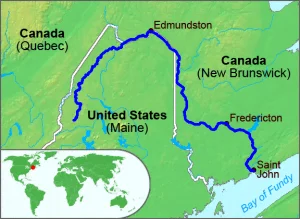
John Gyles captivity narrative provides a stunning display of Abenaki culture and lifestyle, as it was in the 1690’s. John was 10 years old when he was taken captive in the attack on Pemaquid (Bristol Maine) and his narrative provides an accounting of his harrowing treatment by his Indian captors, as well as the three years exile with his French owners at Jemseg New Bruswick. His faith in Christ remains central in the well-being of his mind throughout his ordeal.
Nicholas Baker, born in England in 1610, settled in Scituate, Massachusetts, where he served as a Puritan minister until his death in 1678. After possibly marrying in England, he wed a second wife in 1663. His descendants include notable figures such as Samuel, who established the Brunswick Church, and military captains like Charles, who fought in the War of 1812. The family lineage expanded across New England and into Michigan, with various members contributing to local governance and society.
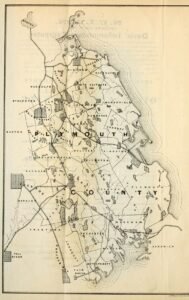
This page features the 1867 directory of Hull, Massachusetts and was originally published by Stillman B. Pratt & Co. as part of their 1867 Plymouth County Massachusetts Directory. The information contains the individuals name, and their occupation.
An historical sketch about Hull, Plymouth County, Massachusetts as abstracted from the Plymouth County Directory and Historical Register of 1867. Includes a list of the men from Hull who gave their life during the Revolutionary War.