Descendants of Thomas Boyden of Bridgewater, MA
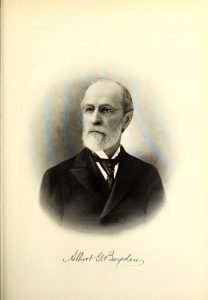
albert boyden

The Boyden family, descended from Thomas Boyden of Watertown, MA, has significantly influenced Bridgewater, MA, through generations of distinguished educators. Notably, Prof. Albert Gardner Boyden dedicated over fifty years to the Bridgewater State Normal School, serving as a student, teacher, and principal, followed by his son, Prof. Arthur Clarke Boyden. Throughout their legacy, the Boydens cultivated a commitment to education and community, exemplified by their roles in shaping the normal school’s reputation and inspiring countless students.
Biographical Sketch of General Lewis S. Partridge

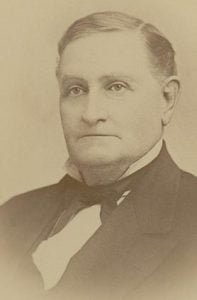
Lewis S. Partridge

General Lewis S. Partridge, born in 1818 in Norwich, Vermont, engaged in mercantile business early in life, including running the Union Hotel. He attended Norwich University from 1833 to 1836. Partridge was active in politics, serving as Adjutant General of Vermont and representing Norwich in the General Assembly. He held the postmaster role at various times and was a delegate to the Democratic National Convention. He married twice, fathering nine children, and passed away in Norwich on May 22, 1885.

Olcott Family of Norwich Vermont

Hon. Peter Olcott, born on April 25, 1733, in Bolton, Connecticut, moved to Norwich, Vermont, in the 1770s. He was a prominent community leader, serving in various public offices including first justice of the peace and Lieutenant Governor. His influence helped establish the town’s first meeting house and burying ground. Olcott was also active in military affairs during the American Revolution. He died on September 12, 1808, leaving a legacy through his numerous children and significant contributions to Norwich’s early governance and development.

Loveland Family of Norwich Vermont

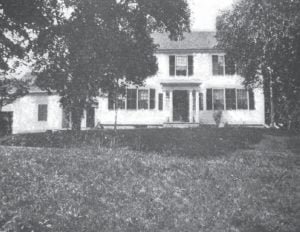
Loveland Homestead, built by Joseph Loveland in 1792

The Loveland family, descendants of original settlers, has maintained a farm in Norwich, Vermont since 1778. Joseph Loveland, born in Connecticut in 1747, established the homestead after serving in the Continental Army. His children, particularly Aaron and David, contributed significantly to the community, with Aaron serving in the legislature and as Chief Judge. Subsequent generations continued the family’s agricultural legacy and civic engagement. Today, the Loveland name reflects a rich heritage tied to local governance, education, and community service, though only a few remain in Norwich.

Hutchinson Family of Norwich Vermont

The Hutchinson family, one of the early settlers in Norwich, Vermont, traces its roots back to Massachusetts in the late 1620s. Abijah Hutchinson, a descendant, settled in Windham before moving to Norwich in 1765 with his son Samuel. They cleared land for farming and eventually made a permanent settlement. Samuel and his wife Jemina had several children, continuing the lineage. John Hutchinson, a soldier in the Continental Army, and his descendants include notable figures and various branches in New York and beyond.

Biographical Sketch of Moses Davis

Moses Davis married Sarah Sawyer in Dracut, Massachusetts, on April 6, 1785. He moved to Hanover, New Hampshire, around 1806 and later to Norwich by 1814. Davis fought in the Revolutionary War, participating in the Battle of Lexington, and possibly the Battle of Bunker Hill. He served at Fishkill in 1777 and at Valley Forge in 1778, and was among the guards for Major Andre prior to his execution. His total military service exceeded two years.

Biography of Prof. George Bush

George Bush, born on June 12, 1796, in Norwich, Vermont, became a prominent Biblical scholar and Orientalist in America. He demonstrated exceptional intelligence from a young age, graduating as valedictorian from Dartmouth College in 1818. After studying at Princeton Seminary and serving as a Presbyterian pastor, he settled in New York City, where he devoted himself to authorship and lecturing. A professor of Hebrew and Oriental Literature, Bush published influential works, including commentaries and theological treatises. He later embraced Swedenborgian doctrines, which alienated him from many former colleagues. Bush passed away on September 19, 1859.

Biography of Honorable Daniel Buck

Daniel Buck, born on November 9, 1753, in Hebron, Connecticut, opened Norwich’s first law office in the mid-1780s after serving in the Revolutionary War. He became a respected attorney and public servant, representing Norwich at the 1791 convention considering Vermont’s admission to the Union. Buck served in the Vermont legislature and one term in the U.S. Congress. Despite his early success, his later years were marked by financial difficulties and personal struggles, leading to his death in Chelsea on August 16, 1816.

History of the Bridges Between Hanover NH and Norwich VT

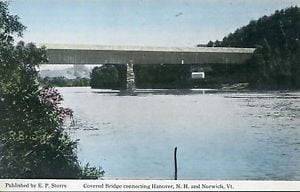
Norwich-Hanover covered bridge

The first recorded crossing of the Connecticut River between Norwich, VT, and Hanover, NH, was in 1765 using a canoe. Following this, ferry services began around 1778, with disputes over ferry rights between the two towns and Dartmouth College. By 1796, the first bridges were established, with significant community efforts aimed at creating a free bridge. Ultimately, following discussions and public support, the Ledyard Free Bridge was constructed in 1859, marking the first free bridge over the river between the two states.

Norwich Vermont and Dartmouth College

Norwich, Vermont, and Dartmouth College share a significant historical bond. Founded around the same time, both institutions benefited from mutual support, with Norwich contributing land and donations for the college’s establishment in Hanover. The founders of Norwich had personal ties with Dartmouth’s founder, Rev. Dr. Wheelock, who nearly chose Norwich as the college’s location. Over the years, Norwich supplied a substantial number of students to Dartmouth, highlighting a close relationship that fostered mutual growth and education amidst the challenges of their early settlements.

The Founding of Dartmouth College

The establishment of Dartmouth College in Hanover in 1769 marked a significant milestone for nearby Norwich settlers, who recognized the benefits of higher education and contributed generously to its founding. Doctor Wheelock, motivated to educate both settlers and Indigenous peoples, raised substantial funds in Europe. The college’s location evolved from Norwich to Hanover due to jurisdictional issues. Early challenges included securing food supplies and labor, but by 1773, the college had transformed from wilderness to a thriving settlement, supported by local community efforts.

Biography of Amos Richardson

Amos Richardson, born on November 27, 1817, in Cornish, was deeply rooted in a notable lineage, descending from Dr. Amos Richardson, a respected physician. Educated in local schools and at Dartmouth’s medical department, he pivoted from medicine to teaching and later ventured into mercantile pursuits in Florida. Returning to Cornish, he became active in civic matters, serving as Town Treasurer and engaging in numerous community organizations. A dedicated family man, he married twice and had five children, contributing significantly to the social fabric of his town.

Biographical Sketch of Robert H. Rolfe

Robert H. Rolfe, born in Concord, N.H., on October 16, 1863, is a prominent figure as the cashier and advertising manager of the Republican Press Association. A Dartmouth College graduate of 1884, he initially pursued law before shifting to a business career, working as an accountant for several railroads. Rolfe served in the New Hampshire National Guard, rising to the rank of Colonel. His courteous demeanor and efficiency have earned him respect and popularity in both his professional role and local community.

Biography of John W. Staples, M.D.

John W. Staples, M.D., born on January 25, 1855, in Wells, Maine, was a respected physician in Franklin Falls, New Hampshire. After attending local schools and graduating from Dartmouth College in 1876, he began his medical practice in 1880. Staples married Martha L. Kimball in 1882, and they had one son, Charles. Active in his community, he served on the School Board and the Board of Health, earning a reputation as a dedicated Republican and member of the Unitarian Society.

Biography of Frank T. Vaughan

Frank T. Vaughan, born May 4, 1864, in Vermont, was the son of Judge Edwin Vaughan. After receiving his early education in Canada and graduating from Dartmouth College in 1886, he worked as a civil engineer before studying law. Admitted to the New Hampshire bar in 1892, Vaughan practiced law in Newport after a brief stint in Kansas. He married Lottie B. Williamson in 1892 and had two children. Active in his community, he served as Justice of the Peace and was involved in various local organizations.

Biography of Albon Loverin

Albon Loverin, born May 24, 1851, in Springfield, N.H., was the fourth child of Austin C. and Lavina A. Loverin. After gaining experience working on various farms, he settled in Northfield in 1885, purchasing the 75-acre Chase Wyatt farm, which he improved while operating a profitable dairy. He married Jennie L. McDowell that same year, and they have one daughter, Gracie Belle. Loverin’s estate, now known as Mountain View Farm, serves as a seasonal retreat for city dwellers, and he is a registered Democrat.

Biography of Albert P. Davis

Albert P. Davis, born in 1835 in Waterloo, N.H., was a prominent figure in Warner, known for his legal career and civic contributions. Coming from a lineage of skilled craftsmen and farmers, he took over the family farm after his father’s death, later establishing a successful law practice that specialized in pension law. Davis actively supported educational initiatives, served in various public offices, and was instrumental in founding a public library and water works. He was married to Lavona Harvey and had two children, demonstrating a lifelong commitment to community welfare and reform.

Biography of David M. Currier, M.D.

David M. Currier, M.D., was born on September 15, 1840, in Grafton, New Hampshire. He trained at Dartmouth Medical College and began his medical career in Sutton before relocating to Newport. Throughout his life, he held various roles, including United States Examining Surgeon and member of numerous medical and social organizations. Dr. Currier experienced personal loss with his first wife’s death but remarried and had two daughters. Active in community service, he contributed to public health and education while maintaining a significant medical practice in Newport.

Biography of Hon. Ira Colby

Hon. Ira Colby, born January 11, 1831, in Claremont, New Hampshire, emerged as a prominent lawyer and public figure. Descended from distinguished English ancestry, he pursued education at Dartmouth College after teaching in New Hampshire and Massachusetts. A committed Republican, Colby served multiple terms in the New Hampshire legislature, was a county solicitor, and notably declined an appointment as Associate Justice of the Supreme Court. He married Louisa M. Way in 1867 and continued his family’s Methodist legacy through active church involvement.

Biography of John Henry Albin

John Henry Albin, born on October 17, 1843, in Randolph, Vermont, became a prominent lawyer in Concord and a member of the New Hampshire legislature. He graduated from Dartmouth College in 1864 and studied law under Hon. Ira A. Eastman, gaining admission to the bar in 1868. Albin served multiple terms in the legislature and held various leadership roles in the railroad industry. A dedicated Odd Fellow, he was influential in the organization, serving as Grand Master and contributing to its development.