Records of First Church in Falmouth Maine

Baptisms and Admissions from the Records of First Church in Falmouth, now Portland, Maine

The contents of the book on the records of First Church in Falmouth Maine were gleaned for and first appeared in the historical and genealogical columns of the Portland Evening Express. It contains a brief history of the church, followed by a list of its members from 1727 through 1855, a register of marriages from 1750 through 1853, and an alphabetical list of baptisms, presumably from the organization of the church. The appendix, comprising exactly half of the book, is made up of historical information, both ecclesiastical and secular, relating to Falmouth and its vicinity.

Chandler Family of Boston and East Bridgewater MA

The Chandler family of Boston and East Bridgewater, Massachusetts, traces its lineage to Edmund Chandler, a Duxbury pioneer from the 17th century. Led by the esteemed Hon. Peleg Whitman Chandler, a prominent lawyer and city official, the family has notably contributed to Massachusetts’ legal and civic life. Cleaveland Angier Chandler, a descendant and active community member, continues this legacy in East Bridgewater. The family includes multiple generations of patriots who played significant roles during the American Revolution, emphasizing their deep-rooted connection to the region’s history.

Candage Genealogy of Blue Hill, Maine

Historical Sketches of Bluehill Maine

The Candage family, descendants of James Candage who settled in Blue Hill, Maine in 1766, have a rich history. James, born in 1753, and his wife Hannah had several children, including Azor and Samuel Roundy Candage. Their lives were intertwined with maritime occupations, agriculture, and community service. James built a house around 1800, which later served various family members. The family endured hardships, with many sons lost at sea. Over time, the estate changed hands, reflecting the family’s evolving legacy in the region.

Sawyer Genealogy of Narraguagus Valley Maine

Narraguagus Valley Some Account of its Early Settlement and Settlers

Josiah Sawyer settled near the Narraguagus River in Milbridge, Maine, around 1757, along with his wife Elizabeth Brown. They had eight children, including Josiah Jr., who married Rebecca Grindle and had numerous descendants. Other notable family branches include William Sawyer, who married Sarah Dyer, and Joseph Sawyer, who settled in Dyers Bay. The Sawyer lineage expanded significantly, with various members marrying into other families and spreading across the region, including into Augusta and Addison, Maine.

Foster Genealogy of Narraguagus Valley Maine

Narraguagus Valley Some Account of its Early Settlement and Settlers

The Foster family of Milbridge and surrounding areas traces its roots to John Foster, an English immigrant who arrived after the Revolutionary War. Settling near the Narraguagus River, he had three sons: James, Robert, and John. The Fosters engaged in various trades and experienced hardships, including a failed shipbuilding venture that led to the loss of property to the Upton family. Over time, family members migrated and contributed to local histories, with John Foster’s unmarked grave remaining on their original land.

Leighton Genealogy of Narraguagus Valley Maine

Narraguagus Valley Some Account of its Early Settlement and Settlers

The Leighton family, prominent in the Narraguagus Valley, traces its roots back to Thomas and Samuel Leighton, who settled in the area around 1760. Samuel’s descendants include Theodore, Isaac, Parritt, and Phineas, who established families in Columbia, Addison, and Pembroke. Thomas, with a large family, also played a significant role. Another line from Thomas Leighton 2nd originated from Dover, NH, settling in Gouldsboro and later Steuben. Both branches produced numerous descendants, integrating into various local families and communities.

Bean and Bane Family Genealogy of Saco Valley Maine

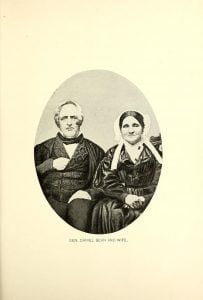
Gen. Daniel Bean and Wife

The Bean and Bane family genealogy traces origins to a supposed ancestor from the Isle of Jersey, though evidence suggests a Scottish lineage, with the surname derived from Gaelic meaning “fair.” Key figures include Lewis Bane, who settled in Boston around 1670, and his sons, who established roots in York, Maine. Captains Lewis and Joseph Bane played prominent roles in early settlements and conflicts with Native Americans. Generations of Beans and Banes contributed significantly to the region’s history, including military service and local governance.

A History of Peaks Island Maine and its People

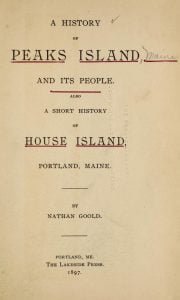
A History of Peaks Island and Its People

A history of Peaks Island and its people: also a short history of House Island, Portland, Maine. In presenting this history of two of the best known islands in Portland Harbor, it has been the intention of the author to give only the story of the early days of those islands, and of the families who have contributed to their history.

Baxter Family of Norwich Vermont

The Baxter family, originally from Norwich, Connecticut, settled in Norwich, Vermont, in 1777. Elihu Baxter and his wife, Tryphena Taylor, had fifteen children, with twelve surviving to adulthood. Their descendants spread across Vermont and beyond, with several establishing prominent careers. Notable figures include William Baxter, a distinguished lawyer, and James Baxter, a member of the Provincial Parliament in Canada. The family’s influence extended through various trades and professions, with connections maintained in the region into the 19th century.

John Gyles Captivity Narrative – Indian Captivities

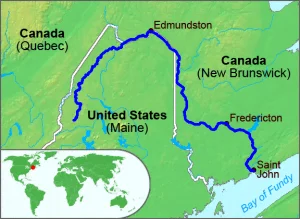
St John River Map

John Gyles captivity narrative provides a stunning display of Abenaki culture and lifestyle, as it was in the 1690’s. John was 10 years old when he was taken captive in the attack on Pemaquid (Bristol Maine) and his narrative provides an accounting of his harrowing treatment by his Indian captors, as well as the three years exile with his French owners at Jemseg New Bruswick. His faith in Christ remains central in the well-being of his mind throughout his ordeal.

Lovewell’s War – Indian Wars

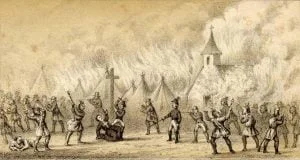
Battle of Norridgewock

Lovewell’s War, fought between 1722 and 1725, involved New England colonists led by Captain John Lovewell against Native Americans incited by French Jesuits. Tensions escalated despite efforts at negotiation, culminating in violent clashes, including attacks on Fort George and the town of Brunswick. Lovewell’s expeditions saw initial successes but ultimately led to his death and the defeat of his forces at Pigwacket. The war highlighted the brutal nature of frontier conflicts and the devastating consequences for both colonists and Native Americans.

Queen Anne’s War – Indian Wars

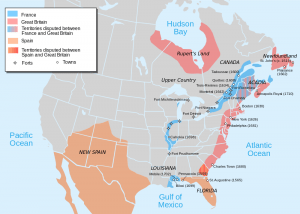
Map providing overview of European territories after Queen Anne's War

Queen Anne’s War, declared in May 1702, intensified conflicts in North America as the French governor of Canada encouraged Indian raids on British settlements. Despite a treaty with local tribes, violence erupted, with significant attacks in 1703-1708, including the devastating assault on Haverhill. Major English military responses, such as expeditions led by Colonel Church, resulted in temporary gains against the Indians and their French allies. Although hostilities continued, a semblance of peace was achieved by 1713, ending the brutal cycle of warfare on the New England frontiers.

King William’s War – Indian Wars

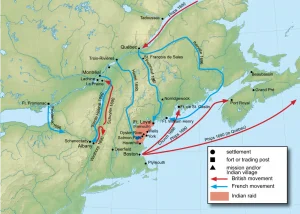
King Williams War Map

King William’s War (1688-1697) stemmed from territorial conflicts among the English, Spanish, and French, with Native American tribes often allying with the highest bidder. While the French aimed to expel the English from northern territories, the English targeted Canada. Initial hostilities began in Maine, escalating with brutal attacks, including the massacre at Schenectady. Despite military efforts, both sides suffered heavy losses, leading to a temporary peace in 1693. The war officially ended with the Treaty of Ryswick in 1697, restoring prior territorial claims and initiating a fragile peace.

Biography of John Shackford Kimball

John Shackford Kimball, born April 28, 1812, in Pembroke, New Hampshire, was a prominent lawyer and businessman. Orphaned at thirteen, he worked various jobs before studying law at Harvard. In 1838, he moved to Burlington, Iowa, where he transformed his brother’s store into a thriving business. Kimball’s firm became a leading enterprise in Iowa, generating substantial profits. He was a civic leader, contributing to local developments and charities, and served in the legislature. Married to Mary E. Stevens, he had five children and passed away in Boston, where he is buried.

Biographical Sketch of Judge George H. Buck

Judge George H. Buck, a prominent figure in California’s judicial history, has served as Superior Judge of San Mateo County for twenty-five years and has over thirty years in public service. Elected District Attorney in 1882, he transitioned to the Superior Bench in 1890, consistently earning re-election by substantial majorities. Appointed by Governor Johnson to preside over additional cases, his reputation as an eminent jurist is well-established. Born in Maine in 1847, he practiced law in California after an early career in education and railroad legal services.

Biography of Chancey Adams, M.D.

Chancey Adams, M.D., born on March 15, 1861, in North New Portland, Maine, hails from a distinguished lineage tracing back to English emigrant Henry Adams, who arrived in 1630. Educated in local schools and universities, he pursued medicine, graduating from Maine Medical School in 1891. After serving in various medical roles, he established his practice in Concord in 1893. Dr. Adams is recognized for his contributions to medicine, holds several society memberships, and is politically active as a Democrat. He married Laurinda Clara Coombs and has one surviving child.

Biographical Sketch of Allen, William

William Allen, born March 31, 1822, in Brunswick, Maine, is the grandson of the Rev. Thomas Allen, a notable figure in the Revolutionary War. Educated at public schools, Phillips Academy, and Bowdoin College, he graduated from Amherst in 1842. After studying law at Yale and Northampton, he was admitted to the bar in 1845. Allen served as an associate justice of the superior court starting in 1880, a position he held with distinction, reflecting the confidence of Governor Long in his capabilities.

Biographical Sketch of Allen, Stillman Boyd

Allen, Stillman Boyd, born September 8, 1830, in Maine, was educated at various academies before being admitted to the bar in 1853. He practiced law in Maine until moving to Boston in 1861, and later became senior partner of the firm Allen, Long & Hemenway. Renowned for winning substantial verdicts against corporations, he served in the Massachusetts House of Representatives and led significant reforms in the state reform school. A prominent figure in legal and civic circles, he was also active in Odd Fellowship and Masonry.

Biographical Sketch of Allen, Horace G.

Horace G. Allen, born on July 27, 1855, in Jamaica Plain, Boston, graduated from Harvard Law School in 1876 and became a partner in the law firm Morse Allen. He was admitted to the Suffolk bar in 1877 and married Grace D. Chamberlain in 1881. Allen served on the Boston Common Council, becoming its president in 1889, where he was recognized for his tact and fairness. He is also involved in various local clubs and resides in Roxbury.