The Archaic Period of Lake Okeechobee

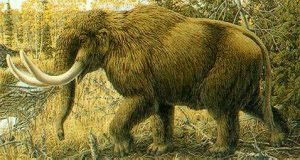
American Mastadon

The Archaic Period in southern Florida, spanning from approximately 7500 BC to 500 BC, underwent significant environmental and cultural changes. The initial phase was marked by rising sea levels that transformed the landscape, while the latter phase saw shifts in cultural practices as hunting of large game diminished. Archaeological evidence from sites like Windover Bog suggests complex societies existed, with advanced burial practices and artifact diversity, yet many aspects of Archaic culture remain unknown, possibly due to submerged evidence or historical preservation challenges.

Slave Narrative of Titus I. Bynes

Titus I. Bynes, born in November 1846 in Clarendon County, South Carolina, was the son of enslaved parents Cuffy and Diana. He served as a houseboy and learned to read and write until threatened by his mistress. Bynes fought in the Civil War with his owner but was prohibited from joining the frontlines. After emancipation, he farmed and later became a carpenter in Florida, where he married and had three sons. He now resides in the Titusville Poor Farm.

Slave Narrative of Henry Maxwell

Henry Maxwell, born in 1859 in Lownes County, Georgia, shares his experiences as a former enslaved individual. His family was fragmented after the Civil War, with several members sold to different owners. Maxwell vividly recalls the violence against enslaved people, including gruesome punishments and the horrors of hunting escaped slaves. After the war, he moved with his family to Titusville, Florida, where he eventually became a successful orange grove owner, amassing significant wealth and respect in his community.

Slave Narrative of Josephine Anderson

Josephine Anderson, interviewed by Jules A. Frost in Tampa, Florida, shares memories of her childhood and family life during slavery. Although she was too young to recall much, she describes her family’s roles in household tasks and her stepfather’s work in turpentine until his death. Josephine recounts traditions around marriage and her experiences with spirits and witches, reflecting a deep belief in the supernatural. Her stories include encounters with apparitions, witchcraft, and protective charms, highlighting a cultural blend of folklore and personal experience.

Slave Narrative of Della Bess Hilyard

Della Bess Hilyard, born in 1858 in South Carolina, recounts her experiences as a slave on the Hiwards plantation. She describes her childhood spent working in the cotton fields alongside her parents, who were also slaves. Although they were allowed to seek education, no formal teaching was provided. Religious instruction focused on obedience rather than spiritual hope. After the Civil War, she married and relocated to Georgia, later moving to Florida. Now settled in Titusville, she reflects on her life as a remnant of a past era.

Slave Narrative of Taylor Gilbert

Taylor Gilbert, interviewed at age 91 in Titusville, Florida, reflects on his life as the son of a colored mother and a white father. Born in Shellman, Georgia, he remembers the harsh realities of slavery, including brutal punishments for disobedience and the risks of moving without passes. Gilbert’s parents worked on a plantation, where his mother was a cook and his father a butler. After emancipation, he became a farmer, a profession he continues today, despite personal struggles and the loss of his wife.

Fresh Water Indians

The Fresh Water Tribe, or Agna Dulce, comprised inhabitants of several towns in eastern Florida, including Anacape, Antonico, and Maiaca. Their history aligns closely with that of other Timucua groups, marked by Ponce de León’s arrival in 1513 and Spanish missions in the 17th century. Following early conversions to Christianity, the population dramatically decreased, with 300 individuals being Christianized by 1602. The remaining communities faced significant decline, with the last Timucua names surviving in place names like Tomoka Creek.

Onathaqua Tribe

The Onathaqua Indians, possibly synonymous with the Ouathaqua, were a tribe located near Cape Cañaveral, Florida. In 1564, they maintained a close alliance with the Calusa. They may also be linked to the Ais tribe. Various historical sources reference the Onathaqua with alternate spellings, indicating their presence and significance in the region during the early colonial period.

Kolupke, Sharon L. – Obituary

Sharon Lee Kolupke, 68, of La Grande, Oregon, passed away on October 20, 2009, at Grande Ronde Hospital. Born on March 11, 1941, in Minominc, Michigan, she married Larry J. Kolupke in Savannah, Georgia, in 1982. A former resident of Orlando, Florida, Sharon enjoyed golfing in her youth. She is survived by her husband, Larry, and her sister, Andrea Konopecky, and was preceded in death by her parents. Arrangements were handled by Loveland Funeral Chapel and Crematory.

Brevard County Florida Cemetery Records

This page lists known online cemetery transcriptions, burial records, and gravestone images for Brevard County, Florida. Resources vary by cemetery and may include full surveys, partial records, mapping, or photographs. Links lead to external sites providing the available data.

Jeremiah John Miller – Obituary

Jeremiah John Miller, 81, of Medical Springs, Oregon, passed away on December 5, 2001. Born in Kansas, he served in the U.S. Army Air Corps and had a distinguished career in aircraft maintenance spanning three wars. He retired in Portland after graduating from Oregon State University and later taught at Benson High School. An avid outdoor enthusiast and skilled in various arts, he enjoyed camping and woodworking. He is survived by his wife Adeline, their children, and grandchildren. Memorial contributions are suggested to the National Kidney Foundation of Oregon.