
The Michael Fetter Family

The Michael Fetter Family

Welcome to a journey through the annals of time, one that is deeply rooted in the lives of the Fetters family and the world they inhabited. The History of the Michael Fetters family, a culmination of a quarter-century worth of research, is an enriching tapestry of generational experiences, shared ambitions, and compelling stories that echo through centuries. This book invites you to traverse a fascinating timeline, beginning with an announcement of the discovery of the 1703/04 baptism of Johann Michael Vetter in Freinsheim, Germany. We then explore the lives of Vetter and his siblings, journeying with them as they brave the waves of migration to America between 1728 and 1738, escaping the Palatinate’s persistent turmoil and religious intolerance. With each chapter, we delve deeper into the narratives of the Fetters family, unfolding their tale of endurance and courage as they venture into the wild frontiers of Pennsylvania, Ohio, and Indiana.
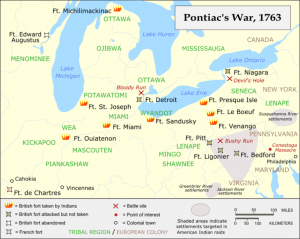
Chief Pontiac of the Ottawa’s

Map of Pontiacs War

Following the 1763 peace, English troops occupied former French forts, prompting widespread Indian apprehension of encroachment. Pontiac, the Ottawa chief, emerged as a pivotal leader advocating for resistance. He organized a council of tribes to unite against the English, inspired by a prophetic vision asserting divine support for their fight. Pontiac orchestrated a coordinated attack on English forts, aiming for liberation. Despite initial efforts, including a siege of Detroit, betrayal foiled his plans. Eventually, Pontiac was assassinated, symbolizing the decline of Indian resistance.

Philadelphia To Steubenville

On October 4, 1819, Dr. Hall and the author departed Philadelphia, traveling through fine weather and well-cultivated lands. They stopped in West Chester, where they noted the plight of a man imprisoned for debt. The journey continued to Strasburg and Lancaster, with observations on the industrious German residents and the notable Susquehanna bridge. As they passed through various towns, they encountered trials such as rough terrain, bad hospitality, and even a violent election incident. The travelers reached Pittsburgh, a smoky industrial town, on October 12, and left for Steubenville, where they took a restful day amidst the bustling village.

Biography of William Henry Francis

William Henry Francis, born February 10, 1867, in Danville, Pennsylvania, is a notable figure in Montgomery County’s industrial sector as the superintendent of the Coffeyville Vitrified Brick and Tile Company. Building on his father’s legacy, he has expanded the company’s operations across multiple locations. Educated in Pennsylvania, he joined the brick business early, succeeding his father after his death in 1915. A respected community member, he is active in various fraternal organizations and supports local initiatives, while maintaining a private life with his wife and children.

Biography of David Stewart Elliott, Capt.

Capt. David Stewart Elliott, a prominent figure in Kansas history, was a soldier, lawyer, editor, and community leader. Born in Pennsylvania in 1843, he served in the Civil War before becoming a journalist and practicing law. He enlisted in the Spanish-American War, leading Company G of the Twentieth Kansas Regiment, and was killed in action in the Philippines in 1899. His legacy continues through his children, including his daughter, Leila C. Elliott, who serves as Coffeyville’s city treasurer, reflecting the family’s enduring commitment to public service.

Biography of William H. Reed

William H. Reed, born on January 30, 1830, in Bedford, Pennsylvania, moved to Kansas in 1869. A self-made man, he progressed through various trades, building a successful furniture business in Topeka with his son B. F. Reed. Known for his integrity and public spirit, he contributed to community development, holding a brief stint as a constable. Now in retirement, Reed is respected for his business acumen and civic involvement. His wife, Elizabeth, also played a significant role in their ventures and community engagements.

Biography of William Thomas Grove, M. D.

William Thomas Grove, M.D., was a distinguished physician and surgeon in Eureka for 22 years, specializing in diseases of the eye, ear, nose, and throat. Born on April 7, 1867, in Pennsylvania, he faced numerous challenges in his early life before pursuing medicine. He studied at Rush Medical College and St. Louis University, obtaining his M.D. in 1893. Dr. Grove was active in local politics and fraternal organizations, married Minnie I. Dalton, and had five children, contributing significantly to his community while practicing medicine.

Biography of James Howard Beegle

James Howard Beegle, born December 13, 1867, in Bedford, Pennsylvania, became a notable oil well contractor and producer in Neodesha, Kansas. Raised on a farm, he shifted from agriculture to the oil industry, working across various states before establishing profitable wells around Neodesha. Married in 1914 to Elsie Cowdery, Beegle is recognized as an authority in the Kansas oil fields and has contributed to the community as a public utilities commissioner. His fraternal affiliations include prominent organizations like the Masons and the Elks.

Biography of S. G. Isett, Col.

Colonel S. G. Isett, a notable figure in Kansas’s oil industry, began his career in oil production in 1902. Born in Pennsylvania in 1849, he served in the Civil War as a young soldier, enduring multiple injuries. After various positions in the coal industry, he launched a successful oil enterprise in Chanute, drilling significant wells and establishing vital connections. A prominent Democrat, he ran for state office and was active in local politics. Married in 1873, he had three children and held extensive property and oil interests around Chanute.

Biographical Sketch of George Diehl

George Diehl, a farmer and stock-dealer in Coles County, was born on October 12, 1811, in Bedford County, Pennsylvania. He moved to Coles County in 1837 and married three times: first to Mary E. Jeffries, then to Catharine Fuller, and finally to Sally Matthews. Diehl had six children: Margaret, Thomas, Daniel, Mary E., John H., and Jennie. His life reflects a blend of agricultural pursuits and family legacy, rooted in Pennsylvania and Kentucky.

Biographical Sketch of William F. Horton

William F. Horton, born in 1824 in Pennsylvania, was a prominent farmer in Coles County, Illinois, after moving there with his family in 1837. He married Emeline Dryden in 1849, with whom he had seven children, two of whom survived. An active community member, Horton served as a School Director and Pathmaster, and became a leading manufacturer of sorghum molasses, a venture he pursued for twenty years. His enduring presence in the county reflects both his agricultural commitment and family legacy.

Biography of Deacon John A. Boyer

Deacon John A. Boyer, born October 16, 1809, in Pennsylvania, settled in Rock Island County in 1837 and married Zeruiah Phillips in 1838. The couple, childless but devoted, raised Thomas Campbell as their own. Baptized in the Mississippi River, Boyer became a foundational figure in the First Baptist Church, serving as deacon and trustee for over thirty years. He contributed significantly to the church’s growth and stability. A Republican turned Democrat, he also held local political positions and was active in Masonic and community organizations. Boyer died on December 5, 1891, in Los Angeles.

Biography of Col. James Taylor

Colonel James Taylor, an influential pioneer of Astoria, Oregon, immigrated in 1845 and contributed significantly to the region’s development. Born in Pennsylvania in 1809, he moved westward, engaged in trade with Native Americans, and ultimately settled in Oregon after a challenging journey. He played a crucial role in local agriculture and industry, including coining Oregon’s first currency, Beaver Money. A family man and a prominent figure in the community, he was Oregon’s first Republican legislator, despite facing political challenges.

Biography of Joseph C Foster

Joseph C. Foster, born in 1826 in Madison County, Ohio, was the youngest of four sons in a large family. He engaged in farming and stock-raising throughout his life. After marrying Maria C. Kingham in 1848, they had nine sons, all of whom became farmers. Foster moved to Page County, Iowa, where he established a successful farm in East River township. A dedicated member of the Methodist Episcopal Church and a Mason, he contributed to local education and held various township offices while preferring to avoid extensive political involvement.