The Cox family in America

The Cox family in America

Two volumes of Cox family genealogy combined as one. The first volume contains information about the various early Cox families across America. The second volume deals specifically with the descendants of James and Sarah Cock of Killingworth upon Matinecock, in the township of Oysterbay, Long Island, New York.
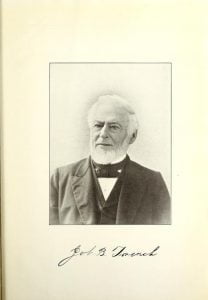
French Genealogy of Fall River Massachusetts

Job B. French

The French family has significantly influenced Fall River’s history since its founding, tracing their roots to Rollo, Duke of Normandy. Notable figures include Hon. Enoch French and his descendants, who were involved in various trades, notably tanning and shoemaking. Enoch established the first boot and shoe store in Fall River and contributed to local governance and community organizations. His sons, including Job B. French, also played vital roles in business and civic life. The family’s legacy continues through their active involvement in the First Baptist Church and local affairs.

Ancestors of George Mitchell Hooper of Bridgewater, MA

George Mitchell Hooper

The Hooper family, established in New England by William Hooper in 1635, has deep roots in Bridgewater, MA. His son, John Hooper, settled in Bridgewater and had several descendants involved in various local endeavors. George Mitchell Hooper, born in 1838, engaged in the brick manufacturing business and served in local government, reflecting the family’s long-standing commitment to community service. His marriage to Jane Hayward further connected the Hoopers to influential local families, including the Mitchells, whose ancestry traces back to early colonial times.

Pierce Family of North Bridgewater, MA

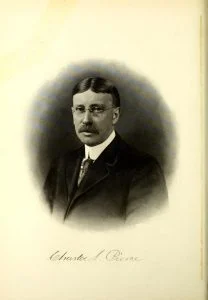
chester pierce

The Pierce family traces its lineage back to England and early New England settlers, notably Richard Pearse, who arrived in America in 1630. The family has produced numerous notable figures, including Charles S. Pierce, a respected Brockton citizen and cabinetmaker, and his sons, George R. Pierce, a successful merchant, and Charles S. Pierce, a prominent manufacturer. Their legacy continues to thrive in North Bridgewater, showcasing a rich history of industriousness, community involvement, and moral integrity, reflected in their contributions to both business and society.

Hussey and Morgan Families of New Bedford MA

The Hussey and Morgan families have a significant history in New Bedford, dating back nearly a century. Key figures include George Hussey and Charles Wain Morgan, both influential in the whaling and shipping industries during the early nineteenth century. Christopher Hussey, their ancestor, was among the early settlers in New England, while George Hussey and his son were prominent ship merchants. Charles Morgan, who also established a successful shipping business, contributed to community institutions and left an enduring legacy in New Bedford’s wealthy society.

Baltimore Maryland City Directories 1799-1946

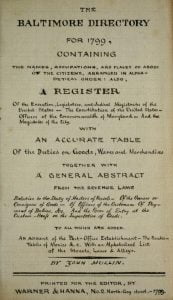
Baltimore Maryland Directory for 1799 title page

This page lists 109 free digitized directories found online for the city of Baltimore Maryland covering the years of 1799-1946 (incomplete). Directories can provide such information on an individual such as their employment and address during the year issued. They may also indicate whether they were renting or residing with somebody else at the time.

Caton Sisters of Baltimore

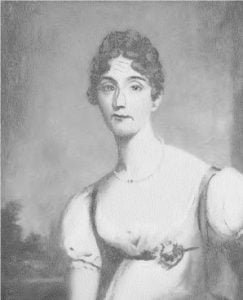
Mary Caton

The Caton sisters of Baltimore, granddaughters of the prominent Charles Carroll of Carrollton, became notable figures in early 19th-century society through their marriages into distinguished English families. Mary Caton married Robert Patterson, while Louisa wed Colonel Sir Felton Bathurst Hervey, gaining the title “American Graces.” Their social prominence was amplified by connections with notable historical figures like the Duke of Wellington. The sisters enjoyed transatlantic travels, lavish balls, and a life steeped in the refined culture of both America and England.

Elizabeth Patterson, Madame Jerome Bonaparte

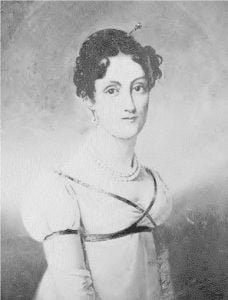
Elizabeth Patterson

Elizabeth Patterson, daughter of a prominent Baltimore merchant, captivated society with her beauty and wit. In 1803, she married Jerome Bonaparte, the brother of Napoleon, amidst social and political turmoil. Their union faced immediate disapproval from Napoleon, leading to an annulment due to Jerome’s youth and lack of family consent. Despite her challenges, Elizabeth maintained her dignity, receiving a pension from Napoleon and eventually finding stability in America. She lived a long life, marked by wit and resilience, passing away in 1879 and buried in Baltimore.

Biography of Henry Davault

Henry Davault, originally from France, emigrated with his German wife, Catharine Maria Grover, to America around 1764. They settled in Pennsylvania and raised a large family of ten children. Davault served under General Washington during the Revolutionary War and lived to 85, while Catharine reached 97. Their descendants spread across various states, with many establishing families in Tennessee. Notable among their children were Philip, who had multiple descendants, and Frederick, who contributed land for Danville, Tennessee. Henry Davault passed away in 1872.

Biographical Sketch of George Bast

George Bast, a notable figure in Montgomery County, settled there in 1819 after moving from Baltimore, where his German father had resided. He married three times, first to Sarah Clark, who bore him four sons before her death in 1816. His subsequent marriages to Emily Courtney and Elizabeth Ford produced additional children. Tragically, Bast died in 1829 from a falling tree. His descendants include prominent citizens like George Y., a respected physician, and William H., a successful merchant, establishing a lasting legacy in the region.

Biography of John A. Keck

John A. Keck was born on October 27, 1843, in Baltimore, Maryland, but moved to Kentucky and later to Missouri, where he grew up. He served in the Missouri Cavalry Militia during the Civil War but was discharged due to injury. Following his military service, he taught school and held various administrative and commercial roles, including deputy county clerk and postmaster. Keck married Sue F. Diestilhorst in 1875, and they had three children. He remained active in business and was a member of the Christian Church.

Slave Narrative of Jim Taylor

Jim Taylor, born in 1847 in Talbot County, Maryland, recounted his experiences as a child laboring on boats owned by Mr. Davis. He described a daring escape attempt to Pennsylvania by fellow enslaved men on July 4th, which was thwarted but led to eventual freedom. After years in Philadelphia, where he received an education, Taylor returned to Maryland, eventually settling in Baltimore. He worked in the furniture business and became a dedicated family man and church member, valuing education and reading throughout his life.

Slave Narrative of Alice Lewis

Alice Lewis, an 84-year-old former slave from Wilkes County, Georgia, recounts her experiences growing up on the Wakefield plantation. She describes her family’s relative comfort, with sufficient food and clothing, and the education they received. Alice recalls her transition to Baltimore, where she worked as a dressmaker for prominent families. She also reflects on her life during the Civil War, witnessing Union soldiers and the upheaval it brought. Throughout her narrative, she emphasizes her sense of community and resilience despite the hardships of slavery.

Slave Narrative of Dennis Simms

Dennis Simms, born on June 17, 1841, on a tobacco plantation in Maryland, recounts his experiences as an enslaved person during a 1937 interview. He describes the harsh realities of plantation life, including daily labor from sunrise to sunset, severe punishments for disobedience, and prohibitions on education and congregation. Simms highlights the cruelty of laws against enslaved individuals, including brutal punishments for runaways. His narrative reflects the struggle for dignity and freedom, as well as the cultural life of enslaved people, marked by song and resilience.

Slave Narrative of Mary Moriah Anne Susanna James

Mary James, interviewed in 1937, recounts her life as an enslaved person on the Randolph Manor plantation in Virginia. Her parents were owned by Silas Thornton Randolph, a relative of Patrick Henry. Mary describes harsh living conditions, with families housed in stable-like quarters, and the brutality of her master and overseer. She reflects on family separations, her work as a child, limited freedom, the absence of education, and the annual Christmas gifts. Mary also shares a haunting story about Union soldiers and the lingering presence of the overseer’s spirit.

Slave Narrative of Rev. Silas Jackson

Rev. Silas Jackson, born around 1846 or 1847 in Virginia, recalls his life as a slave on a plantation owned by Tom Ashbie. He details harsh labor conditions, frequent abuse by overseers, and the minimal provisions given to slaves. Despite the brutality, moments of community and faith prevailed, such as secret prayer meetings and seasonal revivals. Jackson’s family history includes a grandfather who escaped with Harriet Tubman’s help. His account highlights the struggle for dignity amid oppression, the fear of being sold, and the resilience of enslaved people.

Slave Narrative of Annie Young Henson

Annie Young Henson, born in Northumberland County, Virginia, recounts her experiences as a slave on Doctor Pressley Nellum’s plantation, known as Travelers Rest. She describes her family’s structure and living conditions, including a distinct cabin for her family. As a second nurse for the doctor’s family, she had better clothing and was seldom punished. Henson recalls the lack of education for slaves and the communal living on the plantation, ultimately detailing her emancipation and subsequent relocation to Baltimore.

Slave Narrative of Caroline Hammond

Caroline Hammond, born in 1844 in Anne Arundel County, Maryland, was the child of a free man and a slave woman. Her mother worked as the head cook on the farm owned by Thomas Davidson. Following Davidson’s accidental death, his wife denied the family’s freedom, leading them to escape via the Underground Railroad to Pennsylvania. There, the family found work and Hammond received an education. She eventually became a cook and, at 95, reflects on her life surrounded by family, enjoying a modest yet independent existence.

Slave Narrative of Menellis Gassaway

Menellis Gassaway, interviewed in 1937, recounts his childhood in Carroll County, Maryland, born around 1850 or 52. He describes his family’s small farm, where they grew crops like corn and wheat and kept a few livestock. Gassaway recalls the relative friendliness of white people towards his family and notes that they were not subjected to harsh treatment or the sale of slaves. Education was lacking in his family, and health issues were managed with homemade remedies.

Slave Narrative of Mrs. M. S. Fayman

Mrs. M. S. Fayman, born in St. Nazaire Parish, Louisiana, in 1850, recounts her kidnapping at age five and subsequent enslavement on Beatrice Manor near Frankfort, Kentucky. She served as a tutor for the children of Pierce Buckran Haynes, a slave trader, while enduring the oppressive conditions faced by enslaved individuals on the plantation. After escaping in 1864 with assistance from a sympathetic woman, she later completed her education, graduating from Fisk University and leading a diverse career in education across several cities.