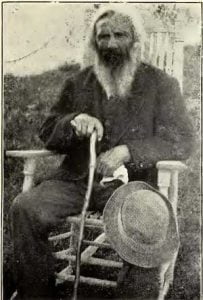
The Migration of Voyageurs from Drummond Island to Penetanguishene in 1828
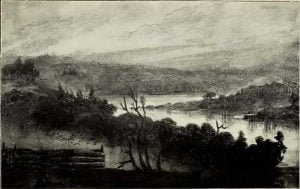
Penetanguishene Bay

In 1828, a significant migration took place as the British garrison moved from Drummond Island to Penetanguishene, accompanied by approximately seventy-five families of voyageurs, primarily descendants of French-Canadians. This transition was prompted by the reassignment of British forces following treaty agreements, leading many to settle around Penetanguishene Bay. The voyageurs, known for their loyalty and service during conflicts like the War of 1812, were granted land as compensation for their previous homes, establishing a new community rooted in their rich historical legacy.
List of the Drummond Island Voyageurs

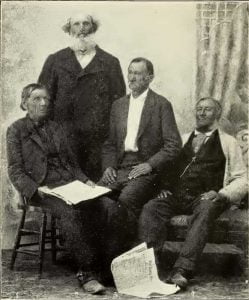
A Group of Voyageurs

In 1828, the British garrison’s transfer from Drummond Island to Penetanguishene led to the documentation of various voyageurs residing on the island. Many of these individuals were of Métis descent, and the following list includes significant personal details that reflect their ethnic backgrounds and family lineages. The entries provide insight into their contributions, settlement patterns, and descendants, showcasing the rich cultural tapestry of the region at the time of the transfer.

Narrative of Angelique Langlade

Angelique Langlade, residing in Penetanguishene, reflects on her life as a Chippawa half-breed and the last survivor of her notable family. With limited English, she recounts her origins from Drummond Island, her parents’ heritage, and the family’s migration. Her grandfather, Captain Charles Langlade, was a significant figure, serving in military engagements and settling in Green Bay. Angelique shares memories of family members and their fates, emphasizing the family’s legacy and ties to the land. The Langlade mansion and heirlooms remain valued possessions.

Narrative of Antoine Labatte

Antoine Labatte

Antoine Labatte, born on Drummond Island in 1824, recounts his family’s migration from the island in 1827, led by his father Louis George Labatte, a British soldier and blacksmith. The family traveled in a bateau to Cedar Point and then to various locations including Holland Landing and Penetanguishene. They faced challenges such as a severe storm that delayed their journey to Meaford. Labatte describes early settler life, his experiences in mining, and details about his family and community. He reflects on significant events and individuals of that time.

Jean Baptiste Sylvestre’s Narrative

Jean Baptiste Sylvestre

Jean Baptiste Sylvestre, born in 1813 at Mackinaw, recounts his early life shaped by the American War and his father’s journey as a fur trader and soldier. His mother drowned in a tragic accident when he was young. After relocating to Drummond Island, his father led him on extensive travels across Ontario, where Sylvestre engaged with various Indigenous tribes and participated in trade and exploration efforts. His narrative captures significant historical interactions and events, including encounters with prominent figures and the impact of the 1837 Rebellion.

Narrative of Rosette Larammee

Rosette Larammee, born on Drummond Island in 1815, recounts her family’s migration from the island in 1828. Her father, Jacques Adam Larammee, had worked with the North-West Company and later married Rosette Cloutier. The family traveled with two other families, enduring a month-long journey to Penetanguishene, camping along the North Shore. Larammee details the community’s early settlers and events, including marriages officiated by Bishop McDonnell. She describes her husband, Jean Baptiste Boucher, and a harrowing search for a missing neighbor, Joseph Giroux.

Narrative of Michael Labatte

Michael Labatte, a French-Canadian voyageur, was born in Sault Ste. Marie in 1814 but grew up on Drummond Island. His father, Louis George Labatte, a British soldier involved in the War of 1812, shared a strong French and Indigenous heritage with him. Michael recounts his life experiences, including military service, early travels, and family history, reflecting the cultural blend of his upbringing. He learned English in Penetanguishene and witnessed various local developments, including the establishment of early community structures and the migration of Indigenous populations.

Narrative of Lewis Solomon

A Group of Voyageurs

Lewis Solomon, born in 1821 on Drummond Island, was the son of William Solomon, an Indian interpreter employed by the British Government. His father, of mixed Jewish and Indian descent, married a half-breed woman, resulting in a family of ten children. Educated in various schools, Lewis became a clever and respected figure among his peers. His narrative recounts his family’s migration to Penetanguishene, the history of local settlers, and his experiences working as an interpreter and guide for notable figures, reflecting the intricacies of early Canadian society.