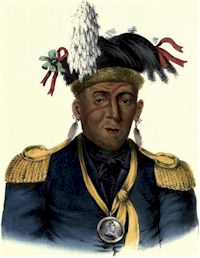
Watchemonne, Ioway Chief

Watchemonne, The Orator, Third Ioway Chief

Watchemonne, known as “The Orator,” served as the third chief of the Ioway. Born around 1786, he demonstrated early prowess in hunting and warfare, participating in numerous battles and leading war parties, which earned him respect and his title. Despite his warlike exploits, he also engaged in peacemaking, exemplified by his efforts to reconcile with the Sauk after they killed Ioway. A man of deep spirituality, he upheld traditions and rituals, ensuring the tribe honored their ancestors and maintained harmony. He was cherished by his people and remembered fondly after his death.
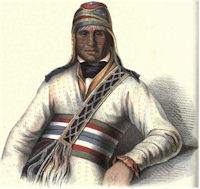
Weshcubb, Chippewa Chief

Weshcubb, known as the Sweet, is a notable Chippewa chief from Red Lake, the son of Le Sucre, who was referenced by General Pike in 1806. While recognized as a just leader, Weshcubb lacked military ambitions. His family is marked by the peculiar behavior of his son, who adopted a female identity, a transformation that remains unexplained. Despite this, he participated in several war parties and ultimately lost his life in battle, illustrating the complexities of identity and leadership within tribal society.

Yaha Hajo, Seminole War Chief

Yaha Hajo, known as the Mad Wolf, was a prominent Creek chief and war leader for the Seminoles. He distinguished himself in both diplomacy and warfare, participating in treaties concerning land emigration. Though initially supportive, he ultimately opposed forced relocation, leading the Seminoles during the war against the United States. Described as a skilled hunter with a striking physique, Yaha Hajo was noted for his cunning and courage. He met his end in battle, exemplifying the fierce spirit of the Indian warrior, even amidst the tragic realities of conflict.

Yoholo Micco, Creek Chief

Yoholo Micco, Creek Chief

Yoholo Micco served as the principal chief of Eufala in the Creek Nation, renowned for his bravery during the 1813-14 war and his eloquence as the nation’s speaker. He skillfully navigated complex council discussions, advocating for civilized practices and government proposals, which ultimately led to his unpopularity and loss of influence. A dedicated family man, he prioritized education for his children. In 1826, he represented the Creek Nation in Washington but tragically died during emigration to Arkansas. His legacy endures as a revered leader.

Young Mahaskah, Ioway Chief

Young Mahaskah, An Ioway Chief

Young Mahaskah, the son of Chief Mahaskah the elder, assumed leadership of the Ioway Tribe at age 24 after rejecting authority until elected by his people. He advocated for peace and agricultural practices, cultivating 16 acres of land and urging his tribe to abandon war. Mahaskah confronted U.S. government injustices regarding treaty violations and traveled to Washington, seeking redress. His visit, marked by grace and dignity, reaffirmed his commitment to his people’s welfare and culminated in his recognition as both a chief and a man of peaceful principles.

Wakaun Haka, Winnebago Chief

Wakaun Haka, known as the Snake-Skin, is a notable Winnebago chief of mixed French and Native lineage, recognized for his oratory and commanding presence. While once a revered hunter and warrior, personal struggles with alcohol have diminished his influence among his people. He has suffered personal tragedies, notably the loss of family in a massacre, which he could not bring himself to forgive through a peace treaty. Wakaun Haka staunchly resists changes imposed by external forces, believing it is against the Great Spirit’s design for his people.

Wakawn, Winnebago Chief

Wakawn, known as the Snake, was a notable Winnebago war-chief born near Green Bay, who passed away in 1838. Despite his modest intellect, he was recognized for his endurance and fair nature. Initially hostile towards the U.S. during conflicts, he later became a proponent of peace and civilization, encouraging education and agriculture among his people. However, his struggle with alcohol ultimately led to his demise. His wife continues to exemplify industriousness and morality, advocating for the benefits of civilization for their children while rejecting the vices prevalent in their community.

Wakechai, A Sauk Chief

Wakechai, known as the Crouching Eagle, was a chief of the Saukie nation, residing in a picturesque area of Illinois. Despite his unremarkable physical attributes and lack of battlefield acclaim, he earned respect for his intellectual prowess and wise counsel. His leadership stemmed from sound judgment rather than martial success. Though a figure of peace, he fell victim to superstition in his final moments, believing a vision would ensure his recovery. Unfortunately, his attempt to meet his guardian spirit ended in tragedy, leading to his untimely death, mourned by his community and American settlers alike.

Wanata, Grand Chief of the Sioux

Wanata, the Grand Chief of the Yanktona Sioux, is a distinguished leader known for his strong influence among the Sioux tribes. His attire, a striking buffalo skin mantle adorned with feathers, symbolizes his power and dignity. A formidable warrior from a young age, Wanata has a complex history, having fought against Americans and later professed friendship towards them while remaining shrewdly self-serving. His leadership style is absolute, and he commands loyalty through authority rather than persuasion, making him one of the most powerful Native American figures of his time.

Wapella, Musquakee Chief

Wa-pel-la The Prince, A Musquakee Chief

Wapella, the Chief of the Musquakee tribe, was a key figure during a delegation to Washington in 1837, where he garnered respect for his articulate speeches. Despite his shorter stature, he displayed notable strength and gravitas alongside Keokuk. The chiefs were received warmly across various cities, with a particularly grand reception in Boston, where Wapella expressed his happiness in meeting the white settlers and shared his tribe’s history. Cultural exchanges included ceremonies, displays of Indian heritage, and enthusiastic participation in various public events.

Waapashaw, Sioux Chief

Waapashaw is the esteemed head chief of the Keoxa tribe within the Dacotah nation, known for his wisdom and agricultural pursuits. He inherited his title and commands respect among his people. The Keoxa tribe practices closer kin marriages, which set them apart from other Sioux. Waapashaw is also noted for his strong stance against cannibalism during a wartime council, where he defended peace with white settlers against threats from the Winnebago tribe, showcasing his leadership during a time of conflict.

Wabaunsee, Potawatomi Chief

Wabaunsee A Pottawatimie Chief

Wabaunsee was a notable chief of the Pottawatomi, known for his daring exploits and strong leadership. Residing by the Kankakee River in Illinois, he skillfully balanced war and diplomacy. His reputation was marked by a fierce sense of loyalty and a commitment to avenge his fallen friends, exemplified by a dramatic act of vengeance against the Osages. A pivotal figure during the War of 1812, he later embraced peace, negotiating treaties with the United States and guiding his tribe’s relocation westward, consistently prioritizing their welfare.

Wabishkeepenas, Chippewa

The portrait of Wabishkeepenas, a Chippewa man, illustrates the deep-seated superstitions within Indigenous cultures. In 1826, Governor Cass and Colonel McKenney encountered Wabishkeepenas, who was shunned by his tribe after failing to guide them to a sacred copper rock, as it was believed a spirit had cursed him. His misfortunes led to further isolation until the American Commissioners intervened, restoring his standing. Another anecdote involved an Indian’s ritual to appease the spirit of a moose, reflecting the profound connection between nature and spirituality in their worldview.

Waemboeshkaa, Chippeway Chief

Waemboeshkaa, a distinguished Chippewa chief, stood out at the 1826 treaty of La Fond du Lac Superior due to his regal attire, crafted from vibrant feathers and horsehair. Representing the Sandy Lake band, he exuded confidence and propriety amidst a gathering of poorly clad and destitute Indians. Despite the contrast surrounding him, Waemboeshkaa’s commanding presence suggested a man of significance, likely chosen for his lineage or past exploits. His resemblance to King Saul was noted, yet his subsequent fate remains unknown.

Tooan Tuh or Spring Frog, Cherokee Chief

Tooan Tuh, or Spring Frog, was a noteworthy Cherokee Chief born in 1754 near Lookout Mountain, Tennessee. Renowned for his skills in hunting, trapping, and athletics, he embodied a harmonious blend of savagery and philosophy. His love for ball-playing reflected the competitive spirit of his people. Though he engaged in agriculture and trade, Spring Frog was also a courageous warrior when his nation faced threats, leading armed responses against the Osages and serving under General Jackson. In later life, he witnessed the successful transformation of the Cherokees into a thriving agricultural community.

Tshizunhaukau, A Winnebago

Tshizunhaukau, known as “He who runs with the deer,” is a distinguished Winnebago warrior notable for his blend of martial prowess and intellectual curiosity. While war is the primary route to acclaim among Indigenous peoples, he transcended conventional roles by engaging in medicine and observation of natural phenomena. Recognized for his innovative almanac-like wand, he recorded seasonal changes and events, showcasing his inquisitive nature. Tshizunhaukau’s legacy is further highlighted by his participation in a significant delegation to Washington in 1828, emphasizing his influence both as a warrior and thinker.

Tshusick, Ojibway Woman

Tshusick, an Ojibway woman, journeyed to Washington in search of shelter and spiritual guidance following her husband’s death. Her arrival captivated social circles, showcasing her beauty, charm, and eloquence in French, despite being an indigenous woman. Introduced to prominent figures, she expressed a desire for baptism, demonstrating an impressive understanding of Christianity. However, her true identity unraveled when it was revealed that she was a deceptive wanderer, often fabricating tales of distress to gain sympathy. Her story, both tragic and remarkable, reflects the complexities of character and circumstance.

Tustennuggee Emathla, Creek Chief

Tustennuggee Emathla, also known as Jim Boy, was a prominent Creek chief born around 1793 on the Tallapoosa River. Standing 6’1″, he earned respect as a leader among warriors. He witnessed key events in the Creek War but later sided with Americans, believing in peaceful coexistence. During the Florida War, he led a contingent of 776 warriors but faced personal tragedy when his family perished in a steamboat disaster. This misfortune symbolized the broader struggles of Native Americans amid their forced removal and displacement.

Timpoochee Barnard

Timpoochee Barnard, a Uchee warrior, emerged as a prominent figure among the southern Indians in the early 19th century. The son of a Uchee woman and a Scottish adventurer, he distinguished himself in the War of 1812, leading Uchee warriors and earning a reputation for bravery. Following the war, he returned to a life marked by domesticity and community respect. Barnard’s legacy continued through his children, particularly his son William, despite facing challenges. He passed away in Alabama, celebrated for both his valor and character.

Tishcohan, Delaware Chief

Tishcohan, a Delaware chief known for his name meaning “He who never blackens himself,” is featured in historical records primarily through reports by Mr. Fisher and Mr. Tyson. He, along with Tasucamin, signed the controversial Walking Purchase of 1737, which led to considerable land cession under questionable circumstances, igniting disputes over the treaty’s execution. The swift pace of the white walkers and violations of traditional practices resulted in deep dissatisfaction among the Delawares, ultimately contributing to their estrangement and forced displacement from their ancestral lands.