Ethnology of the Powhatan Tribes of Virginia

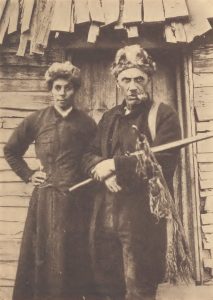
Group of Pamunkey of a generation ago in dance costume.

In the Ethnology of the Powhatan Tribes Frank Speck completed the third of a series of monographs dealing with the modern cultural life of communities of descendants tracing their origin from the tribes inhabiting the Chesapeake tidewater area. The future student of American folk-communities of Indian descent will find here new tribes with new trait-complexes to analyze and interpret. These contributions represent some culture aspects of the humble groups who were at the time of writing of this paper, at a climax and turning point in their history. Replete with over 100 photographs and maps, and at least that many surnames, this paper proves its value to both the historic researcher and the genealogist.
Powhatan Featherwork

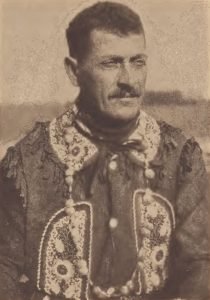
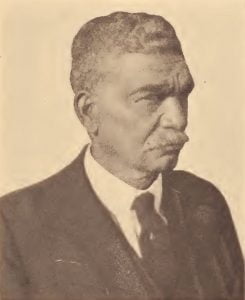
Chief William Terrill Bradby, Pamunkey

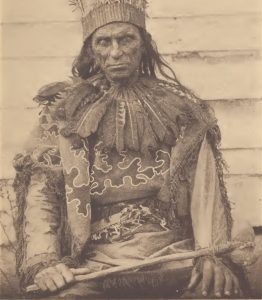
The woven feather technique represents a significant aspect of the material culture of Virginia’s Indigenous tribes, particularly despite the challenges posed by colonization. This ancient art involves integrating feathers, primarily from wild turkeys, into textile fabrics, showcasing both aesthetic beauty and warmth. Historical accounts from colonial writers highlight its prevalence and craftsmanship among various tribes, extending from the Gulf region to southern New England. Today, remnants of this art form persist in Virginia, with local women reviving traditional practices of feather weaving for decorative and functional items.

Powhatan Pottery

Recent Pamunkey pipes.

The exploration of Powhatan pottery reveals significant findings in eastern Virginia, particularly on reservations like Pamunkey and Mattaponi. Two primary pottery types emerge: Coarse Ware, characterized by heavy, reddish ceramics with net-mark patterns, and Smooth Ware, noted for its fine texture and lack of decoration, likely influenced by European contact. The transition from traditional to modern pottery reflects shifts in cultural practices. Pottery remains serve as vital artifacts, highlighting the historical continuity and changes within Indigenous ceramic traditions in the region.

Powhatan Agriculture

Chickahominy children cracking walnuts with stone mortar and pounder

The current agricultural practices of the Pamunkey reflect limited aboriginal influences, primarily due to the adoption of modern tools and crops, such as the common yellow corn. Traditional methods like the log corn mortar and heavy stone pestles have largely disappeared. Baskets remain infrequently made, with notable differences in technique, hinting at European influence. Gourd usage persists for various purposes, and while certain tools like corn-husking pegs have standardized forms, many indigenous practices have been replaced or forgotten, illustrating a significant shift in cultural practices over time.

Powhatan Canoes

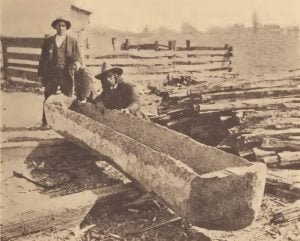
Dugout canoe of the Pamunkey in course of construction.

The Powhatan tribes primarily utilized dugout canoes for transportation in Virginia’s marshy landscape. These canoes were crafted from a single tree trunk, shaped through burning and scraping techniques. Historical accounts detail canoes capable of carrying up to forty men, essential for fishing and travel. Although early writings occasionally misattributed bark canoes to the Powhatan, evidence supports the predominance of dugouts. Today, traditional canoes continue to be made, reflecting indigenous methods that have persisted through generations, showcasing the enduring craftsmanship of the tribes.

Powhatan Fishing Customs

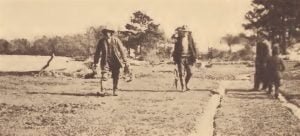
Pamunkey fishermen returning from their nets.

The Powhatan tribes continue to utilize traditional fishing methods, such as fish fences for sturgeon and drift seines for shad, which peak in abundance around the blooming of white violets. Historically, sturgeon were plentiful, but numbers have dwindled significantly. While techniques vary, the tribes emphasize respect for fishing rights and cooperation among fishermen. The use of set-lines for catfish is common, and the tribes maintain their cultural practices, including preferences for stone tools over metal. The river remains a crucial food source for these communities.

A Pamunkey Turkey Hunt

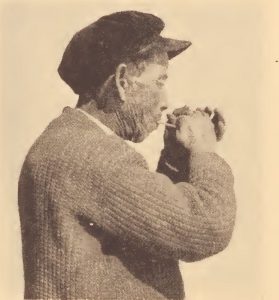
Pamunkey hunter demonstrating method of calling wild turkey with a wing-bone call

The post describes a day in the life of Pamunkey hunter Paul Miles as he navigates the murky waters of Great Creek in search of wild turkeys. Amidst the dense swamp, characterized by towering trees and muddy banks, the hunters employ traditional methods, including the use of a wing-bone call, to lure the birds. As they wait in silence, the atmosphere is thick with anticipation, underscoring the connection between the Pamunkey people and their environment, as they have hunted these waters for centuries.

Pamunkey Hunting Grounds

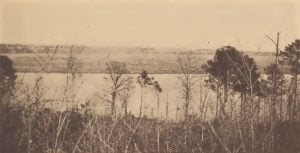
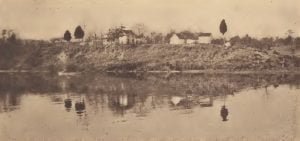
Big bend in Pamunkey River; Uttamussak in the distance.

The Pamunkey tribe maintains a significant tradition of controlled hunting and trapping rights on their 900-acre reservation, which includes cultivated land and a virgin forested swamp. Each hunter is assigned a specific, bounded area for their activities, reflecting a communal system rooted in Algonquian heritage. The hunting grounds are historically divided into six tracts, still recognized by the tribe. The enduring practice throughout centuries of English contact showcases the tribe’s adaptability and resilience in preserving their cultural and economic institutions.

Powhatan Hunting Customs

Chickahominy boy with "sora horses" of iron

The marshes and swamps of tidewater Virginia substantially shape the subsistence patterns of the Pamunkey and other tribes. The area, rich in game and waterfowl, has historically provided resources for hunting, including deer and sora rail. Traditional hunting techniques, such as deer drives and the use of deadfalls, persist today. The geographical features of this region influenced not only hunting practices but also the cultural and economic life of the Powhatan tribes, underscoring their deep connection to the land and its natural cycles.

Legal Status of the Pamunkey Tribe

The Pamunkey Tribe, comprising a resident population of just over a hundred, maintains its national independence under Virginia’s historical privileges. Likely the smallest independent nation globally, their governance embodies democracy, overseen by state-appointed trustees. The tribe is tax-exempt but pays an annual tribute of game to the governor. Disputes and legal matters are settled by the chief and council, with limited jurisdiction, especially concerning serious crimes, which may involve the county court. They impose fines or banishments without corporal punishment.

The Tribal Laws of the Pamunkey Indian Town

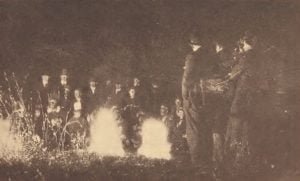
Christmas Indian dance in the woods on the Pamunkey reservation in 1921

The Pamunkey Indian Town’s tribal laws, established on September 25, 1887, include regulations forbidding intermarriage outside of certain groups and restrictions on non-residents. Offenses such as slander, theft, and trespassing incur fines, and citizens must attend meetings and maintain community roads. The laws also dictate land use, where individual ownership is limited, and land reverts to the tribe upon a holder’s death. Further stipulations address behavior, taxation, and communal responsibilities, ensuring the tribe’s governance and structure are upheld.

The Question of the Maternal Clan

Evidence suggests that Virginia’s social structure included a maternal clan system, primarily supported by John Smith’s accounts of Powhatan’s succession. Powhatan’s throne passed first to his brothers and sisters, with preference given to the sisters’ heirs over those of the brothers. This pattern aligns with matrilineal traditions observed in nearby tribes such as the Piscataway and Delawares. The complexities surrounding matrilineal descent among the eastern Algonquians necessitate further sociological exploration.

History of the Powhatan Government

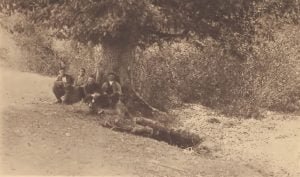
Old Pamunkey spring and ancient dance place.

Powhatan held significant authority as chief, resembling a form of monarchy uncommon among eastern North American tribes. Although details about his predecessors are sparse, his leadership style suggests a blend of demagoguery and traditional authority, contrasting with the expectation of hereditary succession. The Pamunkey government evolved, with chiefs elected through a unique voting system until recently, where the chief and council are elected every four years. This process retains traditional elements, allowing for communal participation in leadership decisions.

The Powhatan Confederacy

The Coronation of Powhatan

The Powhatan Confederacy, an Algonquian monarchy in eastern Virginia, comprised approximately thirty tribes across 8,000 square miles. Established around 1570, it was characterized as a despotic monarchy based on conquest rather than a federation. Under Chief Powhatan, the confederacy expanded but suffered severe population decline due to warfare and disease, particularly after conflicts in 1622, 1644, and 1675. By the late 17th century, it had diminished significantly, leading to a series of treaties that marked the end of the tribal era in Virginia.

Potomac Tribe

Luther Newton of the Potomac tribe

The Potomac Tribe, comprising primarily the Newton and Green families, is believed to descend from the indigenous peoples near Potomac Creek in Virginia. Although their exact heritage remains uncertain and their community is unorganized, they number approximately 150 and primarily engage in fishing. The group possesses folklore, including a legend recounted by Luther Newton about a disowned son of Sir Isaac Newton who marries an Indian girl. This narrative ties their lineage to a blend of European and Native American ancestry.

Rappahannock Tribe

George L. Nelson, chief of the Rappahannock

The Rappahannock Tribe, considered descendants from the Nantaughtacund and other northern Confederacy divisions, resides in King George, Wicomico, Essex, and King and Queen counties. As of 1923, the Rappahannock Indian Association comprised around 200 members, led by Chief George L. Nelson, who advocated for the tribe’s revival. While they share some customs with the Pamunkey and Mattaponi, their practices are slightly distinct. The tribe’s history and ethnology have been documented in separate studies, reflecting their cultural continuity despite previous obscurity.

Nansemond Tribe

Augustus A. Bass, Nansamond

The Nansemond Tribe, descendants of the Powhatan tribes, primarily reside near Portsmouth and Suffolk, Virginia. Although their numbers have declined over the past century, around 200 individuals are recognized as descendants. In 1923, they formed the Nansemond Indian Association to unite with other indigenous groups. Key family names include Bass and Weaver. Their culture retains elements of bear-hunting and wolf-trapping traditions, as well as agricultural practices and the use of dugout canoes, reflecting their historical connection to the land.

Chickahominy Tribe History

Powhatan Bradby, Chickahominy boy of Windsor Shades, Va.

The Chickahominy tribe historically inhabited both shores of the Chickahominy River, maintaining a distinct identity separate from the Powhatan Confederacy. They resisted full subjugation, opting for self-governance and forming an alliance with the English in 1613. Governed by priests and elders, the tribe has shown remarkable cultural resilience and population growth, numbering around 264 by 1923. Although they have intermarried with neighboring Pamunkey, they have preserved their independence and distinct social structure, continuing to evolve their community today.

Adamstown Indians or Upper Mattaponi Band

Part of the Mattaponi Indian town seen from the river

The Adamstown Indians, residing south of the Mattaponi River, are a recognized group of about 75 individuals with strong ties to their Powhatan heritage. This band, often referred to as the Upper Mattaponi, traces its origins to the village marked as Passaunhick on Captain John Smith’s 1612 map. Notably, they have never been enslaved and have maintained a separate identity, operating an independent school since state recognition. Their organization was established in 1923, largely comprising members of the Adams family, with roots possibly linked to the Nantaughtacund tribe.

Mattaponi Tribe History

Lee Major, Mattaponi, wearing native hat made of duck skins

The Mattaponi Tribe, a branch of the Pamunkey, shares a common cultural foundation and historical ties. Their reservation, nearly 75 acres on the south bank of the Mattaponi River, is known as Indian Town. While early records indicate a declining population, recent estimates suggest they now number around 75 individuals. The tribe has a history of interconnection with the Pamunkey and draws from both indigenous and adopted ancestries. Notably, their cultural practices reflect a rural lifestyle, maintaining a distinct community identity.