
Treaty of October 15, 1836

On October 15, 1836, a convention was held at Bellevue, Upper Missouri, between U.S. officials and chiefs of the Otoes, Missouries, Omahaws, and Yankton and Santee Sioux. The tribes ceded land between Missouri and the Missouri River to the U.S., seeking to establish a clear boundary and avoid conflicts. In return, the U.S. promised goods valued at $4,520 and assistance in agriculture, including corn and land preparation, acknowledging their commitment to support the tribes’ transition to farming.
Treaty of Oct. 21, 1837

On October 21, 1837, a treaty was established in Washington between Carey A. Harris, representing the U.S., and leaders of the Yankton Sioux tribe. The tribe ceded land rights from a previous treaty in 1830 in exchange for $4,000, designated for horses, goods, and relocating agency facilities. The United States also agreed to cover negotiation expenses. The treaty would take effect upon ratification, as confirmed by the signatures of the parties involved, marking a significant step in U.S.-Native American relations.

Houses of the Yankton Tribe

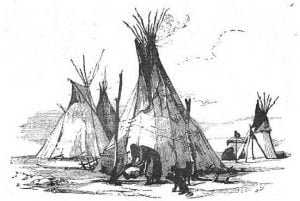
Tipis

In 1825, General Atkinson described the Yankton Sioux as nomadic hunters reliant on buffalo, living in movable leather tents. Estimated at 3,000 individuals, they were well-equipped and friendly towards whites, though hostile to other tribes. By 1833, Fort Lookout, surrounded by pickets, hosted Yankton tipis, notable for their high pointed cones made of strong poles and buffalo skins. Inside, the tents were organized with various tools and items. A journal entry from 1843 noted their gatherings around Fort Pierre for government supplies before heading into buffalo territories.

Alsea Tribe

The Alsea Indians, a Yakonan tribe, historically inhabited the area around the mouth of the Alsea River in western Oregon. Their early history is sparse, with only about a dozen descendants remaining today on the Siletz Reservation. Notable villages included Kakhtshanwaish, Kaukhwan, and Neahumtuk, among others. Despite their dwindled numbers, the Alsea’s geographic presence and cultural significance endure in the historical narrative of the region.

Yankton Tribe

The Yankton Tribe is one of the seven primary divisions of the Dakota, closely related to the Yanktonai. Historically, they have been acknowledged since at least Hennepin’s 1683 map, which depicted their location near Mille Lac, Minnesota. Over time, the Yankton shifted placements along the Missouri River and were noted by Lewis and Clark in 1804. They ceded extensive lands in 1858 but maintained a reservation along the Missouri. The tribe experienced demographic changes, with their population recorded at various times from about 700 in the early 1800s to over 1,700 by 1909.

Plains Indian Culture

Fig. 34. The Cheyenne Camp Circle. (Dorsey).

Museum collections often lack comprehensive representations of Plains Indian social organization, which is complex and varies among tribes. While tribes like the Crow and Blackfoot have distinct political units, they often unite culturally. Clans and gentes play significant roles in regulating marriage, predominantly favoring exogamy. The camp circle, a notable aspect of Plains culture, showcases organized living arrangements. Marriage customs prioritize sister marriages, and child-rearing practices include unique naming ceremonies. Death rituals typically involve scaffolding rather than burial, reflecting deep cultural beliefs about the afterlife.