
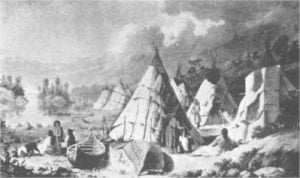
Huron Tribe

Encampment among the Islands of Lake Huron

The Huron Tribe, also known as the Wendat or Wyandot, is a confederation of four Iroquoian tribes originally inhabiting the Huronia region near Lake Simcoe and Georgian Bay, Ontario. Their social structure was organized through councils, and they engaged in agricultural practices, including the cultivation of corn and tobacco. The Huron faced continuous warfare with the Iroquois, culminating in their near destruction between 1648 and 1650. Many survivors migrated westward, eventually forming new communities, notably as the Wyandots in Michigan and Ohio.
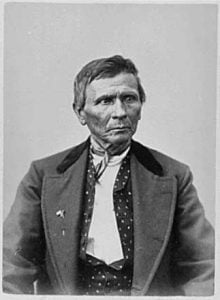
Wyandotte Reservation

The Wyandotte Reservation, located north of the Seneca Reservation, features mostly hilly and rough terrain, with agricultural viability primarily along Sycamore and Lost Creeks. Currently, the Wyandotte population numbers 288, with most members making significant progress in farming and construction. They have a church and a boarding school that serves multiple tribes. Traditional practices have waned, and while they maintain some cultural ties, the community is increasingly integrated into American society. Leadership is nominal, with a focus on peace and order among the tribe.

Indian Tribes in Pennsylvania, Ohio, Michigan and Northwest Territories, 1822

In 1822, the status of Indian tribes in Ohio, Pennsylvania, Michigan, and the Northwest Territories is critically assessed. The Delawares in Ohio, influenced by Christian teachings, begin to recognize the need for agriculture over a migratory lifestyle. In Pennsylvania, tribes have been significantly diminished, suffering the consequences of encroachment by settlers. Meanwhile, the Michigan and Northwest Territories, once solely occupied by Native tribes, are being explored and monitored by the U.S. government, reflecting the growing importance of these lands for trade and military strategy.

Society of the Wyandot Tribe

The Wyandot Tribe enforces strict laws against treason and witchcraft, with severe punishments including death. Treason involves divulging medicinal secrets or assisting enemies, while witchcraft accusations lead to trials by the grand council, where physical trials may determine guilt. Outlawry distinguishes individuals bereft of clan protection, declared through council trials. Military governance is managed by a council comprising able-bodied men, while kinship remains the foundation of tribal structure, with social organization revolving around familial ties and communal responsibilities.

The Wyandot Family

The Wyandot family structure is closely tied to their communal living, typically within a single lodge. Each family unit consists of a woman as the head, with communal fires serving as a central gathering point. The society is organized into gentes, which are matrilineal kinship groups named after animals. These groups are further categorized into four phratries, serving religious and social functions. Membership in a tribe requires belonging to a gens, which is essential to the kinship dynamics within Wyandot culture.

Functions of Wyandot Civil Government

The Wyandot civil government functions to uphold and enforce rights and duties, with a focus on various aspects such as marriage, property, personal adornments, and community relations. Marriage regulations stipulate prohibitions against intra-gens unions while allowing consanguineal marriages between different gentes. Polygamy is accepted under specific conditions, and marriage arrangements involve consultations with families and councilors. Children’s lineage follows the mother, ensuring their care is managed within the maternal lineage. Overall, customs play a pivotal role in maintaining societal order.

Wyandot Tribal Society

The Wyandot government emphasizes individual rights to freedom and security, alongside community responsibilities. Each gens has collective rights to labor and avenging wrongs. Religious practices are also protected, with specific rites assigned to each phratry and gens. Crimes, including adultery, theft, and murder, are addressed through structured councils of the gens, with detailed procedures for adjudication and punishment. Notably, failure to adhere to prescribed formalities in trials is interpreted as proof of innocence, reflecting cultural beliefs about justice.

Wyandot Tribal Regulations

The regulations governing names, personal adornment, encampment, migration, and property rights within the Wyandot tribe delineate important cultural practices. Names are assigned annually by the council women, while personal adornment varies by clan. Encampments are organized methodically, based on familial hierarchy. Land cultivation is communal, overseen by council women, and property rights favor women in inheritance. Households are responsible for maintaining their assigned tracts, with clear rules established for both individual and communal property management.

Iroquoian Sign Language among the North American Indians

The post presents contributions to the documentation of Iroquoian Sign Language, notably from Horatio Hale in June 1880. It includes a list of signs gathered from John Smoke Johnson, a chief of the Canadian Six Nations, and from Hen-to, a Wyandot chief who visited Washington the same year. These insights reflect the rich linguistic heritage among the Iroquois and Wyandots, highlighting key figures and their roles in preserving Indigenous communication practices.

Wyandot Government: A Short Study of Tribal Society

The Wyandot social structure comprises four groups: family, gens, phratry, and tribe. Government is essential for maintaining rights and duties, distinguishing military from civil authority. Civil governance takes the form of councils and chiefs, predominantly led by women. Each gens appoints four women as councillors, who choose a gentile chief, while the tribal chief is selected by the gentile chiefs. Councils convene regularly, with rituals involving ceremonial smoke and feasting accompanying appointments and decisions, emphasizing community participation in governance.

George Rogers Clarke’s Campaign

George Rogers Clarke’s campaign aimed to secure Kentucky from British-supported attacks during the Revolutionary War. By June 1778, he led 153 men to successfully capture Kaskaskia and Cahokia without resistance, later recapturing Vincennes in February 1779. Despite this, Indian hostilities persisted, culminating in various skirmishes until the treaty of peace was finalized in 1782. Clarke’s decisive 1780 expedition into Indian territory effectively ended the significant threats to Kentucky, paving the way for safer settlement in the region.