A Description of the Towns on Coosau and Tallapoosa Rivers

Tal-e-see, positioned at the Tal-la-poo-sa’s junction with Eu-fau-le, reflects a decline in its native population and agricultural vigor. Although the land yields rich spots, the inhabitants, mostly Indians, are increasingly farming out in more favorable locations close to the creek, where cattle are beginning to thrive. The town’s leadership faces internal dissent and struggles with maintaining traditional customs amid pressures from white settlers. Nearby, Took-au-bat-che showcases a more active trading center, rich in resources and potential for agricultural development.

History of the Choctaw, Chickasaw and Natchez Indians

Horatio Cushman

Horatio Cushman’s “History of the Choctaw, Chickasaw and Natchez Indians,” published in 1899, offers an in-depth exploration of these tribes in the American Southeast. Drawing on his personal experiences and oral histories, Cushman presents a nuanced narrative of their lives, social structures, and the challenges they faced from European colonization. His work highlights the cultural richness of the Choctaw, Chickasaw, and Natchez peoples, while addressing historical injustices and conflicts, making it a pivotal text for understanding these indigenous communities.

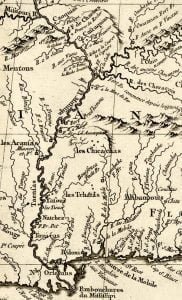
North America Indian Names of Places in Mississippi, Alabama, Georgia, Florida, and Louisiana

The post examines the significance and origins of North American Indian place names in Mississippi, Alabama, Georgia, Florida, and Louisiana, particularly those derived from the Choctaw and Chickasaw languages. It highlights how these names reflect the rich cultural and linguistic heritage of the Native American tribes, while noting that many translations have become corrupted over time. The text provides numerous examples of place names alongside their original meanings, illustrating the deep historical connections embedded in the geography of the region.

The Natchez

On February 11, 1700, explorers led by De Iberville reached Natchez, welcomed by a chief and his warriors. The Natchez were known for their sacred practices, including a temple that housed a perpetual fire and involved ritual sacrifices in times of crisis. Their society was structured around the Great Sun, a pivotal figure in their worship and governance. As they traversed the Mississippi, explorers documented their customs, including festivals aligned with lunar cycles and the poignant traditions of life and death, marking the Natchez as a significant nation in early American history.

The Natchez and the French

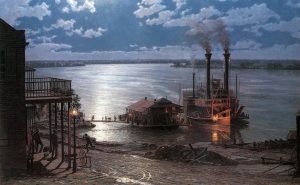
Natchez Under the Hill

The Natchez people faced devastation following the arrival of French colonists in 1716, marked by the establishment of Fort Rosalie. Initial attempts at peace failed due to cultural misunderstandings and disrespect from French leaders like Cadillac and Bienville, leading to hostilities. Despite attempts to negotiate, the Natchez were met with treachery, culminating in violent conflicts and eventual extermination by French forces. By 1733, remnants of the Natchez sought refuge among other tribes, disappearing as a distinct people, victims of colonial aggression and betrayal.

Views on the Choctaw and Fables – North American Indians

In 1723, the Choctaw territories spanned from the Mississippi River to the Black Warrior and included over sixty towns, with an estimated twenty-five thousand warriors. Their fables, known as Shukha Anump, reflect moral lessons, akin to Aesop’s. One fable recounts a turkey and a terrapin, illustrating that arrogance can lead to downfall, as the underestimated terrapin outsmarts the turkey. The author emphasizes that the ancient Indians valued traits like truth, honor, and hospitality, suggesting their readiness for civilization and Christianity, despite skepticism from others.

Mound Builders

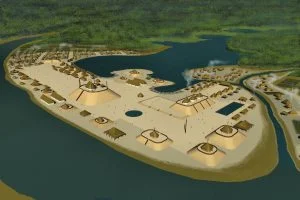
Bottle Creek Mounds

The post discusses the connection between ancient mounds in North America and the indigenous tribes, refuting the notion that these structures were built by a distinct race known as the Mound Builders. Evidence presented includes similarities in skull structure among various tribes and the fortified nature of their towns. Early European explorers observed these communities engaged in agriculture and crafting, challenging the idea of indigenous nomadism. The author argues that the mounds are the work of Native Americans, the true ancestors of today’s tribes, and emphasizes the importance of understanding their legacy.

Indian Mounds throughout North America

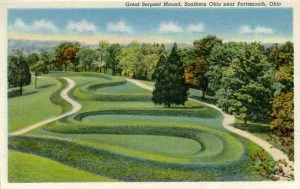
Great Serpent Mound Postcard

The region surrounding Lake Michigan was historically inhabited by skilled mound builders, including the Wyandots and Six Nations, who buried their deceased with treasures beneath earthen mounds. Excavations across North America, from Tennessee to Georgia, have uncovered European artifacts, suggesting cultural exchanges with early explorers. Similarities in mound structures and burial practices link the mound builders to contemporary Native American tribes. Mounds served varied purposes, including memorials and fortifications, reflecting the complex social practices of these ancient communities throughout the continent.

The Creation of an Indian Mound

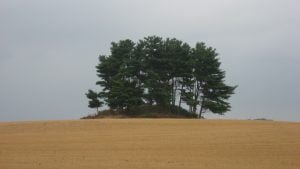
Luthor List Mound

Garcellasso de la Vega notes that American Indian communities began town planning with the construction of mounds for chiefs and warriors, creating a social hierarchy. Mounds served both as living quarters and defensive structures, with evidence of such constructions spanning centuries. The Natchez Indians, for example, built extensive mounds in Louisiana for protection against the French. Excavations of these mounds reveal human remains alongside artifacts, illustrating the cultural practices surrounding death and memorialization among Native American tribes, such as the Choctaws, who honored their deceased with intricate burial customs.

Choctaw and Chickasaw War Preparations

Among southern and northern tribes, war preparations included a solemn council of elders who deliberated on grievances. Upon deciding to act, an embassy sought redress, and if denied, warriors gathered to discuss war measures, signified by smoking the Pipe of War. During this period, ceremonial practices, including feasts and war-dances, were observed to instill courage and focus. Furthermore, the Chickasaws exhibited a commendable virtue in their care for orphans, ensuring no child faced abandonment, a trait recognized by missionaries and attributed to all North American Indians.

Natchez Trace

Natchez Under the Hill

In 1792, a treaty with the Chickasaw at Chickasaw Bluffs established the Natchez Trace, a significant route connecting Nashville to Natchez. Initially a thoroughfare for emigrants, it soon became infamous for outlaws like Mason and Murrell, who preyed on travelers. Despite efforts to capture these bandits, they eluded authorities until betrayal led to Mason’s demise. The Trace witnessed both lawlessness and camaraderie among its diverse users, ultimately fading from memory as it transformed into farmland, overshadowed by the bustling growth of nearby settlements.

Vaundreuil and the Chickasaws

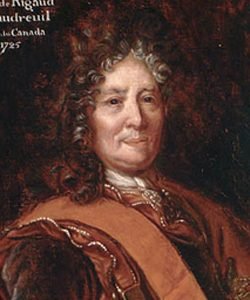
Philippe de Rigaud Vaudreuil

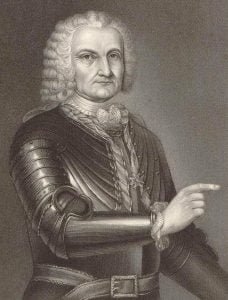
On May 10, 1743, the Marquis of Vaudreuil assumed control of French Louisiana, rejecting peace proposals from the Chickasaws unless they expelled English traders and coordinated with the Choctaws. Despite their attempts for peace, Vaudreuil sought to incite hostilities between the Chickasaws and Choctaws, ultimately igniting a civil war. The Choctaws, influenced by French and English manipulation, faced devastating losses. By 1750, they accepted humiliating peace terms while the Chickasaws continued to resist, indicating the destructive impact of colonial rivalries on Indigenous peoples.

The Chickasaw War of 1739

Chickasaw Wars

The Chickasaw War of 1739 was fueled by French manipulations, leading to a prolonged conflict between the Chickasaws and the Choctaws, which had begun in 1737 without clear gains for either side. Bienville, determined to eradicate the Chickasaws after previous defeats, sought Choctaw support and managed to persuade many tribes to ally with the French. However, logistical failures and disease plagued the French campaign. Ultimately, peace was declared, with the Chickasaws maintaining their independence, despite ongoing tensions and hostilities instigated by the French.

Gov. Perier and Bienville

Bienville

The English colonists, wary of French expansion along the Mississippi, fostered conflicts between French and Native American tribes, particularly igniting animosity with the Chickasaws after a failed French escort led to their warriors’ deaths. Bienville, the French governor, attempted to use the Choctaws against the Chickasaws but faced significant resistance. Subsequent military expeditions by both Bienville and d’Artaguette ended in disastrous defeats against Chickasaw defenses. Ultimately, the Chickasaws showcased their resilience, marking critical victories that hindered French ambitions in the region.

The Discovery Of This Continent: It’s Results To The Natives

Columbus Landing on Hispaniola

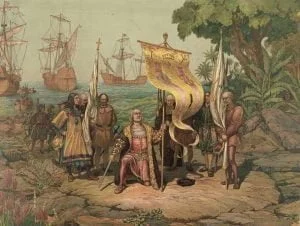
In 1470, Christopher Columbus married Dona Felipa, daughter of a renowned navigator, and settled in Porto Santo, where they shared dreams of discovering lands to the West. Their ambitions fueled Columbus’s determination, leading to his 1492 voyage that resulted in the European discovery of the Americas. However, this event marked the beginning of devastation for native peoples, introducing warfare, disease, and colonization that would decimate their populations and cultures, ultimately transforming their rich, diverse societies into shadows of their former selves.

The Creek War – Indian Wars

general jackson

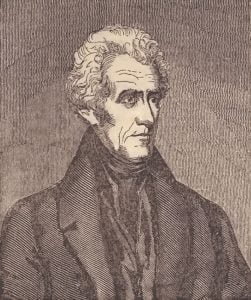
In the spring of 1812, Tecumseh inspired Southern tribes, including the Creeks, to join hostilities against American settlers. Despite initial reluctance, the Creeks engaged in violent raids, culminating in the surprise attack on Fort Mimms in August 1814, resulting in significant casualties. General Andrew Jackson led retaliatory campaigns, ultimately defeating the Creeks at the Battle of Tohopeka in March 1815. The conflict ended with the Treaty of Hickory Ground, marking the subjugation of the Creek nation and their relocation east of the Coosa River.

Early Indian Wars in Florida

Narvaez in Florida

Prior to English settlement in North America, the Spanish and French made multiple attempts to colonize Florida, beginning with Juan Ponce de Leon’s explorations in 1512. These expeditions often resulted in confrontations with Native Americans and failure, exemplified by the disastrous missions of Hernando de Soto and others. Despite some initial friendly relations, the Spanish ultimately faced fierce resistance, leading to their eventual retreat. The arrival of French settlers introduced further conflict, culminating in the brutal expulsion of the French by Spanish forces and the tragic events surrounding their attempts to establish a foothold in Florida.

Terrible Massacre At Natchez

History of Alabama and incidentally of Georgia and Mississippi, from the earliest period

The flourishing colony of Louisiana faced a tragic turn with the massacre of French settlers at Natchez in 1729. Commandant Chopart’s tyrannical actions against the local Natchez tribe, particularly in demanding their land, incited resentment and vengeance. After a secret council, the Natchez resolved to attack the French, leading to the surprise assault that resulted in over two hundred French deaths. The aftermath saw brutal enslavement of survivors and escalated violence, marking a dark chapter in colonial relations and the near annihilation of the Natchez people.

The Origin of the Natchez Indians

The Natchez Indians believe they originated from the sun, envisioned as a woman whose monthly discharges created the first man on earth. This creation narrative parallels that of the Yuchi, indicating a shared cultural significance in solar worship. The Natchez hold a unique perspective on death, believing their demise leads to the sun’s end, suggesting a profound connection between their spirituality and their cosmology. Understanding the origins of this myth could shed light on the historical interactions between these tribes.

Natchez Burial Customs

The burial customs of the Natchez tribe, particularly for their noble members, involved elaborate and gruesome ceremonies. Notably, upon the death of a chief or chieftainess, several individuals, including family members, were sacrificed to accompany the deceased in the afterlife. Accounts detail the ritualistic strangulation of both adults and infants, followed by public mourning practices. In contrast, the burial rites for less prominent members were simpler. Their temple served as a sacred space for honoring the dead, with specific rituals and offerings to appease the spirits of deceased chiefs.