History of Norwich Vermont Education

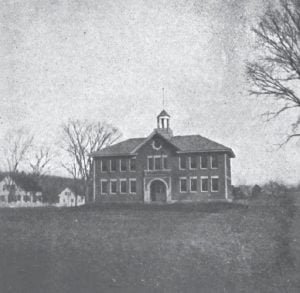
High School Building, Norwich Village, Erected in 1898

The history of education in Norwich, Vermont, traces back to efforts in 1782 to establish school districts. The first successful division occurred in 1785, creating the First School District. Over the years, multiple districts were formed, with the establishment of a committee for school supervision in 1824. Notable developments included the construction of a brick schoolhouse in 1845 and the incorporation of the Norwich Classical and English Boarding School in 1867, although it ultimately closed in 1877. The town’s education framework evolved significantly, culminating in a unified system in 1892.
American Literary, Scientific, and Military Academy

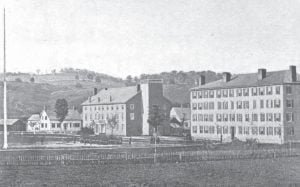
The American Literary, Scientific, and Military Academy, founded by Capt. Alden Partridge in 1819 in Norwich, was a pioneering educational institution aimed at providing a distinctly American system of education. The academy’s initial enrollment reached 100 cadets and eventually grew to nearly 200. In 1825, it relocated to Middletown, Connecticut, where attendance peaked at 300. Despite a brief rivalry with a competing military school, the academy laid the groundwork for what would become Norwich University, emphasizing a commitment to serving a diverse student population.

A Brief History of Norwich University

Norwich University 1862 - North Barracks South Barracks

In 1835, the American Literary, Scientific, and Military Academy was incorporated as Norwich University in Vermont. Established by Captain Alden Partridge, the institution was notable for its secular education, free from sectarian influence. It aimed to develop patriotic and educated citizens, emphasizing moral principles and religious respect without imposing specific beliefs. Throughout its early years, Norwich University contributed significantly to the training of military leaders during the Civil War, producing numerous distinguished officers for both the Army and Navy.

Norwich Vermont and Dartmouth College

Norwich, Vermont, and Dartmouth College share a significant historical bond. Founded around the same time, both institutions benefited from mutual support, with Norwich contributing land and donations for the college’s establishment in Hanover. The founders of Norwich had personal ties with Dartmouth’s founder, Rev. Dr. Wheelock, who nearly chose Norwich as the college’s location. Over the years, Norwich supplied a substantial number of students to Dartmouth, highlighting a close relationship that fostered mutual growth and education amidst the challenges of their early settlements.

The Founding of Dartmouth College

The establishment of Dartmouth College in Hanover in 1769 marked a significant milestone for nearby Norwich settlers, who recognized the benefits of higher education and contributed generously to its founding. Doctor Wheelock, motivated to educate both settlers and Indigenous peoples, raised substantial funds in Europe. The college’s location evolved from Norwich to Hanover due to jurisdictional issues. Early challenges included securing food supplies and labor, but by 1773, the college had transformed from wilderness to a thriving settlement, supported by local community efforts.

University of Washington, 1862

In January 1862, the University of Washington was re-incorporated with a new board of regents, tasked with governance and managing university lands. A primary collegiate school opened that October, but financial mismanagement soon surfaced, leading to an investigation in 1867 that exposed significant losses and a near-closure of the institution. Despite struggles, the university reopened in 1869 under new leadership. Support from the legislature did not arrive until 1877, and by 1880, improvements in faculty and graduation rates reflected a renewed commitment to education.

Education, Schools and Language on the Six Nations Reservations

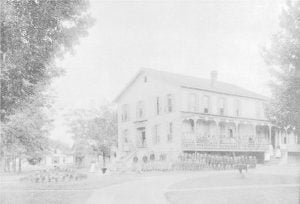
Thomas Orphan Asylum

The post discusses the challenges faced in educating children within the Six Nations Reservations, particularly regarding attendance and literacy. Many families believe they need their children for labor, leading to irregular school attendance. While there are instances of exceptional talent and academic potential among Indigenous students, overall proficiency in English reading and writing remains limited. Schools on various reservations strive to improve educational outcomes, yet systemic issues, including under-resourced facilities and insufficient teacher training, hinder significant progress in learning.

Indian College

The proposal advocates for the establishment of a college dedicated to the education of Indian youth who excel in primary schools. This institution would empower them to teach their communities, ultimately fostering self-sufficiency in education. Drawing inspiration from successful educational initiatives in India, the plan envisions a well-endowed college in the U.S., facilitating the training of both Indian and other foreign students. By enabling these individuals to spread knowledge, the institution aims to elevate cultural exchange and promote goodwill globally.

Historic Schools of Washington

In Olympia, a school was established on November 22, 1852, by A. W. Moore, who was pivotal in advancing education in the early American settlement. The first schoolhouse, built by local families, faced challenges, including its demolition due to snow. By 1853, Olympia hosted one of only three schools north of Cowlitz landing. The region’s education gradually expanded, leading to the founding of various institutions, including the Puget Sound Wesleyan Institute in 1856 and a flourishing public school system by the 1870s, despite initial struggles for funding and resources.

County Development and Education in Idaho

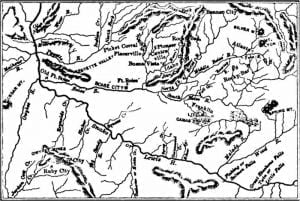
Map of Boise and Payette Valleys

Ada County, established in 1864 with Boise City as its seat, arose from the early settlement efforts marked by agriculture and mining. Notable pioneers like Thomas Davis and Sherlock Bristol contributed to the land’s development, cultivating successful orchards and commercial enterprises despite initial challenges. The introduction of irrigation transformed previously barren lands into fertile farmland, enhancing crop yields and livestock productivity. As population grew, so did the region’s significance, laying the groundwork for Idaho’s broader agricultural and educational advancements.

History of Schools in Dry Grove, Illinois

The first school in Dry Grove was a subscription school held in a log cabin, taught by Daniel Crooks. Later, a division arose over the location of a new schoolhouse, resulting in two separate schools, which ultimately weakened the educational efforts of both communities. Over time, schools in the area improved, reflecting the growing interest in education. This progression is illustrated by the establishment of additional schoolhouses and increased enrollment, culminating in more organized education efforts compared to earlier, more chaotic schooling experiences.

County School Superintendents, San Bernardino County, California

The list details the succession of County School Superintendents in San Bernardino County from 1867 to 1889. It begins with W. L. Ragsdale and includes notable figures such as W. S. Clark, H. C. Brooke, and Dr. J. A. Rousseau, who held multiple terms. Notably, the year 1876 saw no incumbent. The record reflects a period of significant educational governance as the county’s leadership evolved through various individuals over two decades, highlighting the continuity and changes in educational oversight during this era.

Early Educational Interests in Todd County, Kentucky

The evolution of public education in Todd County, Kentucky, mirrors the broader educational struggles in the state. Initially dominated by church-run seminaries catering to the elite, education faced resistance from the wealthy who viewed common schools as demeaning. Efforts to implement public education laws were met with skepticism and opposition, particularly from those fearing the equalization of educational opportunities. However, from the mid-1800s onward, gradual reforms, including the establishment of separate schools for colored children, ultimately laid the groundwork for a more comprehensive educational system, albeit still facing challenges.